
In 1836, the President of the United States stopped in Lawrenceburg. And what he said here incited the wrath of his political enemies.
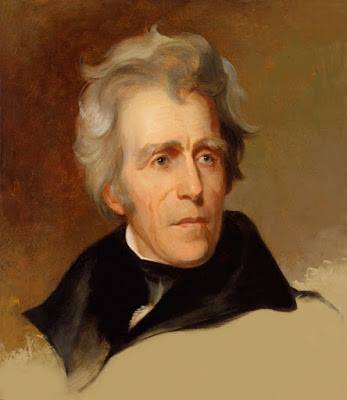
Andrew Jackson was no stranger to Lawrence County. Indeed, local tradition has it that he was a regular at the horse races in Glenrock (modern Loretto). In 1836, he was nearing the end of his final term as President of the United States. That fall, he stopped in Lawrenceburg on his way to Florence.
When he stopped here, it was the season of one of the harshest presidential campaigns that the nation had ever seen. His hand-picked successor and vice president, Martin Van Buren was running against William Henry Harrison of Ohio and Senator Hugh White of Tennessee. Both Harrison and White ran as members of the Whig party. Among other things, the Whig party’s main platform was to malign Andrew Jackson and destroy all things Jacksonian.
According to an article from the Nashville Whig newspaper the ‘National Banner and Nashville Whig,’ Old Hickory was greeted warmly when he arrived in Lawrenceburg. A number of the citizens of Lawrence County supported him politically, and several had served under him in the Creek War and the War of 1812.
One local veteran in particular approached Jackson in the street that day. Although we don’t know his identity, he introduced himself to the President as a veteran of Jackson’s New Orleans campaign. According to the ‘Banner,’ the veteran told Jackson that he was unsure of any of the candidates in that year’s presidential race, and asked Jackson for whom he should vote in the upcoming election.
To the great astonishment and wrath of his Whig enemies, Jackson told the man plainly, “Sir, if you wish the measures of my administration carried out, you ought to support Mr. Van Buren–Judge White is a Federalist.”
The Whigs of the ‘Banner’ and the Pulaski ‘Trumpet of Liberty,’ from whom they gleaned the story, bashed the President for expressing his opinion on who should be his successor. According to them, expressing such an opinion was “undignified and derogatory to his elevated station” as a sitting President of the United States.
However, despite his enemies’ objections, Jackson continued to support Van Buren, who won the election that fall with 170 electoral votes and almost 51% of the popular vote.

 Lawrence County History Trivia