
Has teaching changed much since 1905?
In the spring of that year, one local schoolteacher sent a letter to the editor of the Lawrence ‘Democrat’ explaining the teacher’s role in the community as he saw it, and what behaviors and habits he thought a good teacher should adopt.
The author, J.J.W. Starr, taught school for many years at the Quercus community in northern Lawrence County.
Since we have recently begun a new school year in Lawrence County, I thought our county’s great teachers would enjoy reading an excerpt from this 110-year-old article, which remains surprisingly relevant to the 21st-century classroom.
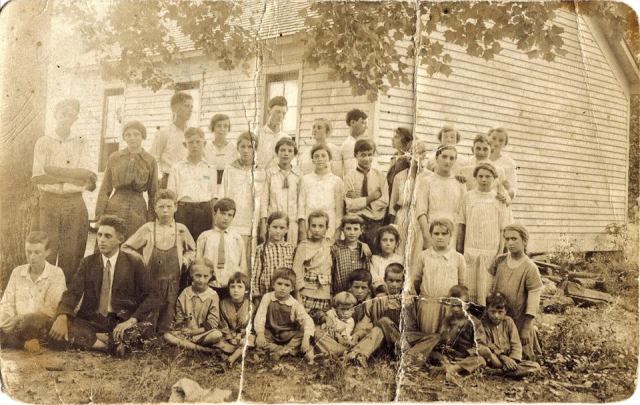
Red Hill School, 1915 Source: Old Jail Museum
“The teacher receives the children at the most plastic period of life, when they are not capable of judging between truth and falsehood, and all he says to or teaches them is accepted as solemn truth, and it moulds their lives for the future.
“In the power for good or evil the teacher is far ahead of the preacher. An immoral man in the pulpit will do far less harm than one behind the teacher’s desk. The teacher’s calling is the noblest and most influential of any, and those who do not so regard it are out of place in the schoolroom.
“The teacher should love his work, and only those who love it should be employed. While in it he should give it his time and strength.
“If he is his own janitor he should be at the schoolhouse at least an hour before school time to have the room comfortable for the pupils when they arrive, and he should always be as polite to them as he expects them to be to him. The whole five days each week should be fully employed in school work, not closing school early on Friday to go home to return late Monday morning. He should always be the first at the school house and the last to leave it, and remain with his pupils during the noon hour.
“He should do all in his power to make the children happy by taking interest in their sports as well as their studies. He should interest them in the current events of the day through newspapers or by other means, and as much as possible he should place new reading matter before them, for children, like adults, soon tire of reading the same thing over and over.
“From the experience of many years I am the decided advocate of newspaper-reading in the schoolroom to make young people intelligent, to expand their minds, and give them something to think of and converse about. In our school work we too often get into ruts and find it hard to get out.”
–From “Our Public Schools” by J.J.W. Starr, Lawrence ‘Democrat,’ May 26, 1905

 Lawrence County History Trivia