
Something happened in the the sky over Lawrenceburg, Tennessee on a clear afternoon in late October 1846.
Nearly 175 years later, the story still piques curiosity and demands explanation.
According to the Lawrenceburg Academist, the incident happened about midday on October 23, 1846. The noise was the first thing that people noticed.
An article entitled The Late Strange Noise¹ recorded that “a strange rumling [sic] noise was heard in the heavens, resembling distant thunder or the roling [sic] of cars on a railroad, or more nearly, the discharge of steam under water.”

The story from The Academist.
But the noise was none of those things. The railroad was still more than three decades in the future for Lawrenceburg in 1846. And the weather was pristine. The article went on to say that “the air was perfectly calm, the sky cloudless,” and the temperature was pleasantly somewhere in the mid-70s.
But for a full half-of-a-minute, the air was filled with a dull rumbling, traveling distinctly from north to south. The Academist goes on to say that the noise “resembled that of an earthquake, or whirring noise of large birds descending very suddenly.” And it was heard nearly 20 miles away.
More than a century later, an article about the event found in a junk store scrapbook in Loudon, Tennessee claimed that the noises were accompanied by violent explosions that shattered windows. The junk store article in question goes on to say that witnesses saw “trails of steam over the city,” and that at least two people saw “a strange slag-like material fall from the sky after the explosions.”
Lucky Selvidge, the man who found the scrapbook, wrote about the find in a 1972 article for the Democrat-Union.² His opening line tantalizingly asks “could Lawrenceburg have been visited by a spaceship from another world, more than 125 years ago?”
Selvidge speculates further that the rumbling noises and the explosions described by witnesses were suggestive of “jet aircraft engines…breaking the sound barrier.” He goes on to say that “falling slag has been reported countless times in UFO sightings.”

An early view of Lawrenceburg, probably made about three or four decades after the ‘Late Strange Noise.’
But the Academist took a more circumspect view of the incident. The “late strange noise,” it said, “is quite possible to have originated in some meteorlogical phenomena, possibly a long and dense body of meteoric stones passing through the earth’s atmosphere.”
Indeed, the Academist article seems to describe in minute detail what happens when a large meteorite strikes the earth.
An almost identical event happened four months later near Hartford, Iowa. As related in the Nashville Republican Banner³ on November 1, 1847:
On the 28th of February, 1847, at about ten minutes before three o’clock in the afternoon, the attention of the people in this region was arrested by a rumbling noise as of distant thunder; then three reports were heard one after another in quick succession, like the blasting of rocks or the firing of a heavy cannon half a mile distant. These were succeeded by several fainter reporters, like the firing of small arms in platoons…Two men were standing together where they were at work; they followed with their eye the direction of one of these sounds, and they saw about seventy rods from them the snow fly. They went to the spot. A stone had fallen upon the snow, and bounded twice…
Unbeknownst to the people of Lawrenceburg or Hartford in 1846, or apparently to Mr. Selvidge in 1972, is that, millions of miles from the earth, Biela’s Comet had broken in half in early 1846, scattering a massive debris field in its wake. The meteoric activity described in Lawrenceburg and Hartford was probably connected to this obscure astronomical event.
In 2013, a massive meteor exploded in the earth’s atmosphere over the region around the Russian city of Chelyabinsk. The explosion created a shockwave which shattered glass and damaged buildings throughout the area, injuring nearly 1,500 people. The Chelyabinsk event was recorded on cell phones and dash cams by hundreds of people.
The following link is a compilation of some of those videos. Compare the sounds made by the Chelyabinsk meteor with the reports from the Academist and the unnamed junk store scrapbook article describing the Lawrenceburg event of 1846.
Chelyabinsk Meteor Compilation
Lawrence County was very sparsely-populated at the time of the explosion, and few records of the event have survived. This kind of scarcity of source material can fuel speculation like Mr. Selvidge’s idea that the noise was evidence of alien beings visiting Lawrenceburg.
Scientific reasoning, however, leads us to the much more likely conclusion that the explosion in Lawrenceburg in late 1846 was more likely the result of a falling meteor on par with the Chelyabinsk event.
Did aliens land on the Lawrenceburg Square in 1846? No. Did a meteor fall in broad daylight somewhere south of Lawrenceburg? Probably so.
As Richard Feynman said, “Science is what we do to keep from lying to ourselves.”
But still, as Mr. Selvidge’s colorful article attests, it can be great fun to ask ‘what if?’
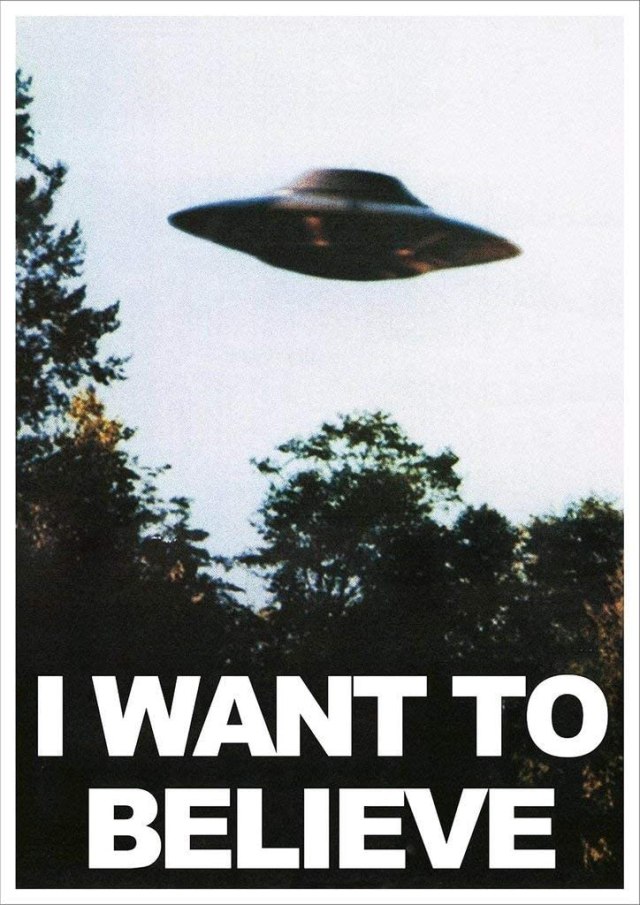
The truth is out there, Mulder.
¹ “The Late Strange Noise,” The Academist, 2 Dec 1846, p. 1: Lawrenceburg, Tenn.
² “Century-Old County Mystery Found in Junk Shop,” The Democrat-Union, 27 Jul 1972, p. 1: Lawrenceburg, Tenn.
³ “Fall of Meteorid Stones in Iowa,” Republican Banner, 1 Nov 1847, p. 2: Nashville, Tenn.

 Lawrence County History Trivia