
Did giants once roam Middle Tennessee?
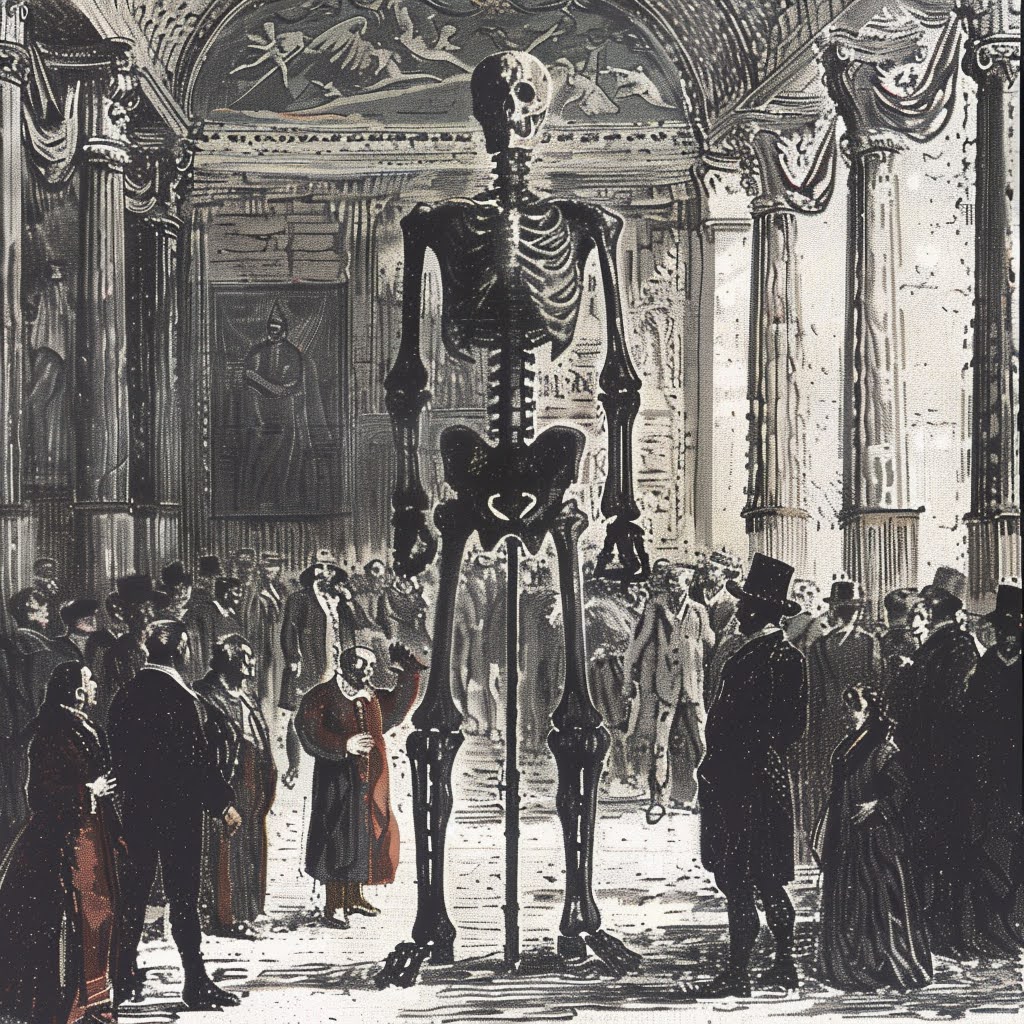
In the autumn of 1845, a traveling exhibition made its way into the muddy streets of Lawrenceburg claiming to contain a truly unusual cargo: the bones of a long-dead, eighteen-foot-tall giant.
Contemporary newspaper accounts claim that the skeleton was discovered some fifty feet beneath the earth by a group of men digging a well on the farm of William Shumate, south of Franklin. When assembled, the bones measured a staggering eighteen feet in height. The thigh bone is said to have been five feet long, and the skull “about two-thirds the size of a flour barrel, and capable of holding in its cavities near two bushels.”
The discovery of the giant caused a sensation throughout the region, convincing many that the area had once been home to a race of long-extinct giant men.
The owner of the bones claimed that he was offered $8,000 for the skeleton, but decided instead to exhibit the bones for a year. He had them wired together, and sometime in the autumn of 1845, the show made its way to Lawrenceburg en route to New Orleans.
Although we don’t know where the skeleton was displayed in Lawrenceburg, we know that in other places it was “erected in a high room; the skeleton was sustained in its erect position by a large upright beam of timber” with a normal human skeleton displayed alongside for scale.
According to the fantastic book Mastodons to Mississippians: Adventures in Nashville’s Deep Past by Aaron Deter-Wolf and Tanya M. Peres, admission was “thirty cents, though with a fifty percent discount for servants and children.”
When the show made it to New Orleans, the party ended. Dr. William D. Carpenter, a respected professor, was invited by Shumate to examine the bones on New Year’s Day 1846. Carpenter later wrote, “At a glance it was apparent that it was nothing more than the skeleton of a young mastodon.” Wooden ribs, teeth, and pelvic bones had been built to make the skeleton appear more complete.
Word reached Lawrenceburg in April 1846 of the skeleton’s true identity. The Shumate Mastodon is one of a number of mastodon skeletons recovered in Williamson County. Since 1977, paleontologists have discovered portions of the skeletons of four of the mighty beasts at the Coats-Hines Site in Brentwood. The finds are especially important because they are some of the only mastodon skeletons east of the Mississippi River which show direct evidence of hunting by humans.

 Lawrence County History Trivia