There is no escaping it if you grew up in Lawrenceburg. The town has a school, a theater, a street, a cinema, a state park, a motel, a hospital, a waterfall, a festival, a pediatrician’s office, a bank branch, and a stretch of highway named after David Crockett. His name is everywhere around town. One of the only full-sized statues of him in the United States stands on the south side of the Public Square.
And yet, many lifelong residents still may not be quite sure why Lawrenceburg cares so much about Crockett. Confused by Fess Parker’s skipping over the town in the 1955 Disney miniseries that gave an entire generation Davy fever, many locals have some lingering questions about Crockett’s time here. Why did he come to Lawrenceburg? What did he do here that was such a big deal? Have we overblown his legacy?
David Crockett’s time in Lawrenceburg was a turning point in his life, and it can be argued that the impact the town had on Crockett was even greater than the legacy he left on the town. Here are three reasons why we are obsessed with Crockett in Lawrenceburg, and why we should remain so.
1. He began his political career here.
Fred Thompson isn’t the only native son who launched his career of public service in Lawrenceburg.
As the base of his statue downtown will tell you, Crockett was a big deal to early Lawrenceburg. Magistrate, commissioner of the town, lieutenant-colonel of the county militia, and member of the state legislature. That’s quite a laundry list of accomplishments—especially for a man who, by his own admission, could barely write his own name when he first moved into the area.[1]
This image of Crockett is a familiar one to natives of Lawrenceburg. It’s from a painting of the famous frontiersman done by John Gadsby Chapman. The same painting inspired the statue of Crockett on the Square. Source: The Washington Post
If that isn’t impressive, then consider that he achieved the first of those only two months after his September, 1817 arrival in the area.[2] He had originally come to the untamed country because game was plentiful. Crockett’s rise to power in early Lawrence County was fueled by two things: his reputation for “common justice…honesty…and natural-born sense” and his self-deprecating sense of humor, which both endeared him to the voters and shielded a sharp mind.[3]
Crockett’s story would not have been possible a generation earlier. He began his rise to power at the right time—when poor, white men were being given the right to vote all over the state, regardless of their ownership of property or payment of taxes—and at the right place—early Lawrence County was a backwoods district full of tough men who were distrustful of wealthy elites and wanted to see one of their own representing them in the legislature.
2. He gained a famous nickname while representing Lawrence County in the legislature.
All of his life, Crockett seems to have been somewhat self-conscious about his limited education. He had gone to school for only four days as a boy, and had worked for a schoolteacher for six months as a young man in exchange for four lessons per week on basic reading, writing, and arithmetic.[4] It wasn’t until the state ordered him to keep better records as a magistrate in Lawrence County that he would learn how to write more than just his name.
When he attended his first session of the Legislature, Crockett’s lack of education and eloquence was pointed out on the floor, when a fellow-representative named James C. Mitchell referred to Crockett as ‘the gentleman from the cane.’[5] Crockett was infuriated by this insult. As luck would have it, later that day, he found a cambric ruffle lying on the ground like the one Mitchell wore on his fine shirt. So, pinning the ruffle to his own “coarse shirt,” Crockett took the floor in a most dramatic way. Mitchell was laughed out of the room by the other members of the legislature, and ‘the gentleman from the cane’ got both a moral victory and a nickname that would stick.[6]
3. He built a diversified industrial operation on Shoal Creek.
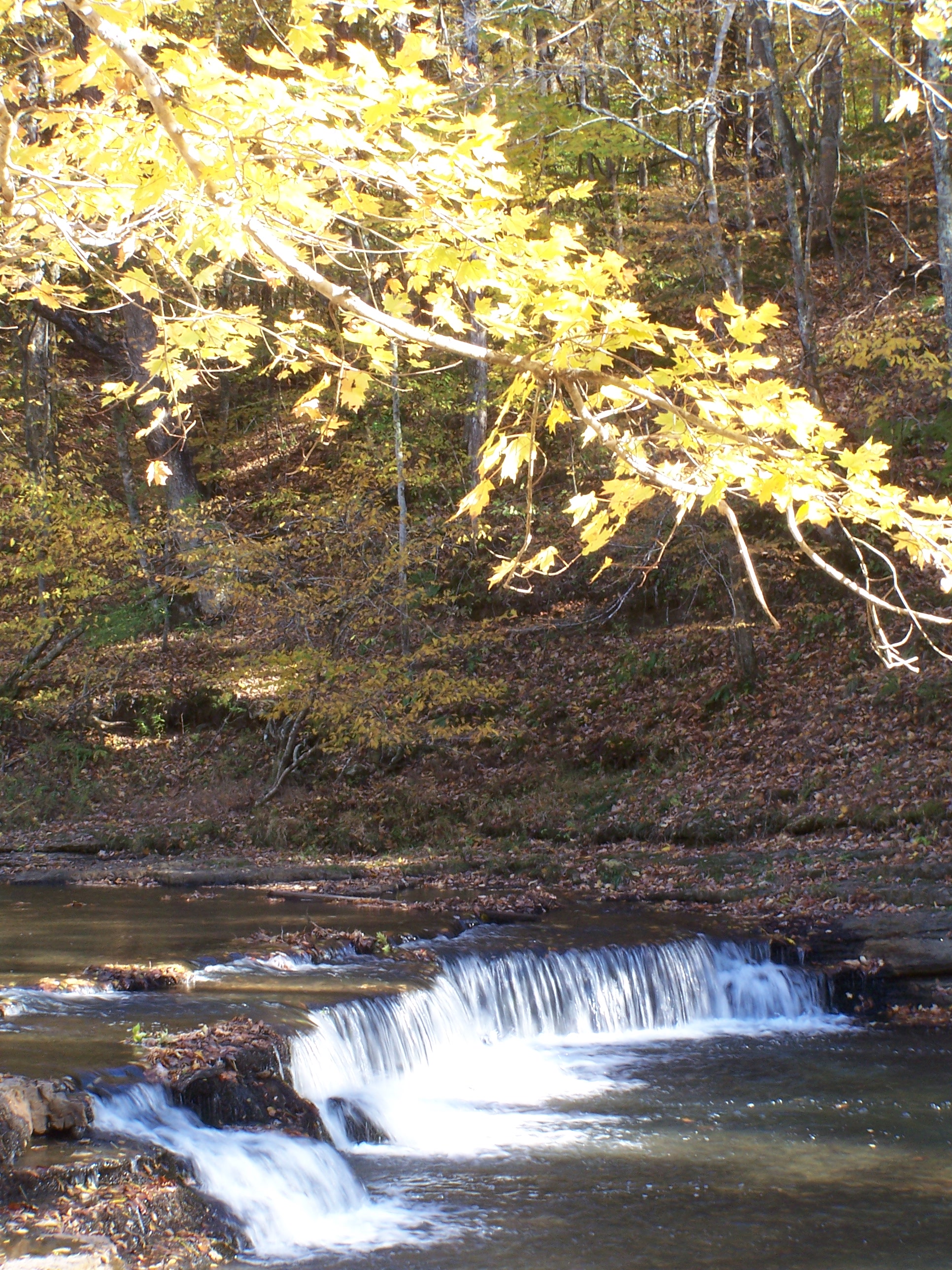
Crockett came very close to escaping his lifelong cycle of poverty and debt while he lived in Lawrence County. After borrowing the monumental sum of $3,000, he built “an extensive grist mill, and powder mill, all connected together, and also a large distillery” on his 160-acre property on Shoal Creek, at the location that is now known as Crockett Falls in David Crockett State Park.[7]
Crockett Falls, the location of David Crockett’s extensive milling and distillery operation, is today a popular place to enjoy a beautiful day in the state park that bears Crockett’s name. Photo by Clint Alley
Crockett’s mills and distillery were built to address the most pressing needs of a frontier community in those days. Gunpowder, of course, was a necessity for hunters and for military preparedness. Also, farmers needed a place to grind their corn, and they needed to turn most of that corn into whiskey, which would not spoil and could be traded for other goods. By constructing a grist mill alongside his distillery, Crockett set himself up to be the ‘one-stop shop’ for Lawrence County’s early farmers.
However, it was not to last long. Twelve days after arriving at the first session of the legislature in 1821, Crockett got word that a flood of Shoal Creek had destroyed both of his mills, rendering his distillery useless.[8] Left greatly in debt, and with no option but to sell his extensive land holdings, Crockett said that “the misfortune just made a complete mash of me.”[9] He was comforted, however, by the fact that he had “an honest wife” who told him that they would “scuffle for more.”[10] And so Crockett sold his land to satisfy his debts and set out to find a new home in West Tennessee.
Sources
Crockett, David. A Narrative of the Life of David Crockett of the State of Tennessee. Philadelphia: E.L. Cary and A. Hart, 1834.
Shackford, James Atkins. David Crockett: The Man and the Legend. Lincoln, Nebraska: University of Nebraska Press, 1994.
[1] David Crockett, A Narrative of the Life of David Crockett of the State of Tennessee, (Philadelphia: E.L. Cary and A. Hart, 1834). 70.
[2] James Atkins Shackford, David Crockett: The Man and the Legend, (Lincoln, Nebraska: University of Nebraska Press, 1994). 38.
Lawrence County has 13 properties listed on the National Register of Historic Places. To introduce you to the history of these properties, I will publish a series of short articles about each place, using information from the official National Register of Historic Places nomination forms.
Opening Night
The projectionist on opening night, Walter L. “Bud” Young, wrote the name and date of the first movie showing on the back of a piece of cardboard. Image source: Iceposter.com
Named for Lawrenceburg city father and American hero David Crockett, Crockett Theater opened its doors to the public on September 13, 1950. At that time, it could seat around 1,200 people, dwarfing the 500-seat capacity of the older Princess Theater on the Square. The first movie shown in Crockett Theater that night was And Baby Makes Three, starring Robert Young and Barbara Hale.
The theater was significant not only because of its glamorous Art Deco facade, but also because it was the first movie theater in Lawrence County which showed movies seven days a week–Sunday movies were scheduled to begin only after morning worship services were over. But, in addition to movies, a variety of entertainers performed on the multi-purpose stage at Crockett Theater, including the Carter Family and Little Jimmy Dickens.
Separate, But Not Equal
Crockett Theater was originally racially segregated, as were all public businesses at the time of its construction. The only remnants of that period of the building’s history today is the old entrance once used by African-Americans, a set of large, plain, wooden double doors which are situated to the south of the ticket booth and lead to the balcony, the back part of which was reserved for African-American seating before integration.
The ‘colored’ section of Crockett Theater was originally intended to have segregated bathrooms, but the fixtures for the sinks and toilets were never installed, meaning that, before integration, the few African-Americans who attended the movies at Crockett Theater had to walk to a service station down the street to use the bathroom.
After the opening of Crockett Cinemas in 1985, Crockett Theater ceased to be a movie theater. The building was purchased by the City of Lawrenceburg in 1986. The theater is significant not only because of its cultural importance, but also because it is one of the only Art Deco theaters in Middle Tennessee to have largely preserved the interior elements of its design. It was listed on the National Register of Historic Places on July 29, 1997.[1]
Sources
National Register of Historic Places, Crockett Theater, Lawrenceburg, Lawrence, Tennessee, National Register #97000804.
[1] National Register of Historic Places nomination form, Crockett Theater, Lawrenceburg, Lawrence, Tennessee, National Register #97000804.
10.We have a community named after a plow…only spelled backwards.
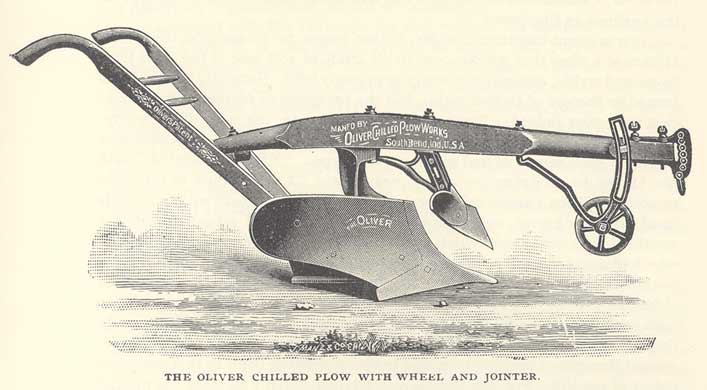
An Oliver plow like the one that is said to have inspired the name of Revilo. Source: Northern Illinois University
The community of Revilo is in southeastern Lawrence County. Around the turn of the 20th century, the residents of the community had built a new school, but were having trouble deciding what to name it. As the story goes, some of the men were gathered at the country store eating lunch one day, when one of them noticed an Oliver double-shovel turning plow sitting nearby. According to Estha Cole’s book Places in Lawrence County, Tennessee, Then and Now, he realized that the name ‘Oliver’ spelled backwards was ‘Revilo,’ and the name appealed to him. The other men at the store that day agreed, and so it came to be that the new school–and, by extension, the community–was named ‘Revilo.'[1]
9.The only F5 tornado in Tennessee history ripped through western Lawrence County.
Although this certainly wasn’t ‘cool’ to those who experienced it, it is still a remarkable part of our county’s history. On April 16, 1998, a large tornado touched down in Wayne County, Tennessee. It gained strength as it traveled northeast, and the damage it caused by the time it reached Deerfield in western Lawrence County was on such a massive scale that the National Weather Service later declared it to be an F5 on the original Fujita scale. This was the only tornado in Tennessee’s history to be considered an F5 using that particular means of measurement (meteorologists swapped to the enhanced Fujita scale, or EF scale, since 2007). However, because news coverage of smaller tornados in downtown Nashville overshadowed coverage of the Lawrence County event, meteorologists have dubbed it ‘The Forgotten F5.’[2]
8. We have one of the oldest Mexican War monuments in the United States.
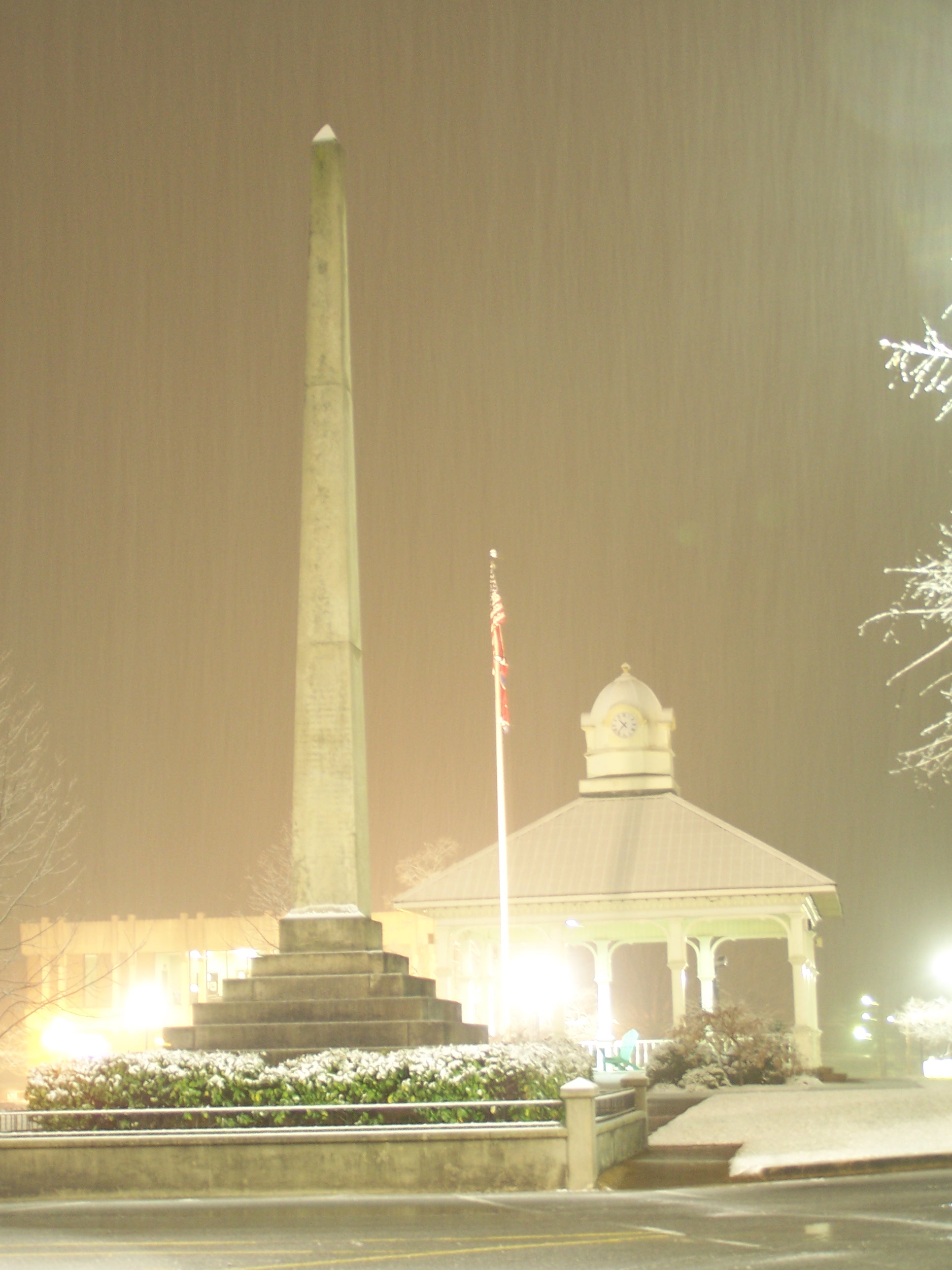
The Mexican War Monument has stood at the north end of the Public Square for 165 years this year. Photo by Clint Alley.
The Mexican War was fought between 1846 and 1848. When it began, the Secretary of War requested that Tennessee furnish 2,800 volunteers, and the state answered by providing more than 30,000![3] Among those volunteers was a local company known as the Lawrenceburg Blues, which was mustered into the regular army as Company M of the 1st Tennessee Infantry Regiment. These men were among the first to assault the ‘Black Fort’ at Monterrey, and suffered severe casualties, including the company’s captain, a promising young state legislator named William Bethel Allen.[4]
When news about the battle reached Lawrenceburg, a movement to memorialize Allen and the men of the Lawrenceburg Blues began almost immediately. The monument—a towering obelisk engraved with tributes to the war’s causes as well as the names of those from Lawrenceburg who died in the conflict—was erected in 1849 on the north side of the Public Square in Lawrenceburg. It was paid for partially with funds raised by the people of Lawrence County, and with $1,500 appropriated by the Tennessee General Assembly.[5] Although commonly cited as either the only Mexican War monument in the nation or one of two or three, there are actually at least 15 other monuments commemorating the Mexican War in the United States.[6] The Lawrenceburg monument, however, was one of the first to be erected, predating most of the others by more than half a century.
7. Legendary frontiersman David Crockett not only lived here, but he won his first-ever election here—and he won it out of spite.
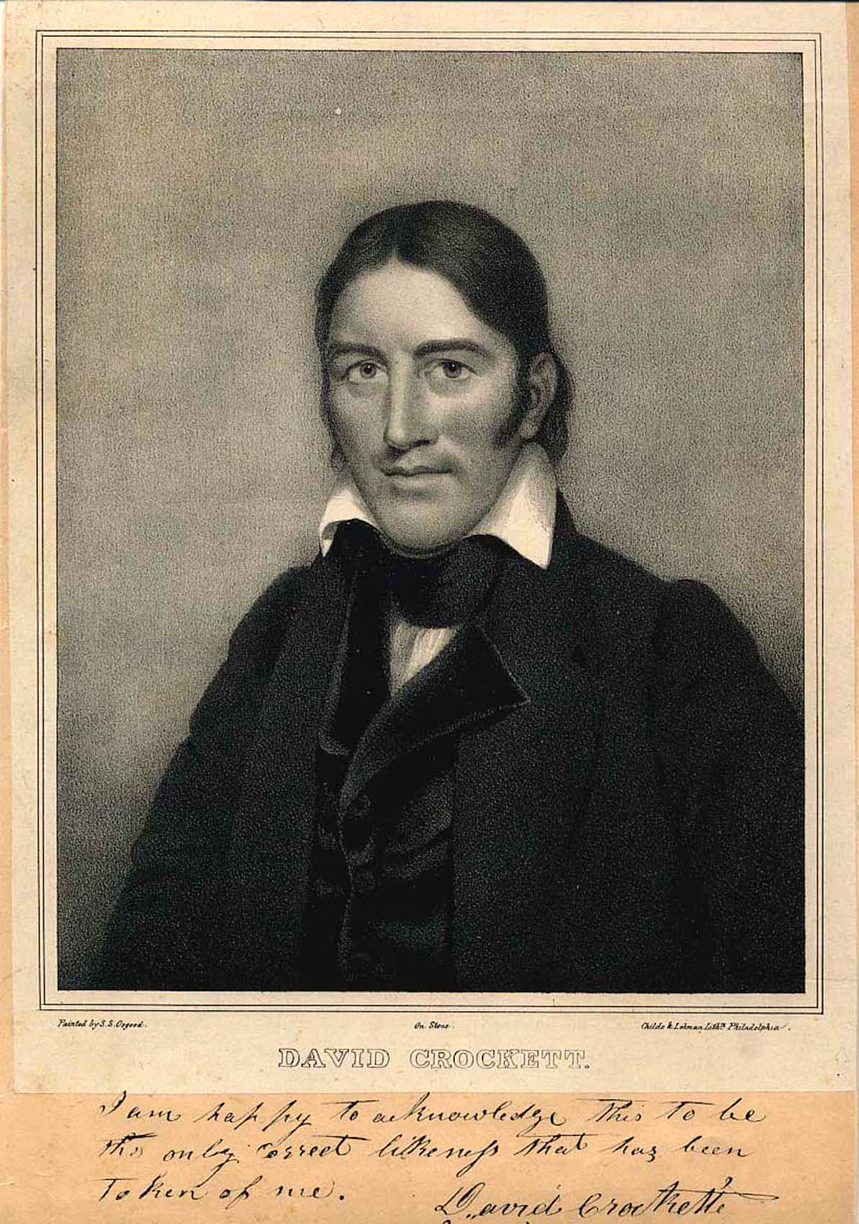
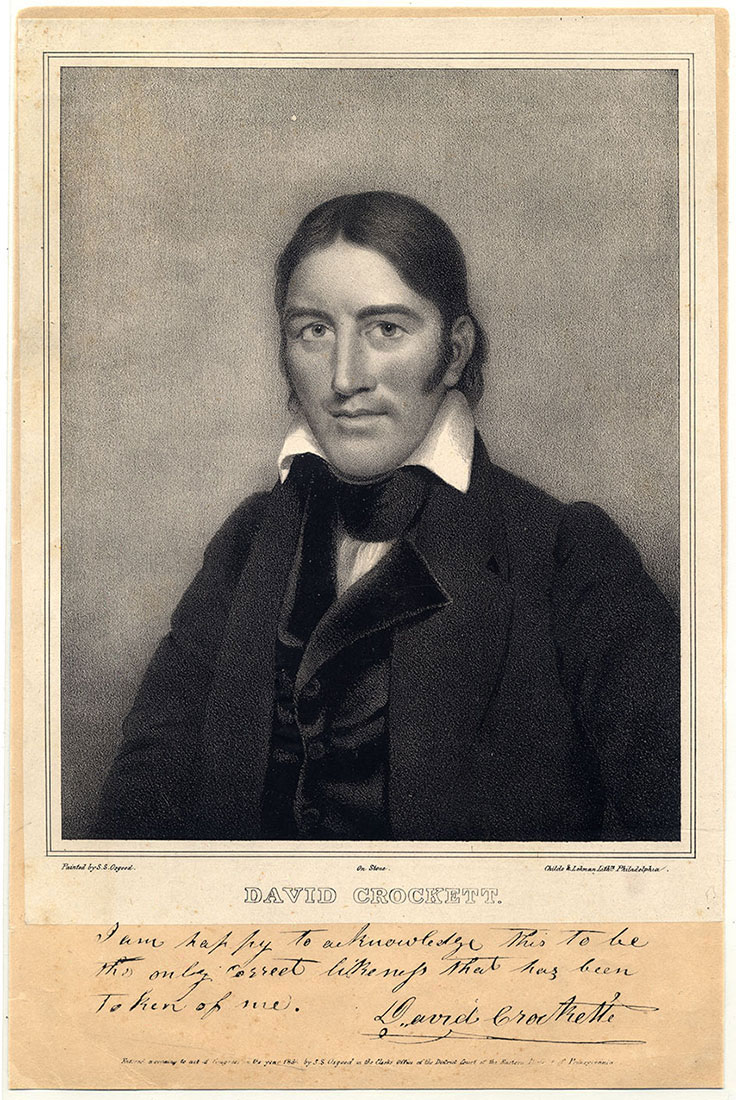
This image of the King of the Wild Frontier by S.S. Osgood was personally endorsed by Crockett to be the most accurate one of him ever drawn from life. Source: Wikimedia Commons.
David Crockett probably never intended to enter the world of politics when he settled in Lawrence County. He came mainly because the hunting was good. But he was popular in the county, and had many friends among the early settlers. A man whom Crockett called Captain Matthews approached Crockett one day and told him that he planned to run for colonel of the county militia, and he wanted Crockett to run as major, and be his second-in-command. Not long after, at a cornhusking given by Matthews, Crockett found out that Matthews intended to run his son against Crockett. As Crockett said in his autobiography, “it put my dander up high enough,” and so he decided to run against Matthews for colonel.[7] When he gave a speech to the crowd gathered at the frolic that night, Crockett explained “as I had the whole family to run against any way, I was determined to levy on the head of the mess.”[8] Not only did Crockett win the election by a landslide, but Matthews’s son was badly beaten, as well.
6. We have the only consecrated Catholic Church in the state of Tennessee.
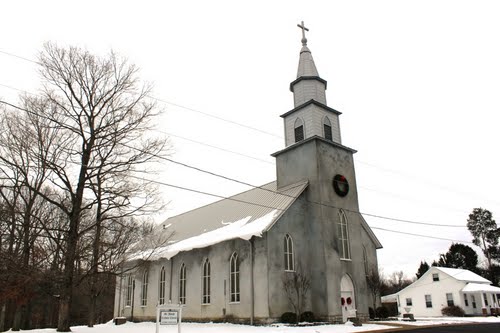
The only consecrated Catholic church in the state of Tennessee looks good in any weather. Photo by Ben Tate.
The St. Joseph Catholic Church in the town of St. Joseph was completed in 1885. It is built of coursed ashlar stone quarried roughly a mile from the site, and its walls are 28 inches thick. Its stained glass windows were imported from Munich, Germany. Upon its completion, the Bishop of the Diocese of Nashville traveled to St. Joseph by the newly-completed railway and consecrated the structure, making it the only consecrated Catholic church in Tennessee.[9] According to the the parish’s website, only churches with “assured permanency, both of construction and use, may be consecrated…they must be built of stone or other permanent materials, and the land and building must be entirely free from debt.”[10] The church was listed on the National Register of Historic Places on October 10, 1984.
5. Thurgood Marshall tried an historic civil rights case here, before he was famous.
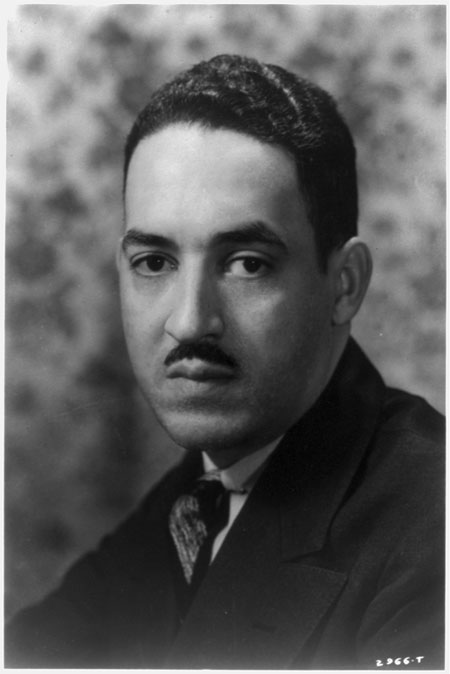
This image of Thurgood Marshall as a young man captures how he would have looked when he was in Lawrenceburg. Source: Primary Source Nexus.
In 1946, in Columbia, a fistfight between a black Navy veteran and a white store clerk escalated into a pitched urban street battle between the black community, a mob of angry whites, and white police officers. After the violence ended, twenty-five black men were charged with the wounding of four white police officers. The incident and the trial made national headlines. One of the attorneys for the defense was none other than a young Thurgood Marshall, who would later go on to become the first black Supreme Court Justice in American history. The trial was held in Lawrenceburg.
Marshall and the other black defense attorneys were inconvenienced by the small number of ‘colored’ hotel rooms and restaurants in Lawrence County. To compensate, they had to commute each day from Columbia, and they relied heavily on the charity of black churches in Maury County for their meals. Although the national media lampooned Judge Joe Ingram as a backwoods buffoon and painted Lawrenceburg as a run-of-the-mill stronghold of southern racism, many were shocked when the all-white local jury found 23 of the defendants not guilty. [11] Two others were found guilty, but were never retried due to lack of evidence, and a third would be the only guilty party to serve time in jail.[12]
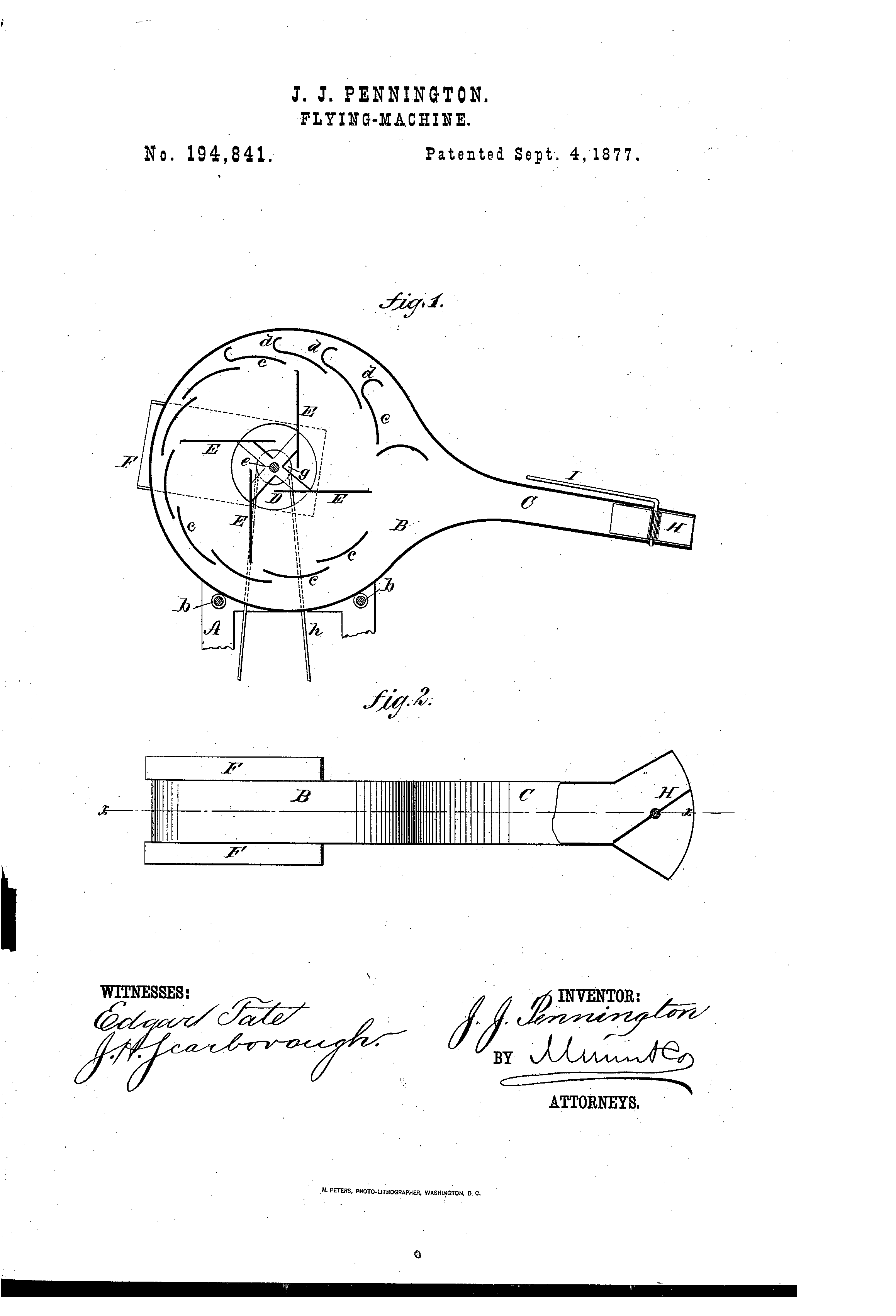
4. A man from Lawrence County patented a pneumatic flying machine thirty years before the Wright Brothers made their maiden flight.
The lone schematic accompanying Pennington’s patent application. Source: Google Patents.
Henryville native James J. Pennington—for whom the Lawrenceburg Municipal Airport is named—invented a device which he called an ‘aerial bird’ while the Wright Brothers were still in elementary school. Local tradition says that Pennington conducted a manned flight in his aerial bird from atop a shed in Henryville in 1872, before a large crowd of onlookers. While the success of this flight is still hotly debated, it is fact that he patented the air-powered device in the summer of 1877, and he took it to the Southern Exposition in Louisville, Kentucky in 1883, shortly before his death. This image is the lone schematic accompanying his patent application, which is registered as patent number 194841 in the United States patent office.[13]
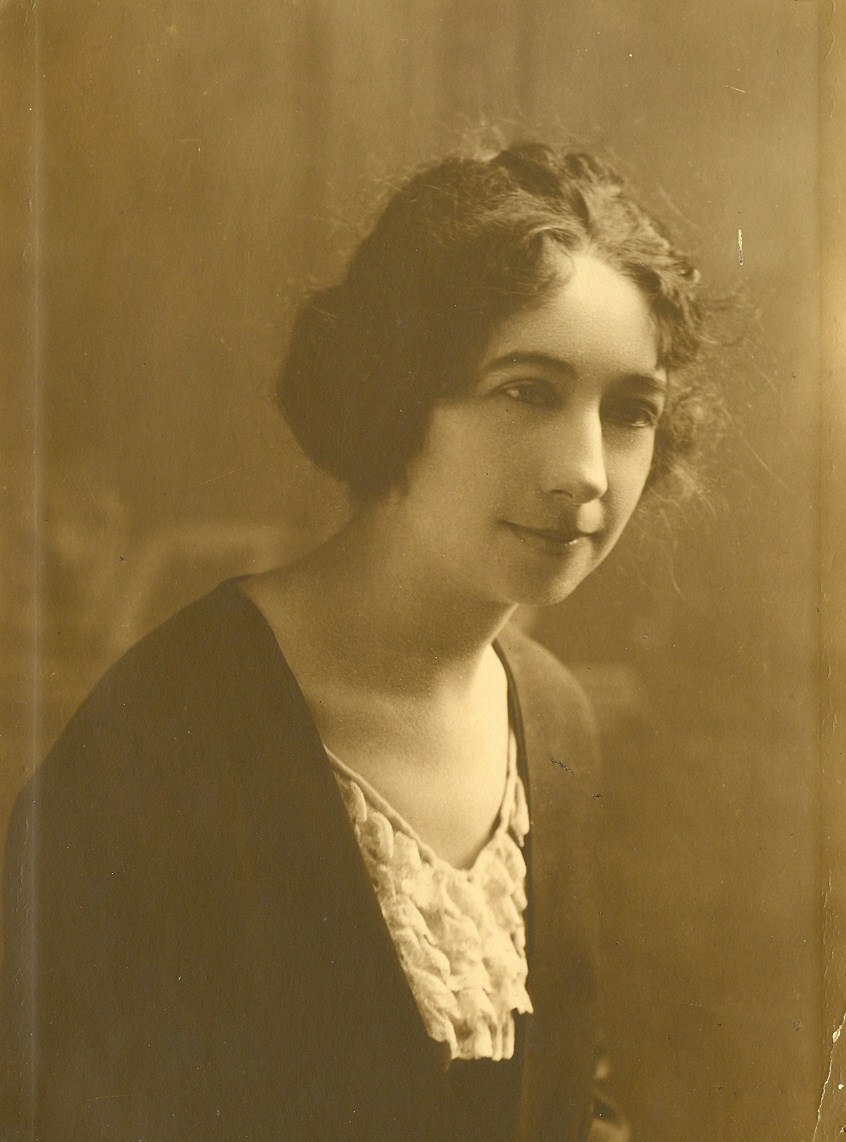
3. Lawrenceburg gave women the vote more than a year before the ratification of the 19th Amendment.
Docia Spann Richardson, the second woman in the history of Lawrence County to cast her vote–a full year before the passage of the 19th amendment. Source: Ancestry.com.
Lawrenceburg first allowed women to vote in city elections in May 1919, more than a year before the ratification of the 19th Amendment ensured women’s suffrage nationwide. According to Our Hometown by Carpenter and Carter, the first woman to exercise this right in Lawrenceburg was Mrs. Etta Stockard Crawford, of whom we could unfortunately not find a picture at this time. Pictured here is Miss Docia Spann, who was the second woman in Lawrence County’s history to cast her ballot as a registered voter in 1919.[14] At the time of the election, Miss Spann was 27 years old. Some locals may remember her by her married name, Mrs. Docia Richardson. She died in 1986, at the age of 94.[15]
2. We had one of the first radio stations in the state of Tennessee.
On November 21, 1922, James D. Vaughan—the father of Southern Gospel music, and mayor of Lawrenceburg—obtained an FCC license to broadcast a radio signal, marking the birth of WOAN Lawrenceburg. WOAN featured a variety of music, but the spotlight of the station’s programming was on the Vaughan Quartet and advertising for Vaughan’s school of music. According to Carpenter and Carter, WOAN was the third radio station in the state of Tennessee to obtain an FCC license, and it predated Nashville’s famous WSM station by three years.[16]
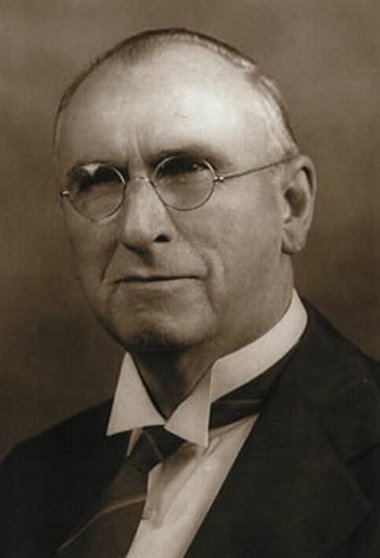
1. Lawrence County is the birthplace of an entire genre of music.
James D. Vaughan, the father of Southern Gospel music. Source: AL.com.
But Vaughan’s radio station was only part of the story. By pioneering the concept of “four male voices singing Gospel songs written for mixed voices,” Vaughan became the undisputed father of Southern Gospel music, and the Public Square of Lawrenceburg became its birthplace.[17] In 1902, Vaughan moved to Lawrenceburg and began printing and selling hymnals. As his publishing business steadily grew, he diversified. In 1910, he assembled the first-ever Southern Gospel quartet, leading to the creation of the Vaughan School of Music in 1911.
His quartets traveled the country, selling hymnals and drawing talented young voices to the school of music wherever they went. In 1921, he founded Vaughan Phonograph Records—one of the first record labels to be owned and operated completely in the South—followed by the previously-mentioned WOAN radio station in 1922.[18] Vaughan’s commitment to sacred music lives on today in the James D. Vaughan Museum, which is in the Suntrust building on the south end of the Public Square, and in the Quartet Festival that bears his name.
Sources
Alford, Bobby. History of Lawrence County: Book Two. Lawrenceburg, TN: Bobby Alford.
Carpenter, Viola, and Mary M. Carter. Our Hometown: Lawrenceburg, Tennessee, The Crossroads of Dixie. Lawrenceburg, TN: Bobby Alford, 1986.
Crockett, David. A Narrative of the Life of David Crockett of the State of Tennessee. Philadelphia: E.L. Cary and A. Hart, 1834.
Compiled Service Records of Volunteer Soldiers Who Served During the Mexican War in Organizations from the State of Tennessee. Micropublication M638, RG 94. Washington: National Archives. Digital image, Fold3.com (http://www.fold3.com/image/245/271906815/ : accessed 2 Mar 2014).
Descendants of Mexican War Veterans, “Honoring Our Ancestors: U.S.-Mexican War Monuments and Memorials.” Last modified June 24, 2013. Accessed February 28, 2014. http://www.dmwv.org/honoring/monmem.htm.
Evers, Mary Sofia. “St. Joseph Catholic Church, St. Joseph, TN.” The Heritage of Lawrence County, Tennessee. Waynesville, NC: County Heritage, Inc., 2008.
Find A Grave, “Memorial page for Docia Spann Richardson (8 Jan 1892-2 Dec 1986).” Last modified 15 May 2012. Accessed 2 March 2014. Findagrave Memorial #90190901.
Gordon, John D., Bobby Boyd, Mark A. Rose, and Jason B. Wright. National Weather Service Forecast Office, “The Forgotten F5: The Lawrence County Supercell during the Middle Tennessee Tornado Outbreak of April 16, 1998.” Last modified November 24, 2009. Accessed February 28, 2014. http://www.srh.noaa.gov/ohx/?n=forgottenf5.
Ikard, Robert W. No More Social Lynchings. Franklin, TN: Hillsboro Press, 1997.
Niedergeses, Kathy. “The Mexican War and the Lawrenceburg Blues.” The Heritage of Lawrence County, Tennessee. Waynesville, NC: County Heritage, Inc., 2008.
Van West, Carroll. American Association for State and Local History, “The Tennessee Encyclopedia of History and Culture.” Last modified January 1, 2010. Accessed March 2, 2014. http://tennesseeencyclopedia.net/entry.php?rec=296.
[1] Estha Cole, Places in Lawrence County, Tennessee, Then and Now.
[2] John D. Gordon, Bobby Boyd, Mark A. Rose, and Jason B. Wright. National Weather Service Forecast Office, “The Forgotten F5: The Lawrence County Supercell during the Middle Tennessee Tornado Outbreak of April 16, 1998.” Last modified November 24, 2009. Accessed February 28, 2014. http://www.srh.noaa.gov/ohx/?n=forgottenf5.
[4] W.B. Allen, compiled military record (captain, Company M, 1st Tennessee Infantry Regiment), Compiled Service Records of Volunteer Soldiers Who Served During the Mexican War in Organizations from Tennessee, M638 (Washington: National Archives), RG 94. Digital image, Fold3.com (http://www.fold3.com/image/245/271906815/ : accessed 2 Mar 2014).
[5] Kathy Niedergeses. “The Mexican War and the Lawrenceburg Blues.” The Heritage of Lawrence County, Tennessee (2008): 38.
[6] Descendants of Mexican War Veterans, “Honoring Our Ancestors: U.S.-Mexican War Monuments and Memorials.” Last modified 24 June 2013. Accessed 28 Feb 2014. http://www.dmwv.org/honoring/monmem.htm.
[7] David Crockett, A Narrative of the Life of David Crockett of the State of Tennessee, (Philadelphia: E.L. Cary and A. Hart, 1834). 71.
[8] Ibid., 72.
[9] Mary Sofia Evers. “St. Joseph Catholic Church, St. Joseph, TN.” The Heritage of Lawrence County, Tennessee. Waynesville, NC: County Heritage, Inc., 2008. 36-37.
[11] Robert W. Ikard, No More Social Lynchings, (Franklin, TN: Hillsboro Press, 1997): 79-104.
[12] Carroll Van West. American Association for State and Local History, “The Tennessee Encyclopedia of History and Culture.” Last modified January 1, 2010. Accessed March 2, 2014. http://tennesseeencyclopedia.net/entry.php?rec=296.
[13] Bobby Alford, History of Lawrence County: Book Two, (Lawrenceburg, TN: Bobby Alford), 15.
[14] Viola Carpenter, and Mary M. Carter, Our Hometown: Lawrenceburg, Tennessee, The Crossroads of Dixie, (Lawrenceburg, TN: Bobby Alford, 1986), 124.
[15] Find A Grave, “Memorial page for Docia Spann Richardson (8 Jan 1892-2 Dec 1986).” Last modified 15 May 2012. Accessed 2 March 2014. Findagrave Memorial #90190901.
[16] Viola Carpenter, and Mary M. Carter, Our Hometown: Lawrenceburg, Tennessee, The Crossroads of Dixie, (Lawrenceburg, TN: Bobby Alford, 1986), 135-136.
A Snapshot of Slavery in Lawrence County, Tennessee
By Clint Alley
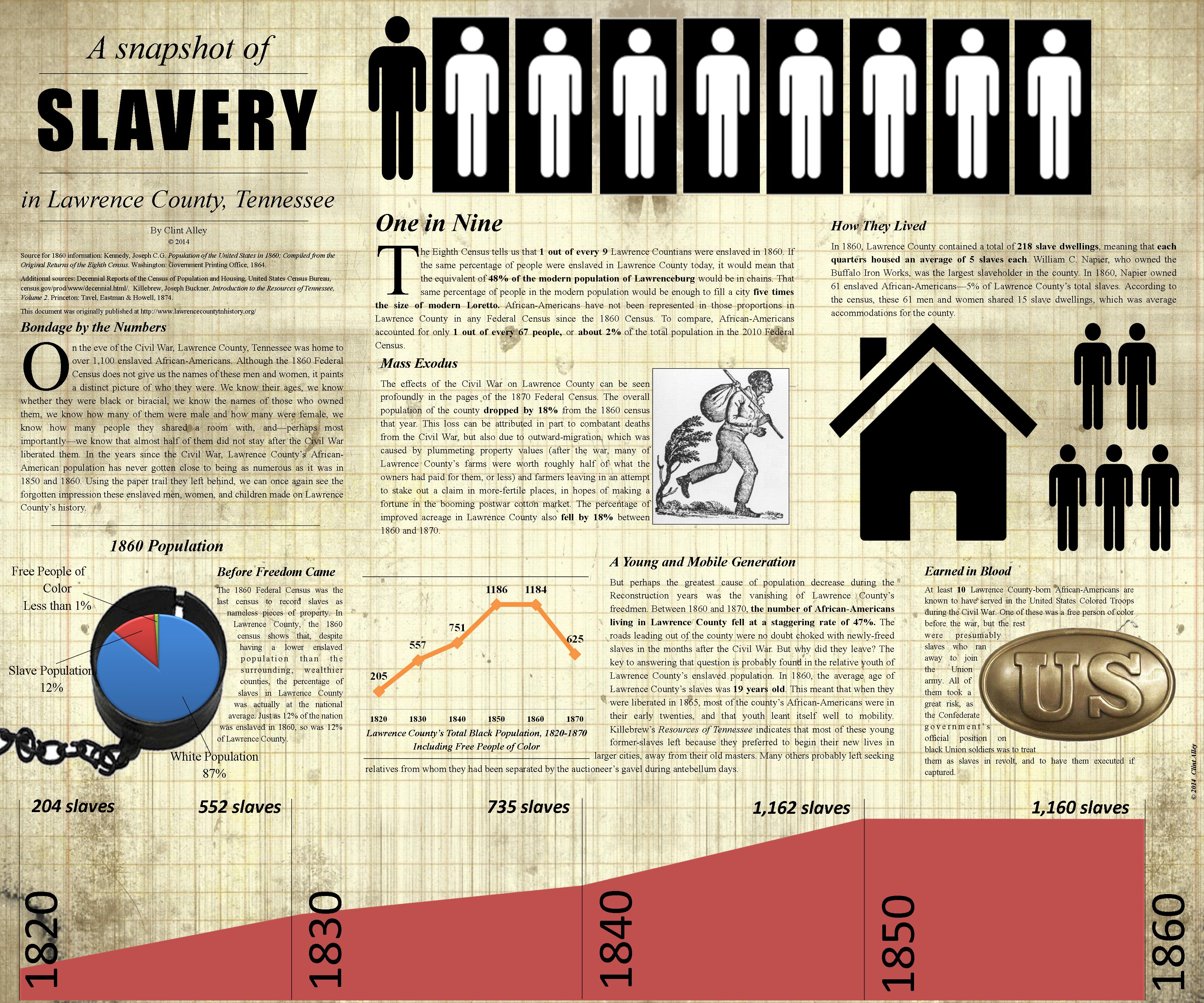
The Federal Census serves as a snapshot of community life across America. One has been taken in Lawrence County every ten years since 1820. Genealogists rely on census data to trace family migration patterns, show names and vital data of ancestors, and to help solve puzzles left by gaps in other records. For this reason, they are fascinating and useful documents. But the data returned from these population surveys can also give us a wonderful sense of context for what life was like in Lawrence County during those ten-year intervals.
I chose to use data from the 1860 census to tell the story of a group of people whose history is often overlooked or glossed-over in our community: African-American slaves. We know that they were here, but because they left few written records of their existence, we know scarcely little about them.
Census data can’t complete the puzzle. It can’t tell us exactly who these men and women were, or exactly what became of them. But, it can give us a great deal of context for what life was really like for them here. How many of them were there? How old were they? What were their living conditions? What happened to them after their liberation? This infographic seeks to answer some of those questions using data collected from the 1860 Federal Census.
Caleb Davis: A Unionist Black Sheep in Civil War Lawrenceburg
By Clint Alley
A County Divided
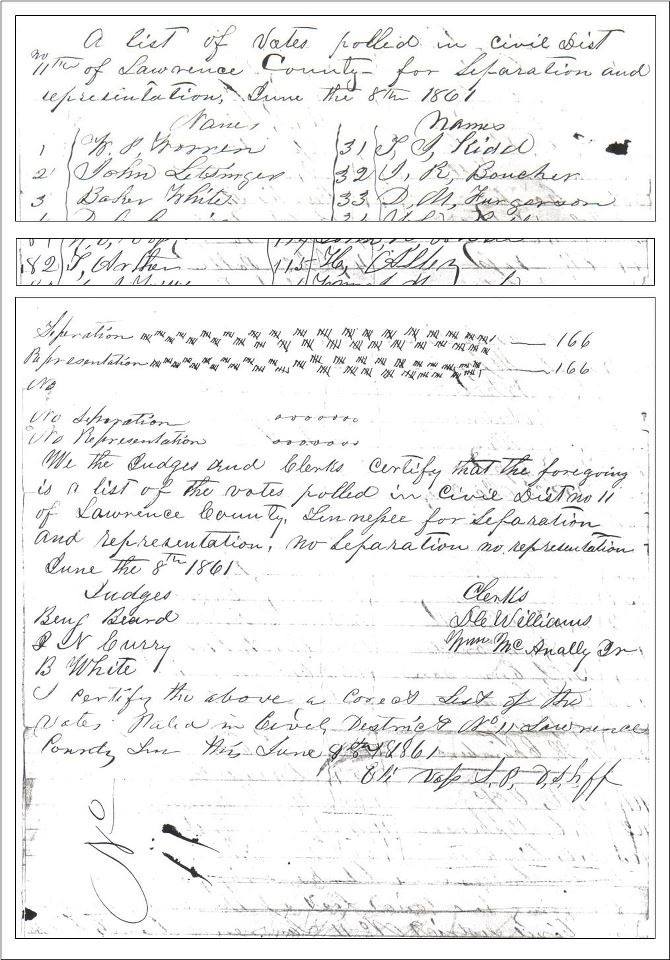
Not all Lawrence Countians supported the cause of the Confederacy during the Civil War. For a variety of reasons, many native southerners chose to remain loyal to the Union despite the prevailing sympathies of their neighbors. Although the majority of those sympathies were enthusiastically pro-Confederate when Tennessee voted to leave the Union after the shelling of Fort Sumter,[1] many early supporters of the secession movement began to question their loyalties when the realities of war began crashing down around them.[2]
For others, their loyalty to the United States government was never in doubt, only their outward expression of it. According to Alfred O. Williams, a closet unionist and owner of the Marcella Falls cotton mill during the Civil War, many of Lawrence County’s loyalists voted for secession because “it was unsafe to vote otherwise.”[3] In his Southern Claims Commission testimony, Williams related the tale of the only man in his district who openly voted against secession. “There was only one vote against separation,” said Williams, “and that man was so threatened that he had to finally leave and join the Federal Army.”[4]
A Slaveholding Unionist?
One prominent local unionist was Caleb B. Davis. Before the Civil War, Davis was an attorney who lived “on a hill at the west end of town.”[5] He was 44 years old in the 1860 census.[6] He had a law firm in Lawrenceburg with partner Thomas H. Paine (who would go on to serve in Tennessee’s Confederate legislature, raise a company of Lawrence Countians for the Confederate cavalry and, after the war, become a pioneer of public education in Tennessee).[7] And it may come as a shock to some that Davis—despite his self-ascribed strong unionist sympathies—was also a slaveholder. In 1860, Davis was the owner of a 43-year-old female and a 7-year-old male slave, respectively.[8]
Davis’s position as a slaveholder underlies the complex nature of the Civil War. For the sake of curricular expediency, most Americans have been conditioned by elementary school textbooks to believe that all slave-owners were supporters of the Confederacy and all non-slave-owners were supporters of the Union. However, as the life of Caleb Davis proves, the Civil War was not always a matter of black and white. Just as many non-slaveholding northerners supported the Confederacy’s efforts to leave the Union, many slaveholding southerners (like Davis) supported the Union’s efforts to keep the South as part of the United States. In his Southern Claims Commission deposition, Davis explained that, at first, although he did not vote for secession, he was “a rebel and made fine speeches for the rebellion.”[9] While he felt that the southern states had legitimate grievances with the Federal government, he believed that, rather than commence an armed revolution, they should have fought “for their rights in the Union under the Constitution.”[10]
The Lawyer Takes the Oath
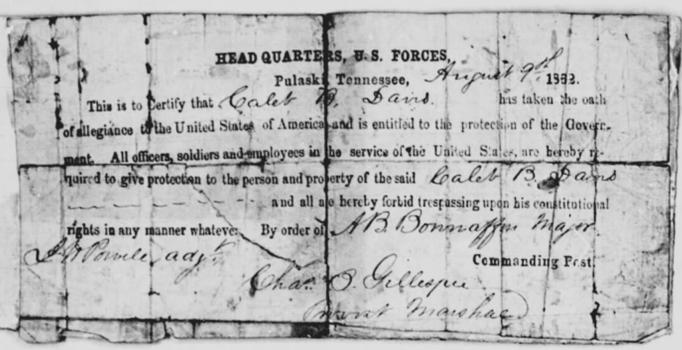
This torn and tattered page is a copy of Caleb Davis’s original Oath of Allegiance to the Union, as sworn before Union officers in Pulaski on August 9, 1862. Source: Caleb B. Davis Southern Claims Commission file.
The courts of Lawrence County continued to operate as normal from the time of secession until the coming of Union troops disrupted the normal dispensation of law and order. Davis the attorney became Davis the blacksmith when the war closed the courts. By December 1861, Davis had a change of heart about the rebellion, and—despite his wartime retirement from the bar—his neighbor, William P.H. Turner testified that Davis continued to make occasional public speeches which became increasingly “in favor of peace and the Union” at that time, and that he became known in the county as a “Union man.”[11] After the United States Congress approved the administering of the Ironclad Oath of allegiance to the Union in July 1862, Davis was quick to comply. On August 9, 1862, he traveled to the Union army headquarters in Pulaski to take the oath, becoming one of the first residents of Lawrence County to do so.
Loyalty Displayed and Rewarded
Turner, his neighbor, testified that Davis suffered at the hands of local authorities and Confederate officers for taking the oath. Davis, himself, claimed that he was forced to hide in the woods near Lawrenceburg for three days in 1863 while being hunted by men under the command of Confederate captain—and fellow Lawrence Countian—Lewis M. Kirk, a guerilla leader whose fierce treatment of Unionists was infamous among his enemies. Davis also claimed to have adamantly refused to do blacksmith work for a group of Confederate soldiers who tried to force him. [12] But Davis’s loyalty to the Union cause extended beyond acts of defiance to his Confederate neighbors. According to his Southern Claims Commission deposition, Davis and his wife spent seven weeks nursing a sick Union soldier in his own home and at his own expense. When the soldier succumbed to his illness, Davis built the coffin and buried the man, himself, presumably on his own property.[13]
General Andrew Jackson Smith, of the Union Army’s XVI Corps. Davis claimed that Smith’s men were responsible for requisitioning $1,300 worth of property from his home in January 1865, when they encamped on his land. Source: Civil War Trust.
However, in a move that many local Confederate sympathizers no doubt found wrought with poetic justice, Union troops under command of General A.J. Smith confiscated over $1,300 worth of Davis’s property—500 cords of wood, a seven-year-old mare, and 200 pounds of bacon, to name some of it—when a force of 15,000 of them camped in Lawrenceburg and on his land on January 10, 1865 while pursuing General Hood after the Battle of Nashville.[14] His neighbors watched as unhusked corn was taken from his corn crib, his new fence rails were burned for fuel in the brisk January cold, and his gray mare was taken from his stable. According to the Westegg Inflation Calculator, a loss of $1,300 in 1865 would be akin to losing $19,000 today. The loss represented 1/3 of Davis’s total 1860 property value.[15]
Postwar Activities
At the war’s end, according to testimony from his friend T.H. Gibbs, Davis “sought and accepted a position as Freedmen’s Bureau agent.” But, after all that he had suffered in the name of the Union, the Federal government refused to repay him the $1,300 he lost to them in 1865. His claim file says simply “as he was not loyal throughout the whole war—claim rejected.”[16]
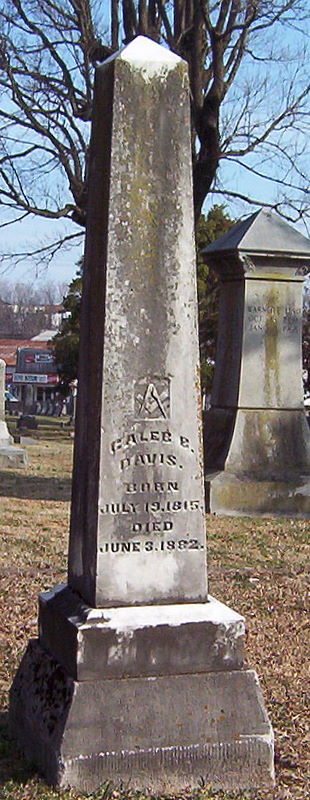
Davis’s wartime activities illustrate the truth that the Civil War was perhaps at its worst on the local level, where entire communities were torn apart. Despite Davis’s prior good standing in the community, no doubt many of his Confederate neighbors were loathe to forgive him for his wartime position. And so, despised by his neighbors and abandoned by the government he loved, Davis moved to McMinnville in Warren County, Tennessee, where he lived out his days until his death on June 3, 1882.[17]
Sources
Carpenter, Viola, and Mary M. Carter. Our Hometown: Lawrenceburg, Tennessee, The Crossroads of Dixie. Lawrenceburg, TN: Bobby Alford, 1986.
Davis, Caleb B. (Lawrence Co., Tennessee) claim, office no. 737, case no. 13130, Barred and Disallowed Case Files, Southern Claims Commission, 1871-1880; digital images, “Southern Claims – Barred and Disallowed,” Fold3.com [accessed 17 Feb 2014].
Derby, George, and James Terry White. The National Cyclopedia of American Biography. Vol. 8. New York: James T. White & Company, 1898.
Find A Grave, “Memorial Page for Caleb B. Davis (19 Jul 1815-3 Jun 1882).” Last modified April 07, 2012. Accessed 17 February 2014. Findagrave Memorial #88201230.
Tennessee. Lawrence County. Separation and Representation referendum returns, 8 June 1861; Lawrence County Archives, Leoma, Tennessee.
Tennessee. Lawrence County. 1860 U.S. census, population schedule. Micropublication M653_1260, pg. 451, image 245. Washington: National Archives. Digital image, Ancestry.com [accessed 17 Feb 2014].
Tennessee. Lawrence County. 1860 U.S. census, slave schedule. Micropublication M653, 8th civil district, page 4. Washington: National Archives. Digital image, Ancestry.com [accessed 17 Feb 2014].
Williams, Alfred O. (Lawrence Co., Tennessee) claim, office no. 1431, case no. 13983, Barred and Disallowed Case Files, Southern Claims Commission, 1871-1880; digital images, “Southern Claims – Barred and Disallowed,” Fold3.com [accessed 17 Feb 2014].
[1] A full 94% of Lawrence County’s voters voted to leave the Union and join the Confederacy in June 1861.
[2] Separation and Representation referendum returns, 8 June 1861; Lawrence County Archives, Leoma, Tennessee.
[3] Alfred O. Williams (Lawrence Co., Tennessee) claim, office no. 1431, case no. 13983, Barred and Disallowed Case Files, Southern Claims Commission, 1871-1880; digital images, “Southern Claims – Barred and Disallowed,” Fold3.com [accessed 17 Feb 2014].
[4] Ibid.
[5] Viola Carpenter, and Mary M. Carter, Our Hometown: Lawrenceburg, Tennessee, The Crossroads of Dixie, (Lawrenceburg, TN: Bobby Alford, 1986), 241.
[6] C.B. Davis household, 1860 U.S. census, Lawrence County, Tennessee, population schedule, 8th civil district, Lawrenceburg post office, page 25, dwelling 179, family 167; National Archives micropublication M653_1260; digital image, Ancestry.com [accessed 17 Feb 2014].
[7] George Derby, and James Terry White, “The National Cyclopedia of American Biography,” Vol. 8, (New York: James T. White & Company, 1898), 261.
[8] C.B. Davis, 1860 U.S. census, Lawrence County, Tennessee, slave schedule, 8th civil district, page 4, lines 7-8; National Archives micropublication M653; digital image, Ancestry.com [accessed 17 Feb 2014].
[9] Caleb B. Davis (Lawrence Co., Tennessee) claim, office no. 737, case no. 13130, Barred and Disallowed Case Files, Southern Claims Commission, 1871-1880; digital images, “Southern Claims – Barred and Disallowed,” Fold3.com [accessed 17 Feb 2014].
[10] Ibid.
[11] Ibid.
[12] Ibid.
[13] Ibid.
[14] Ibid.
[15] C.B. Davis household, 1860 U.S. census, Lawrence County, Tennessee, population schedule, 8th civil district, Lawrenceburg post office, page 25, dwelling 179, family 167; National Archives micropublication M653_1260; digital image, Ancestry.com [accessed 17 Feb 2014].
[16] Caleb B. Davis (Lawrence Co., Tennessee) claim, office no. 737, case no. 13130, Barred and Disallowed Case Files, Southern Claims Commission, 1871-1880; digital images, “Southern Claims – Barred and Disallowed,” Fold3.com [accessed 17 Feb 2014].
[17] Find A Grave, “Memorial Page for Caleb B. Davis (19 Jul 1815-3 Jun 1882).” Last modified April 07, 2012. Accessed February 17, 2014. Findagrave Memorial #88201230
Williamson County, to the north of Lawrence, has been the location of an unusually high number of mastodon finds for many years. Since 1977 alone, paleontologists have discovered portions of the skeletons of four of the mighty beasts at the Coats-Hines Site, near the Cool Springs Galleria. The finds are especially important because they are some of the only mastodon skeletons east of the Mississippi River which show direct evidence of hunting by Paleoindians.
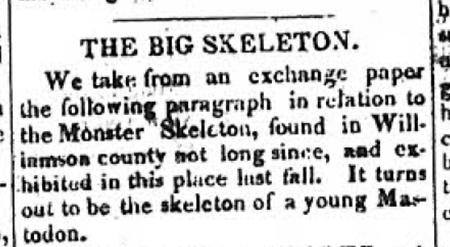
According to this blurb from the April 1, 1846 edition of the Lawrenceburg ‘Academist,’ however, the mastodon finds in Williamson County go back much farther than 1977. In the autumn of 1845, one such mastodon skeleton from Williamson County was displayed in Lawrenceburg.
According to the article, the collection of giant bones was billed as a ‘Monster Skeleton’ during its stay in Lawrenceburg, no doubt to excite the minds of the curious. Scientists properly identified it as the remains of a mastodon in early 1846, after it had left Lawrenceburg.







 Lawrence County History Trivia