The Hunter and the Witch

As schoolchildren, many of us learned the tale of the Bell Witch of Adams, Tennessee. It is a timeless piece of state folklore. But did you know that Lawrence County is said to have had its own local witch in the county’s early days?

According to a 1915 Lawrence ‘Democrat’ article, “it was believed that there were witches in the community” when Lawrence County was first being settled in the late 1810s and 1820s. And one hunter believed that he may have killed one.

This hunter related to his friends and neighbors that each time he went hunting, he saw the same large deer, and this deer would leisurely come within a few paces of him. Several times, the hunter fired on the deer at point-blank range, but the deer was never injured, and it only scampered away.

The hunter determined that the deer was not a real deer, but a phantom deer or the spirit of a witch in the form of a deer. To test his theory, he molded a silver bullet and went hunting again.

In the field, the large deer approached him, and the hunter took aim and fired the silver bullet. Only this time, the deer was clearly injured, and limped away into the woods.

The hunter never saw the deer again, but not long after, an old woman of the community fell seriously ill. This woman “had been suspected of witchery” by her neighbors. The nature of the old woman’s illness is said to have been a secret among her neighbors, but soon word spread throughout the county that she had been seriously wounded by a silver bullet.

Lawrence County abounds with tall tales, legends, and ghost stories, and we will be sharing more with you occasionally throughout the month of October.

Posted in Uncategorized | Leave a comment

Going Old School…VERY Old School

The Lawrence County Schools System does its best to ensure that all of the public schools under its jurisdiction have up-to-date textbooks for our county’s students.

But did you know that more than a dozen private schools in Lawrence County are still using a textbook that was first copyrighted in 1879–completely by choice?

The Amish of Lawrence County do not send their children to public schools. The issue of private education and compulsory attendance in schools is what drove many Old Order Amish settlers from other states to Lawrence County.

Unlike some other states, Tennessee allows Amish communities to set up their own parochial schools. These Amish schools begin for children who are seven years old and never go past the 8th grade; the Amish believe that any education past the 8th grade is superfluous to the agricultural lifestyle they lead.

One of the textbooks used by the Amish schools is McGuffy’s Fourth Eclectic Reader, which was a staple in American elementary schools from the late 19th century through the early 20th century, but which was long ago replaced in public schools by more modern readers and textbooks.

McGuffy’s Reader contains brief excerpts of many poems and short stories chosen for younger children to practice reading. Each selection typically teaches a moral or ethical lesson.

Amish education focuses heavily on the basics of reading, writing, and arithmetic. Amish children do not study history or science, and although they speak a dialect known as Pennyslvania Dutch at home, they are exposed to the English language at an early age in order to communicate with their non-Amish neighbors and for business purposes.

The school in this photograph is the Amish school on South Brace Road in Ethridge.

To see the McGuffy’s Fourth Eclectic Reader, follow this Google Books link:

https://tinyurl.com/y3afv9fu

12140565_908119112611750_289791632978637421_n

Posted in Uncategorized | Leave a comment

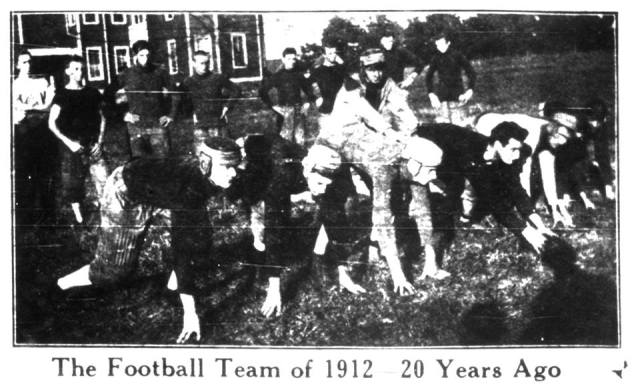
The LCHS Football Team of 1912

Friends, I apologize for my long period of silence. I have been busy finishing the long-delayed and hopefully-anticipated book version of ‘Lawrence County History Trivia.’

But I am pleased to announce that, after a few final edits, I will be sending the final draft to the publisher this week! I will announce online when and where it is available for purchase.

In the meantime, since we are well into football season, please enjoy this photo from the 1912 season of one of Lawrence County High School’s earliest football teams.

LCHS’s first football team was formed in the summer of 1910, and the game was played continuously at LCHS for the next 12 years. At that time, football was controversial and extremely dangerous. The Lawrence ‘Democrat’ in 1912 published a quotation which said that football was “rougher than prize-fighting.”

Players were protected by flimsy pads and helmets in those days, and the rules of the game forbade substitutions, forcing injured players to continue playing. Among the host of dangerous maneuvers which were legal in those days was ‘spearing,’ the act of stopping an opposing player by ‘spearing’ him headfirst.

The LCHS football program was discontinued for a decade following a 1922 matchup with Centerville in which the opposing quarterback suffered a broken neck and died. It was reestablished in 1932, and has continued uninterrupted for 83 years.

12107013_904999476257047_8534101292231730632_n

Posted in Uncategorized | Leave a comment

Tied to the Whipping Post

In Lawrence County’s early days, people convicted of petty theft were sometimes whipped in public as punishment.

Crime and punishment were quite different in those days. Some of the most common offenses in Lawrence County’s first years were gambling and debt. In the August 1819 session of the circuit court, four men were fined $5.00 each after being caught gambling.

Similar rulings occurred that year against men found guilty of not paying their debts.

Patrick Gillespie was found guilty of petit larceny on October 6, 1825. As punishment, he received “twenty-five lashes on his bare back.”

When T.J. Lindsey was found guilty that same year of marrying a second time in Illinois while his first wife was still alive in Tennessee, his wife Nancy was granted a divorce from him.

In 1833, John Brandon became the first Lawrence Countian to be sentenced to the state penitentiary for horse-theft. For that crime, Brandon received a sentence of three years in the new state prison in Nashville.

In 1835, thirteen men were found guilty of gambling, and each was ordered to pay the $5.00 fine for that offense. (Five dollars in 1835 would be about $113 today, after adjustment for inflation).

T.J. Deavenport was found guilty of betting on elections in 1839, and ordered to pay a fine of $5.00, although, unfortunately, the court record does not tell us if Deavenport’s money was riding on the Whig candidate or the Democratic candidate that year.

Posted in Uncategorized | Leave a comment

The Eyeless Fish of Depot Street

Are there eyeless fish swimming deep beneath Depot Street in Lawrenceburg?

There certainly were in 1891.

That October, future mayor of Lawrenceburg J.W. Garrett dug a well on some property he owned on Depot Street. At that time, there was not much north of Depot Street but rolling fields.

The Lawrence ‘Democrat’ explained that, after much hard digging, Garrett struck “a cave through which runs a large stream of water.” This subterranean river quickly filled the bottom of Garrett’s well, and despite the fact that a steam pump labored over the site for eleven hours, “the pool at the bottom of the well was not lowered a fraction,” and everyone was relieved to find that plentiful water could be had at the north end of town.

Garrett’s well, however, contained something besides water.

Not long after striking water, Garrett began to catch eyeless fish in the well, which is a good indicator that he had, indeed, struck a cave. The ‘Democrat’ put it this way:

“Jim Garrett will take pleasure in describing the blind fish taken out of his well at the depot, or he will show you the fish if he has any of them on hand. Being eyeless, they are readily caught with the hand.”

Most such blind fish are found in caves, like the Spring Cavefish, which was first discovered in a well like Garrett’s in Lebanon, Tennessee.

As we have mentioned before, there exist many old legends of a giant cave beneath downtown Lawrenceburg. As late as the 1960s, some old men claimed that they had gone into the cave as boys in the late 1800s from its entrance southeast of the Cumberland Presbyterian Church, and many such “old-timers” believed that the cave stretched from there all the way to Mile Crossing, where North Military Street crosses the railroad tracks.

Posted in Uncategorized | Leave a comment

The Legend of Granddaddy Creek

Have you ever wondered where the name ‘Granddaddy Creek’ and ‘Granddaddy Road’ came from? We may never know for sure, but early Lawrence County newspaper writer W.P. Oliver had a fanciful explanation for it in 1906.

That spring, Oliver (who wrote under the pen-name of ‘Fleetwood’) wrote that a great tragic love story lay behind Granddaddy Creek and the naming of it. According to Oliver, in about 1749, a Scottish hermit came to the rough frontier country that would one day become western Lawrence County.

As the story goes, the hermit made his home in a large cave at the head of a beautiful stream. At the time, this area was deep in the heart of Indian territory, but the hermit was friendly with the Indians, and he never caused anyone any trouble. He often went north for weeks at a time to get supplies and ammunition, and two or three times a year, he would go west to trade his furs at a trading post in the modern location of Clifton.

One day, the hermit brought a beautiful young woman back with him from his trip north, presumably to be his wife. The hermit told the young woman to call him Granddaddy, and he said that one day the stream which flowed near his cave would be known as ‘Granddaddy Creek’ in memory of him.

The couple was happy, and the woman loved Granddaddy. But one day, while he was gone to get supplies, a wicked Indian chief named White Eagle rushed the cave with his warriors and kidnapped the beautiful young woman, taking her far away, telling everyone he passed that he was going west to find gold.

When Granddaddy returned to find his young bride had been taken, he vowed revenge, left all of his goods behind in the cave except for his rifle, and rode west to rescue the young woman. He never returned, and no one ever heard from either of them again, but the cave is still in Lawrence County. In 1906, it was “near the Kelso farm,” presumably in Deerfield, and, sure enough, the creek–and now the road that crosses the creek–still bears his name.

How much of this old legend is truth and how much came from the mind of Fleetwood is subject to interpretation. However, he claimed that he heard the tale from some of old folks of the area. Regardless of its accuracy, it makes for a great story!

Posted in Uncategorized | 1 Comment

Heroes of Lawrence County: The Lawrence County Sheriff’s Department

The Lawrence County, Tennessee Sheriff’s Department has been in existence since the county was founded in 1817. But the modern, professional, trained force that protects the people of Lawrence County today is a far cry from the department’s humble beginnings. As this photo of the Lawrence County Sheriff’s Department in 1906 shows, standard uniforms are a relatively new innovation, and it would be impossible for even the best sheriff to preserve the peace today with only four deputies on staff.

Our current sheriff, Jimmy Brown, is the 55th sheriff of Lawrence County, in an unbroken line going back almost 200 years. And just as our county has changed a great deal in those two centuries, so has the job of enforcing its laws.

David Crockett wrote in his autobiography that, before the government of Lawrence County was organized by the state, the settlers of the area had no law, and “so many bad characters began to flock in on us, that we found it necessary to set up a sort of temporary government of our own.”

This “temporary government”–sometimes known as the Shoal Creek Corporation–consisted of several men being chosen as magistrates and constables at an informal public meeting. When Crockett was chosen as one of the magistrates, it was the beginning of his political career.

This system seemed to succeed in establishing law and order in the area. Later, when the county government was officially organized, the men chosen as constables and magistrates were officially commissioned as officers of the local government. At this time, Lawrence County’s first sheriff, Luke Grimes, was elected. Not much is known about Grimes, other than that he served as sheriff for just one year, in 1817.

The county’s first sheriffs definitely had their work cut out for them. When local blacksmith Lewis Kirk shot and killed Thomas Westmoreland on the Square in Lawrenceburg in 1858, the sheriff was Robert J. Kelley. It was Kelley’s duty as sheriff to round up a jury for Kirk’s trial. However, due to the controversial nature of the trial, the men of Lawrence County suddenly became very hard to find when he came to visit.

Sheriff Kelley, after several days of riding across multiple districts, finally reported to the judge that he was unable to raise a jury from Lawrence County. He said that everywhere he went, the eligible men at every home were either suddenly gone to town, helping a neighbor far away, or were simply hiding in the woods. Due to these circumstances, the venue of the trial was changed to Columbia.

Due to limitations in manpower, it was not uncommon in those early days for the sheriff to deputize random citizens on the spot when the need arose. Such was the case in 1876, when Sheriff James K. Garner deputized Circuit Court Clerk John B. Kennedy to help subdue a drunken W.B. Chaffin.

When Sheriff Garner and Kennedy approached Chaffin, Chaffin pulled his pistol and aimed it at the sheriff. Acting fast, Kennedy struck Chaffin with a nearby shovel, a wound which would later kill him. Kennedy was acquitted for his actions in Chaffin’s death.

Sheriff Cleve Weathers, who was murdered in the county jail by an inmate in 1943, is the only Lawrence County sheriff who has ever been killed in the line of duty. But each person who has ever worn the badge of the sheriff’s department has placed his or her life at risk for the safety of our community.

Lawrence County History Trivia is proud to support local law enforcement, and we appreciate the sacrifices our men and women in blue make for us each day.


11988333_887985567958438_8487438341145640873_n

Posted in Uncategorized | Leave a comment

Happy Birthday, Davy!

Happy birthday to Colonel David Crockett, who was born on this day 229 years ago! Crockett began his political career in Lawrence County, where he was elected magistrate, colonel of the county’s militia regiment, and state representative.

David Crockett

This image of the King of the Wild Frontier by S.S. Osgood was personally endorsed by Crockett to be the most accurate one of him ever drawn from life. Source: Wikimedia Commons.

Posted in Uncategorized | Leave a comment

Changing Lives: This Teacher’s 1905 Letter to the Editor will Inspire Educators Today

Has teaching changed much since 1905?

In the spring of that year, one local schoolteacher sent a letter to the editor of the Lawrence ‘Democrat’ explaining the teacher’s role in the community as he saw it, and what behaviors and habits he thought a good teacher should adopt.

The author, J.J.W. Starr, taught school for many years at the Quercus community in northern Lawrence County.

Since we have recently begun a new school year in Lawrence County, I thought our county’s great teachers would enjoy reading an excerpt from this 110-year-old article, which remains surprisingly relevant to the 21st-century classroom.

49800281_2234230089942132_797648364001820672_n

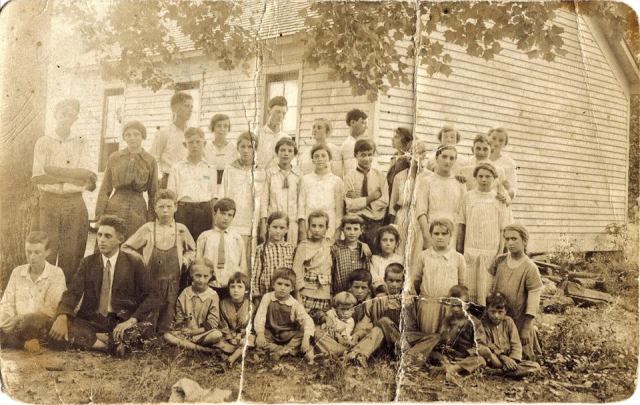
Red Hill School, 1915  Source: Old Jail Museum

“The teacher receives the children at the most plastic period of life, when they are not capable of judging between truth and falsehood, and all he says to or teaches them is accepted as solemn truth, and it moulds their lives for the future.

“In the power for good or evil the teacher is far ahead of the preacher. An immoral man in the pulpit will do far less harm than one behind the teacher’s desk. The teacher’s calling is the noblest and most influential of any, and those who do not so regard it are out of place in the schoolroom.

“The teacher should love his work, and only those who love it should be employed. While in it he should give it his time and strength.

“If he is his own janitor he should be at the schoolhouse at least an hour before school time to have the room comfortable for the pupils when they arrive, and he should always be as polite to them as he expects them to be to him. The whole five days each week should be fully employed in school work, not closing school early on Friday to go home to return late Monday morning. He should always be the first at the school house and the last to leave it, and remain with his pupils during the noon hour.

“He should do all in his power to make the children happy by taking interest in their sports as well as their studies. He should interest them in the current events of the day through newspapers or by other means, and as much as possible he should place new reading matter before them, for children, like adults, soon tire of reading the same thing over and over.

“From the experience of many years I am the decided advocate of newspaper-reading in the schoolroom to make young people intelligent, to expand their minds, and give them something to think of and converse about. In our school work we too often get into ruts and find it hard to get out.”

–From “Our Public Schools” by J.J.W. Starr, Lawrence ‘Democrat,’ May 26, 1905

Posted in Uncategorized | Leave a comment

Heroes of Lawrence County: the Lawrenceburg Fire Department

The Lawrenceburg Fire Department was established in 1898, in the aftermath of a massive blaze which completely destroyed more than 1/4 of the Public Square. The Florence ‘Times’ published that the fire was believed to have been started by an errant cigarette.

In the 19th and early 20th centuries, fire was a real concern. Most homes and businesses were heated by wood- or coal-burning stoves, and practically all cooking was done over the open hearth or, later, on wood-burning ranges. Add all of that to the fact that most structures were shoddily-constructed frame buildings of wood, and you can see why fire was such a scourge to early Lawrence County.

Before there was an organized fire department, the city’s only means of combating fire was for every man in town to keep a bucket ready, and the alarm would be shouted from house to house if fire was spotted.

An example of how this system worked can be seen in how Lawrence County court official William T. Nixon handled such an alarm in 1880. On the evening of March 23, he wrote in his journal, “I went down to see Mrs Edmiston and while there an alarm was raised that old Mrs Johnson was over at schoolhouse and burning up all the wood. I went over but Shff Sanders had got there before I came up and had taken her over to town. She was put in jail on charge of vagrancy and she is now there. She threatens to burn the town.”

And again on December 16, 1882, Nixon wrote, “Today I attended in the office until near 10 O’clock when an alarm of fire was raised which was occasioned by the accidental burning of the Kitchen and smoke house at father Parkes’ old homestead.”

Unfortunately, it took a huge disaster like the 1898 fire for the city to realize that its system of citizens carrying buckets was not sufficient to battle the scourge of fire. While the ashes from that 1898 blaze still smoldered on the Square, city leaders met and agreed to purchase ladders, a fire-bell for the top of the courthouse, and eventually a fire engine.

This photo was made in 1923, and shows the Lawrenceburg Fire Department as it had evolved from 1898, in their leather jackets and helmets, with a modern fire engine to help battle blazes.

We at Lawrence County History Trivia salute all of our county’s brave firemen and other civil servants.

11817156_869830529773942_8088203570995900983_n

Posted in Uncategorized | Leave a comment