
Numbers do, indeed, tell a story. And the story of Lawrence County’s first century is that of a place finding its identity.
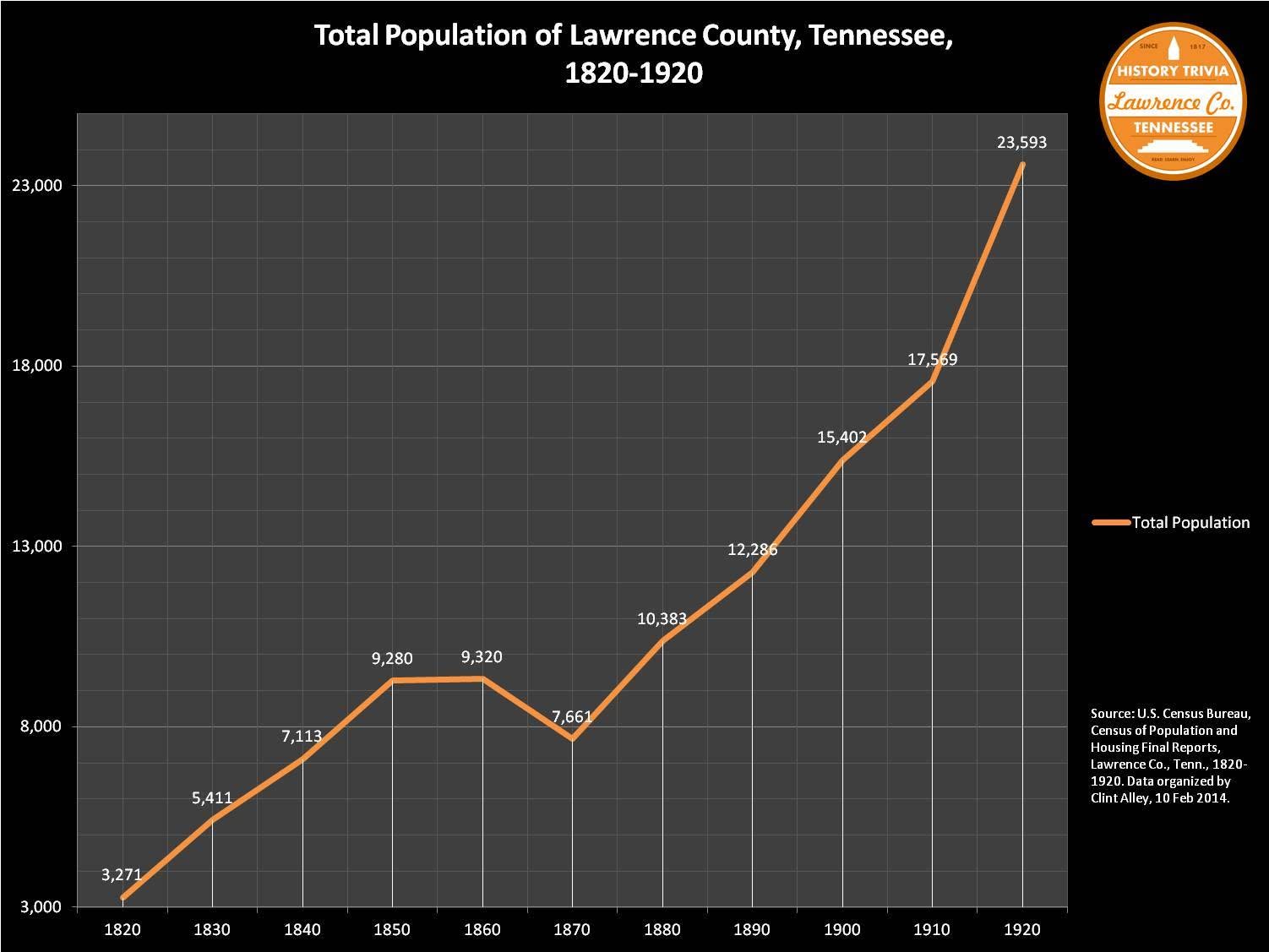
As this graph shows, population growth in the county’s first sixty years was slow and difficult. The major dip in 1870 was the result of the Civil War, which slashed property values, depleted the workforce, and caused many fields to sit fallow and untended for years.
Lawrence County experienced an 18% loss of population in the years following the Civil War–if the same percentage of the county’s population were to leave today, it would be like losing over 80% of the modern inhabitants of Lawrenceburg. According to Killebrew’s ‘Introduction to the Resources of Tennessee, volume 2,’ many Lawrence County farmers were lured to more fertile regions during Reconstruction by the brief postwar boom in cotton production.
The 1870 dip in population is also indicative of the activities of Lawrence County’s newly-freed African-American population. A whopping 47% of the county’s 1860 black population vanished during the decade of the Civil War. After their liberation, many of these freedmen probably hit the road to find loved ones separated by slavery, and more still left to begin their new lives in larger cities. However, recovery was aided in large part by the settlers of the German Catholic Homestead Association, who began to trickle into Lawrence County shortly after the 1870 census was taken.
The arrival of the railroad in 1883 spurred another boom in commerce and settlement, and the first decades of the 20th century saw a wave of immigration from northern Alabama, which helped to settle the sparsely-populated southern half of the county. Lawrence County’s population today is about 47,800, or about 103% of what it was in 1920.


 Lawrence County History Trivia
Pingback: Bringing Local History to the Classroom | Lawrence County History Trivia