
William Simonton was a boy when David Crockett built his gristmill operation on Shoal Creek, at the falls which now bear his name in David Crockett State Park. In 1880, as a 74-year-old man, Simonton recounted some of his memories of Crockett to a correspondent of the Pulaski ‘Citizen.’
At the age of 13, Simonton said that he rode the six miles to Crockett’s mill on horseback, carrying a massive bag of corn. When he reached the mill, he found that it was being operated solely by Elizabeth Crockett, David’s wife.
Simonton goes on to say that Elizabeth–whom he described as a “large, pleasant-faced woman”–took the bag from his horse and ground the corn into cornmeal, herself. She then replaced the bag on his horse and “sent him homeward always with a kind word.”
It is hardly a shock to historians that Simonton found Elizabeth operating the mill alone. David was famously hard to keep at home. His hunting expeditions and political campaigning kept him away for long periods of time, leaving Elizabeth, their children, and their slaves to operate the mill and distillery operation without him.
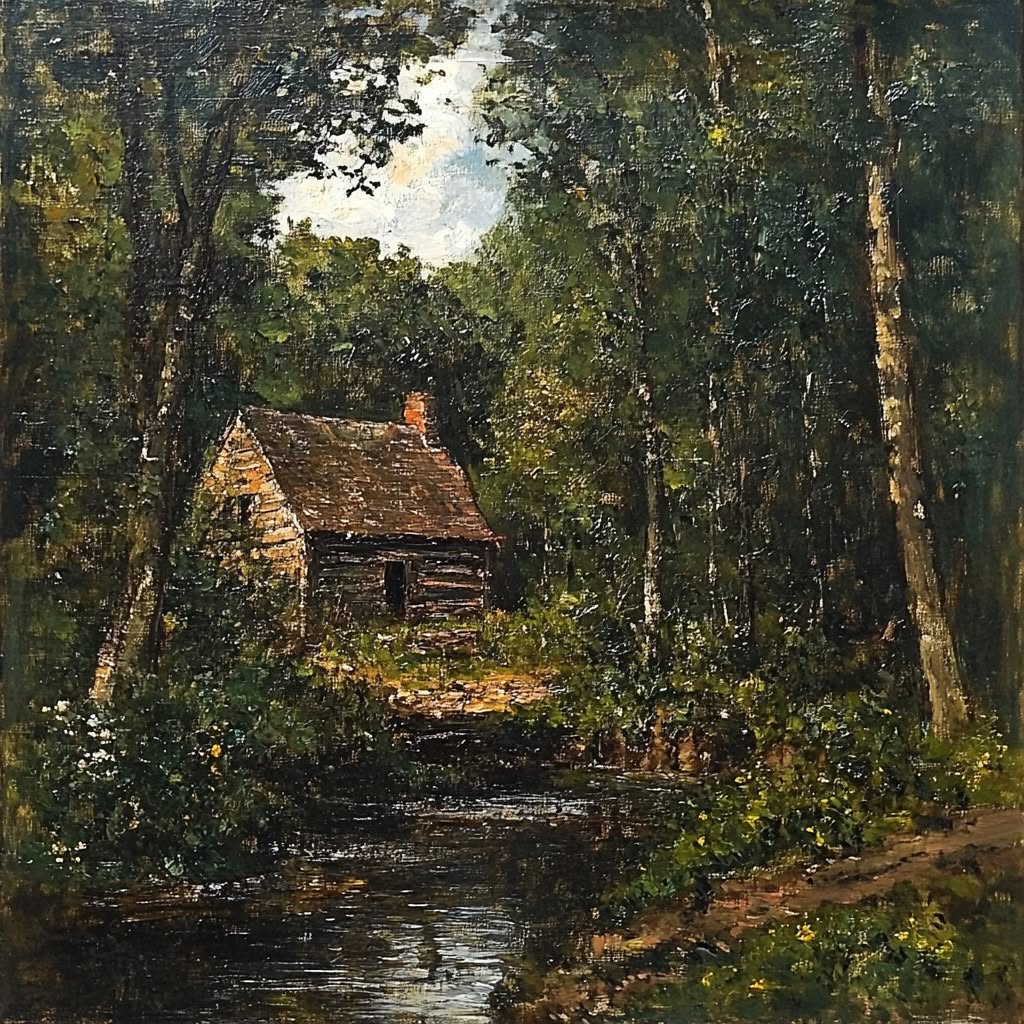
However, despite his wanderlust, Crockett was not completely negligent of his family’s needs. In 1880, a cabin that Simonton claimed Crockett had built near Shoal Creek to shelter his family was still standing as a testament to his provision for their needs–albeit it was standing several miles from where it had originally been built! The same Pualski ‘Citizen’ article tells us that, in addition to knowing Crockett and his family while they lived in Lawrence County, William Simonton had engaged in what is likely the first historic preservation effort in Lawrence County’s history in order to save the cabin for posterity.
With a sense that Crockett’s cabin was of great historic importance, Simonton had dismantled and faithfully reconstructed the Crockett cabin from its original location near Crockett Falls to a place near the Crescent Mill textile factory that Simonton owned a few miles downstream. The correspondent for the ‘Citizen’ writes that “the logs of the cabin show numerous holes for the wooden pins upon which [Crockett] hung the skins of the numerous game he killed.” The chimney, which was built of “slabs, sticks and mud” was still intact and attached to the cabin in 1880.
However, it was also noted that, despite Simonton’s valiant efforts at preservation, the cabin was “rapidly sinking down to dust” after almost 60 years of vacancy.


Pingback: Bringing Local History to the Classroom | Lawrence County History Trivia