
At about 945 feet above sea level, Mt. Ararat Cemetery on Mt. Ararat Road north of Lawrenceburg is not so much on a mountain as it is on a low hill. But voices raised in sacred song once rang out across this place, and the area has a heritage of faith as towering as its biblical namesake.
In 1839, a group of Cumberland Presbyterians established a campground across the road from the current site of the Mt. Ararat Cemetery, about three miles north of Lawrenceburg on the waters of Little Shoal Creek, for the purpose of holding old-fashioned tent revival services known as camp meetings. They named the campground Mt. Ararat, after the mountain where Noah’s Ark came to rest after the Flood in Genesis.
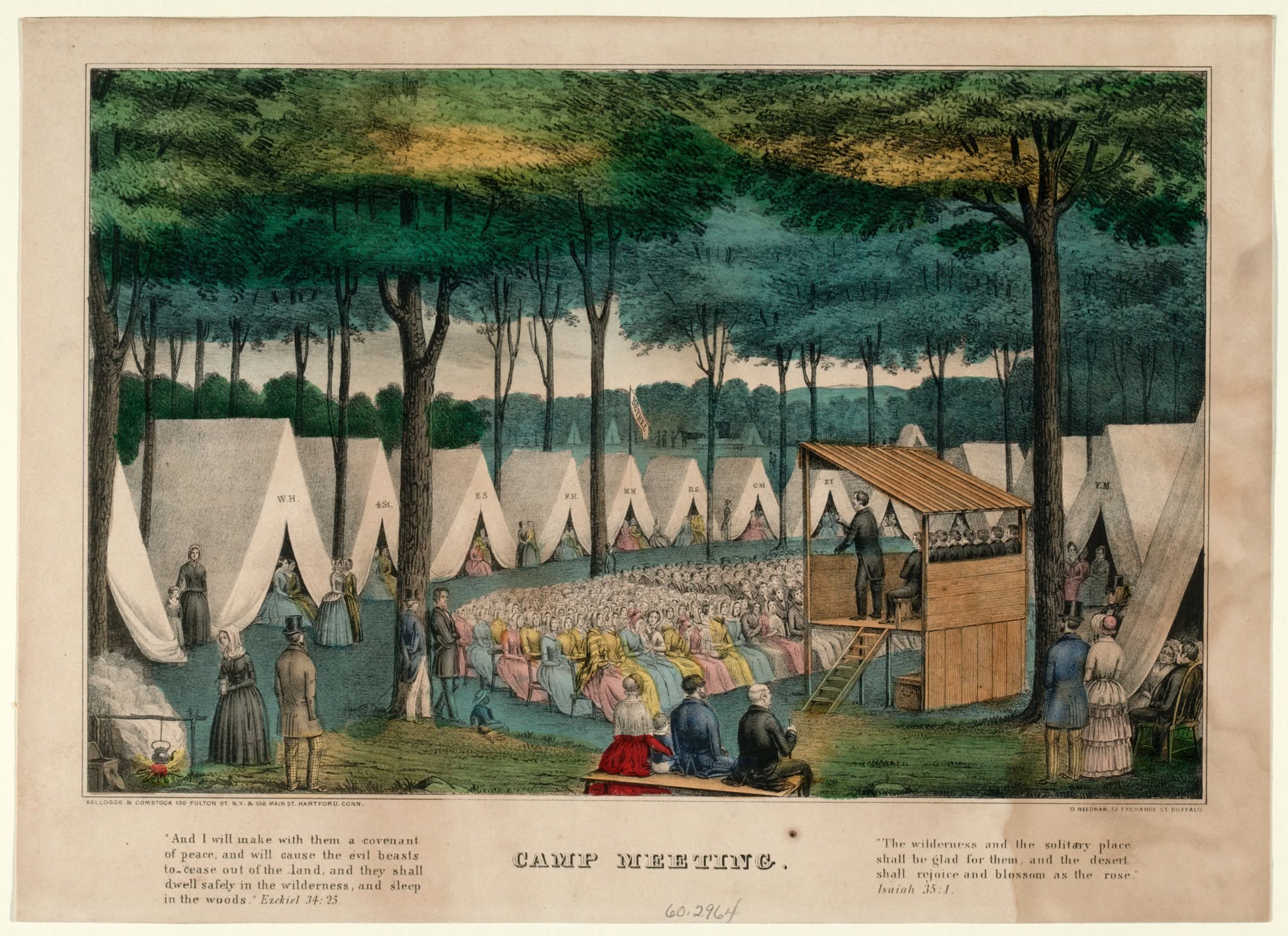
In an era when church buildings were still sparse, camp meetings gave hundreds or sometimes thousands of people the opportunity to hear extended sermons outdoors from itinerant preachers. Often occurring in the late summer, large brush arbors were erected to shade the congregants, and families would camp overnight in tents. These meetings usually lasted a period of three or four days.
Camp meetings were social events as well as times of religious rededication. Many people developed strong attachments to the camp grounds and the memories they made there.
On August 8, 1841, a primitive church building was raised at the Mt. Ararat campground. One of the largest gatherings recorded there was the 1847 funeral of Captain William B. Allen, who died in the Mexican War and to whose memory the Mexican War monument in Lawrenceburg is dedicated. More than 1,000 people attended his funeral.
The church grew to around 100 members until 1861, when the Civil War scattered its membership. By 1875, there were fewer than 15 members left and the original building “rotted and fell to the ground.” Despite the construction of a second church at the site in 1891, no building exists there today.
Across Mt. Ararat Road from the site of the church, however, the place’s sacred nature endures in a quiet burial ground where many of the campground’s original campers are forever laid to rest. The first burial there was in 1840, and today there are more than 370 marked burials in the place.


Pingback: Bringing Local History to the Classroom | Lawrence County History Trivia