
On this day in 1865, one Lawrence County man was promoted to corporal in his artillery unit. Little did he know that he would make the ultimate sacrifice for his country in less than a year’s time.
Born free prior to the Civil War, Silas Smith was one of about a dozen “free people of color” living in Lawrence County in 1860. We don’t know the particulars of his case, but we do know that the 1860 census identifies him as being of mixed racial origins; one of the most likely scenarios is that he was probably the son of a free white mother and an enslaved African-American father.
In that 1860 census, Silas is listed as a 14-year-old free person of color living in the home of wealthy Lawrenceburg attorney and planter Lee M. Bentley.
Little is known of the circumstances surrounding Silas’s life, or why he was living in the household of a wealthy white family (the Bentley’s entire estate in 1860 would be worth over $1.5 million in today’s money).
We do know that Lee M. Bentley represented our county in the General Assembly of the state and that, according to an article of the Lawrenceburg newspaper ‘The Southern Flag,’ he also made a run for the Confederate Congress in 1861, just one year before his untimely death.
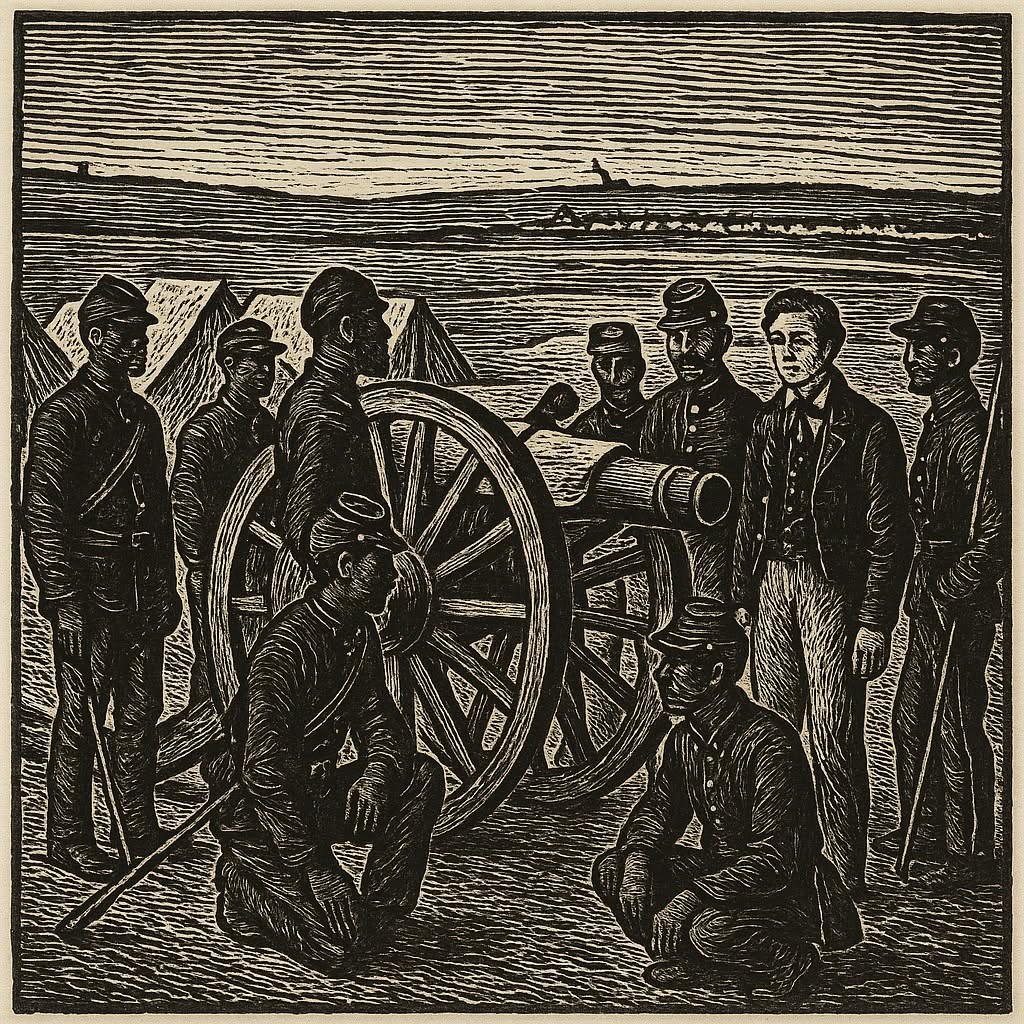
Regardless of Smith’s prewar position in the Bentley household, we know that he joined Battery A of the 2nd Light Artillery of the United States Colored Troops on April 10, 1864. The USCT was the segregated branch of the Union army created after the Emancipation Proclamation so that African-Americans could serve in the armed forces of the Union cause.
Despite Confederate threats to treat them as slaves in revolt if captured, more than 180,000 African-Americans joined the USCT, including ten Lawrence County men, four of whom would pay the ultimate price while serving their country.
Smith served with distinction through the remaining year of the Civil War, being promoted to corporal on May 1, 1865. After the war ended, Smith remained in the army in order to finish his three-year term of enlistment.
Unfortunately, he was admitted to an army hospital in Nashville on Christmas Day, 1865 with smallpox, and died on January 4, 1866.


 Lawrence County History Trivia
Pingback: Bringing Local History to the Classroom | Lawrence County History Trivia