Have you ever pictured the first company of Confederate soldiers leaving Lawrenceburg at the beginning of the Civil War in the spring of 1861? If you have, you probably imagined that they marched off to war beneath the first national Confederate flag, representing the new southern nation that they were off to defend.
If so, you would be wrong.
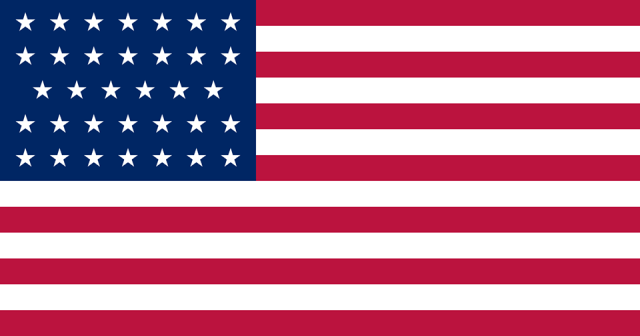
According to Lieutenant John Hildreth–as quoted in an article in the Lawrence ‘Democrat,’ written sometime in the mid-1910s–when the first Confederate troops left Lawrenceburg to serve in the Civil War in 1861, the community indeed made and donated a flag to them, but it was not a Confederate flag.
Despite the company’s clear allegiance to the new Confederacy, Hildreth said that the company flag under which they marched off to war was the Stars and Stripes of the United States.
There are several possible reasons for this confusing footnote in local history. One is that, when the first Confederate troops left Lawrenceburg for training, Tennessee still had not formally seceded from the Union. The state’s voters had rejected secession in a special referendum on February 9.
It wasn’t until May 6, after the Union bombardment of Fort Sumter and Lincoln’s subsequent call for troops, that Tennessee’s legislature passed a resolution to secede from the Union, pending another referendum. That referendum was held on June 8, when the people of Tennessee voted 2-to-1 in favor of secession, making Tennessee the last state to secede.
Meanwhile, in the month-long interlude between the legislature’s resolution and the referendum, Lawrence County men began going to war. Lawrenceburg’s first company of Confederate soldiers left in May, before the state had officially joined the Confederacy. The men who joined the company actually voted on the issue on June 8 while in camp (interestingly enough, Hildreth said that he voted against secession both times, even when in training to join the Confederate army; regardless, he served the South faithfully throughout the entire war).
It is possible, in the confusion surrounding Tennessee’s official status, that the people of Lawrenceburg had no clue what kind of flag to send off to war with their sons, so they may have arrived at the decision by virtue of it being the only flag they knew.
Another explanation may be that the pattern for the new Confederate flag had not yet been seen in Lawrenceburg at the time that the company left for war, and the people of the community again fell back on the only flag design they knew.
The Stars and Stripes flag was presented to the Confederate company in Lawrenceburg with “a beautiful address” by 18-year-old Lily Bentley, who no doubt helped stitch it together. The cloth for the flag was purchased b Flovel Wilson, the owner of the Laurel Hill Cotton Mill.
Whatever the cause for the mismatched flag, the company did not march beneath the flag for long. As it was clear that flying the flag of the Union would cause great confusion on the battlefield, the company commander, Captain Benjamin F. Matthews, sent the flag home to his family after the company was officially mustered into the service of the Confederacy on August 7, 1861.
Although Hildreth did not say whether the company ever got another flag from home, he did describe the company’s first uniforms. To the best of his memory, the company was comprised of about 80 men when it left Lawrenceburg. They were outfitted with uniforms made of “beautiful” gray jean cloth, which he believed had been produced at one of the textile mills between Lawrenceburg and Florence, but which other sources say was produced at the Laurel Hill Cotton Mill.
Hildreth, who was a tailor, cut the uniforms for the men, himself. With “two sewing machines and 20 Southern Lawrence County ladies,” he was able to present the uniforms to the company in just two weeks.







 Lawrence County History Trivia