
Lawrence County in the days of David Crockett was, indeed, the wild frontier–and that applied to the wild men who lived here as well as the wild animals.
According to the Annual Report of the Tennessee Judiciary for 2022-2023, the top five most common filings in criminal court in modern Lawrence County are, from most to least, probation violation, drugs, burglary/theft, assault, and “other motor vehicle offenses.”
While to some extent it is difficult to compare modern crime to crime two centuries ago, our earliest court records paint a picture of Lawrence County as a sparsely-populated land roamed by wolves and quick-tempered men.
The Court of Pleas and Quarter Sessions was Lawrence County’s first local source of justice. Comprised of the justices of the peace assembled together, they initially dealt with all manner of judicial business. The minutes of their first five years of activity have been transcribed and are available for free at familysearch.org.
In the late 1810s and early 1820s, Lawrence County’s population density was only about 5 people per square mile. Despite the isolation of frontier life, people apparently fought each other frequently in early Lawrence County. One of the most common charges brought before the court was assault and battery. In fact, the word “assault” appears 85 times in the minutes of those first five years.
Following close behind assault, the term “affray” appears 68 times in those early minutes. An affray is a particularly public fight that disturbs the peace. Given the frequent fighting that seemed to be happening in early Lawrence County, it should probably not be surprising that the term “trespass” appears 23 times in the minutes.
Roughly 9 cases of bootlegging–or “retailing spiritous liquors without a license”–appear in the minutes, as well as 4 or 5 cases of “bastardy,” which was the crime of fathering a child out of wedlock. This charge was essentially a 19th-century means of forcing a man to pay child support.
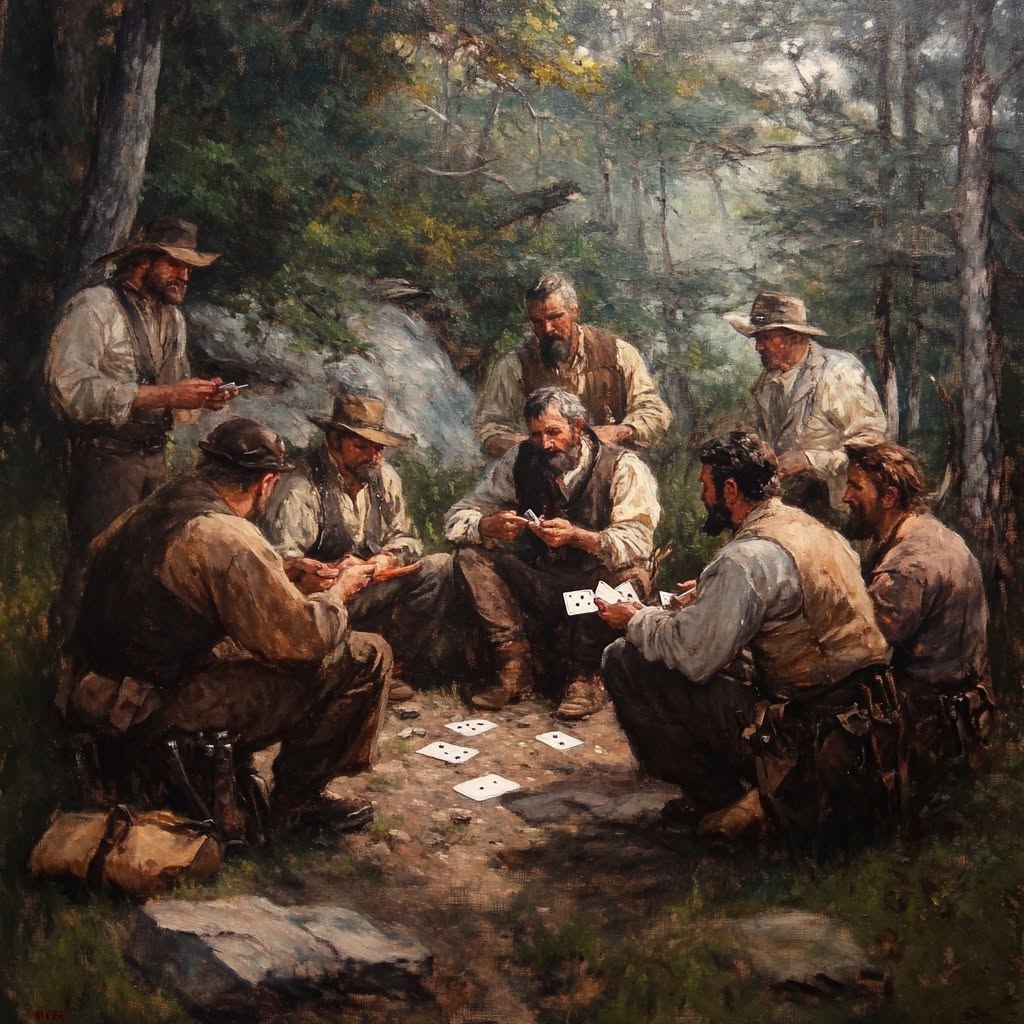
A handful of men plead guilty to gambling and paid a $5 fine. Surprisingly, only two cases of drunkenness were tried during this period, one of which was for a juror who got drunk and expressed “contempt of the court.”
The county paid for more than fifty wolf scalps during this period. Wolves were considered such a nuisance that the county placed a literal bounty on their heads, and anyone who could produce a wolf scalp in open court was paid for it.


Pingback: Bringing Local History to the Classroom | Lawrence County History Trivia