
A roadside inn, buried Indian gold, and a connection to Hellen Keller? Welcome to Alexander Springs!
On Highway 43, between Ethridge and Summertown, an old road winds through the hills and crosses the beginning of what becomes the Buffalo River. The road–Alexander Springs Road–roughly follows a path that has been traveled for more than two centuries, and it is the heart of a community that began many years before the first Alexander came to the area.
What we now call Highway 43 is the descendant of the Military Road, which was the main route from Nashville to New Orleans for many years. It was so-named because it was built by Army engineers from 1816-1820. Alexander Springs Road is part of the original route of that road.
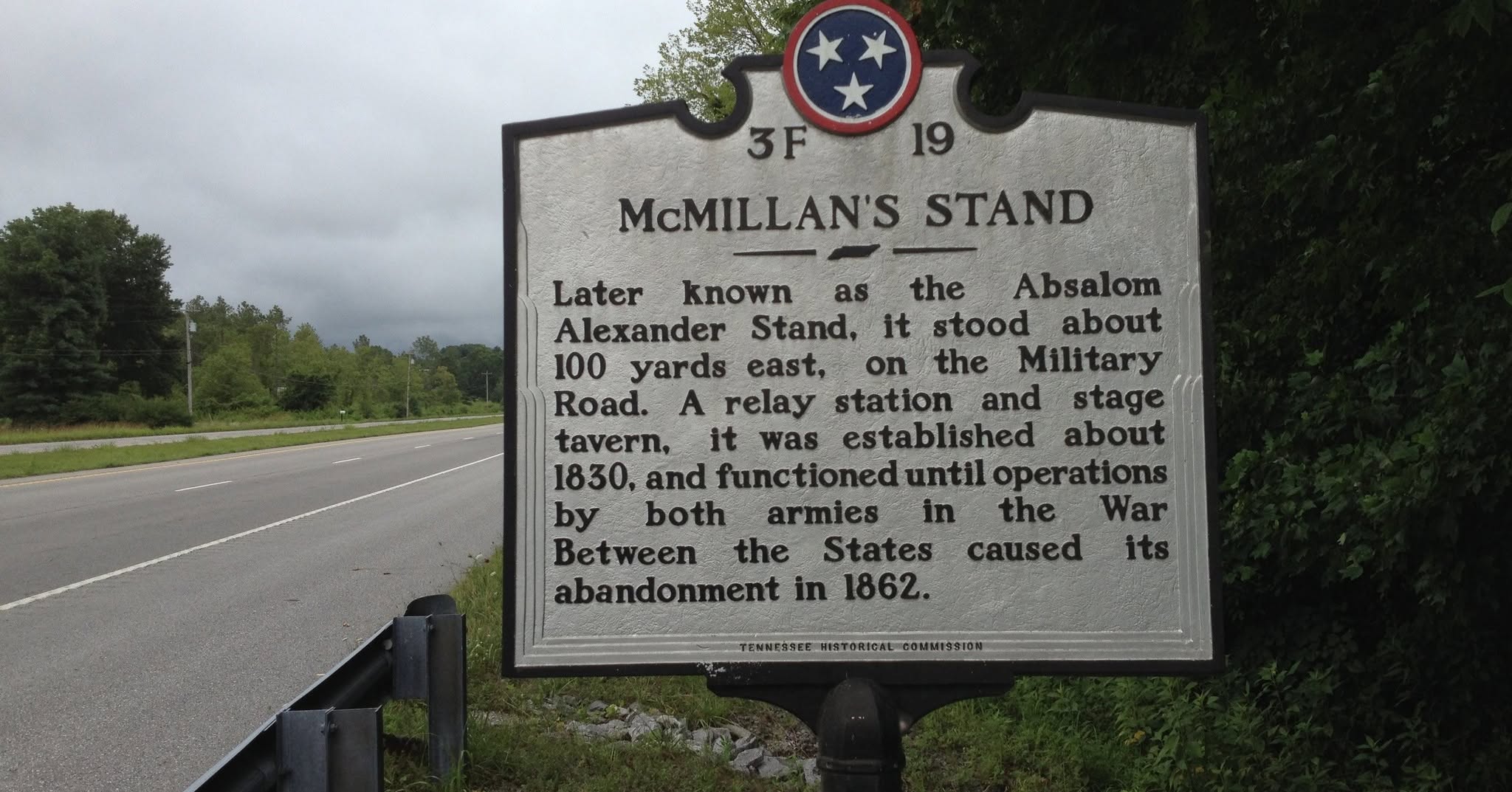
At the place where the road met the Buffalo River, James McMillan operated a stand by at least 1835 and probably much earlier than that. A stand was a roadside inn where travelers could obtain room and board for themselves and their horses. In 1853, McMillan sold the stand and 550 acres to Absalom Alexander, who operated it with his wife Ellen Fields Alexander and their children.
According to family lore (Absalom and Ellen were my ancestors), a regular lodger at the Alexander Stand was Mary Keller of Tuscumbia, Alabama. You may not have heard of Mary, but you probably know about her granddaughter, Helen. As the story goes, Ellen became such close friends with Mary that she named one of her children in Mary’s honor. We can’t be sure if the story is true, but we do know that Ellen named her newborn son Mack Keller Alexander in 1855.
The stand and stable were dismantled during the Civil War to prevent soldiers from using the buildings. But the size of Absalom’s estate and the presence of so many excellent springs in the area leant the Alexander name to the area, and it has been Alexander Springs ever since.
A persistent legend about the community is that a group of Indians long ago buried gold on Ivy Bluff, near the old Stand. A group of Indians came to the area in 1939 claiming to have a map showing the location of the gold. Fresh holes dotted the bluff the next morning, and new holes were discovered in the area for many years.


Pingback: Bringing Local History to the Classroom | Lawrence County History Trivia