
How many people can say that they have owned over 3 square miles of land in Lawrence County AND had an American hero as a squatter on that land?
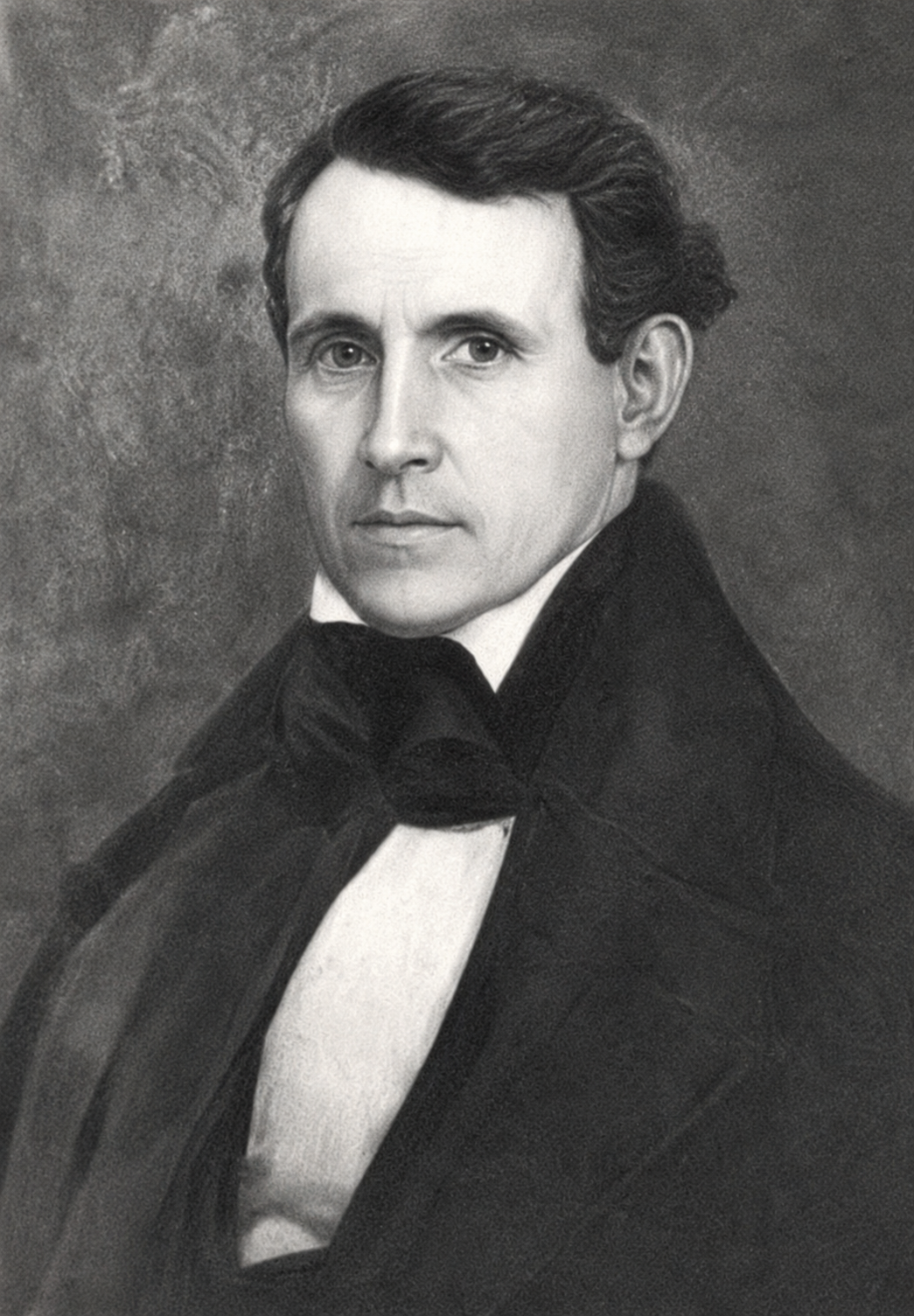
John Christmas McLemore (1790-1864) was one of the most powerful men in early Lawrence County–and it’s possible that he never set foot here. In the months following Lawrence County’s organization, McLemore purchased thousands of acres in the new county. One massive tract contained 2,100 acres of land (that’s over 3 square miles of territory!), which he then struck off into dozens of smaller tracts for a tidy profit.
Most of the people who settled Lawrence County were not like the wealthy and powerful McLemore (who was good friends with Andrew Jackson, and went on to marry Jackson’s niece and become even wealthier by purchasing Jackson’s stake in the land that would become Memphis). Indeed, many of Lawrence County’s early pioneers were squatters–penniless folk who settled, cleared, and cultivated land they didn’t own in hopes of saving enough money to one day purchase their home-place from the owner.
One of these early squatters was none other than David Crockett. Although Crockett used some of his wife’s small fortune to purchase several hundred acres of Lawrence County land outright, he laid claim to hundreds of other acres that he hoped to one day pay for with the profits of his mill. And some of the acreage Crockett claimed belonged to McLemore.
On October 26, 1820, Crockett wrote a letter to McLemore from Lawrence County, explaining that his “powder factory have not been pushed as it ought and I will not be able to meet my contract with you.” Crockett had promised McLemore payment by November 1 for one 320-acre tract of McLemore’s massive holdings, on which Crockett was claiming occupancy.
Apparently Crockett had already paid for a separate 60-acre tract from McLemore, but had received no title, and was unable to pay for the 320-acre tract because of delays in constructing his Shoal Creek milling and distillery operation. Crockett’s letter goes on to say, “I dont expect I can pay you the hole amount until next Spring if you confide in me you can Sent the warrant by male as soon as posable and my letter can Stand as my note.”
Crockett’s struggle to obtain ownership of his occupancy claim on McLemore’s land was a familiar story to most of the poor folks who settled the Tennessee frontier with no money but a solid work ethic and a fighting spirit. This personal experience with occupancy rights in Lawrence County no doubt inspired his later actions in Congress.
Years later, Crockett built his congressional career on a complicated bill which sought to, among other things, reform the corrupt bounty-land system and give squatters in Tennessee a fair chance to lay claim to the land they had worked. His devotion to this cause cost him his political career, as it estranged him not only from the rest of the Tennessee congressional delegation–which was made up of wealthy men who did not see the plight of the common man as urgently as Crockett did–but also drove Crockett away from President Andrew Jackson, who was a legend among land speculators.
[The above excerpts from Crockett’s letter to McLemore were taken from the stellar book ‘David Crockett in Congress: The Rise and Fall of the Poor Man’s Friend’ by James R. Boylston and Allen J. Wiener]


Pingback: Bringing Local History to the Classroom | Lawrence County History Trivia