
One Lawrence County man was taken to court in 1858 for the crime of…staying in Tennessee too long?
Enslaved people who were freed before the Civil War or African-Americans who were born free were known as free people of color. From the 1820s until the Civil War, Lawrence County had a very small population of these people. The Federal Census of 1860 shows that no fewer than 21 free people of color called Lawrence County home in that year. Seventeen of them lived near Lawrenceburg and four lived near Henryville.
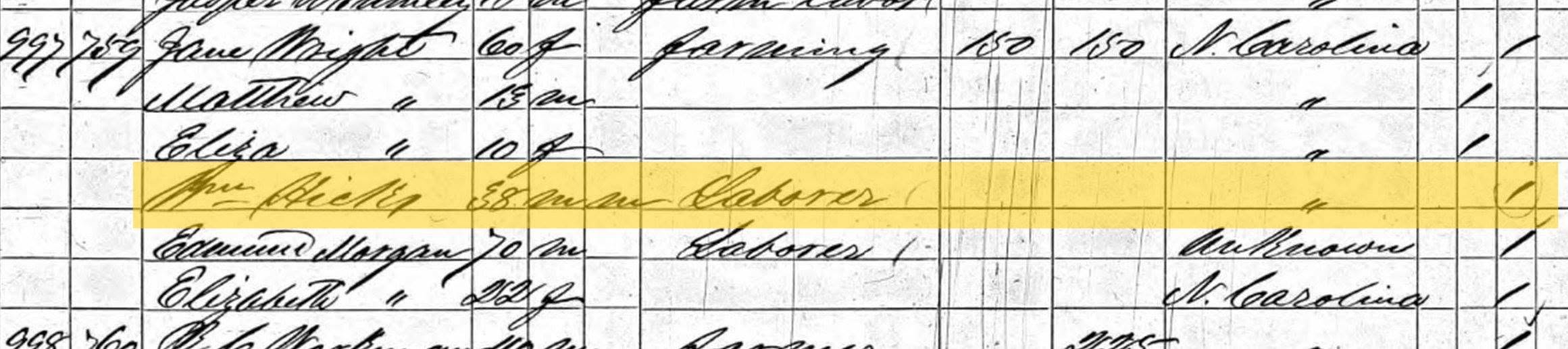
One of the free people of color living near Henryville was William Hicks, who was born around 1822 in North Carolina. In 1860, he was living as a laborer in the home of 60-year-old Jane Wright, who had also been born in North Carolina. In 1858, Hicks was taken to court for “remaining in the state longer than the statute allows for free persons of color not born in the state of Tennessee.”
According to court documents, William Hicks was a mixed-race person who had been born a free man. His court case records say that he was born in North Carolina, and census records indicate that he was born around 1822.
In most Southern states before the Civil War, a person’s freedom was determined by the condition of his mother. If the mother was free, then her children would be born free, regardless of the condition of the father. But if the mother was a slave, her children would be born slaves, regardless of the condition of the father.
Although the court documents in Hicks’s case do not go into further detail about the circumstances surrounding his birth, it is clear that he–and others like him–presented a conundrum to the judicial system of Tennessee.
A law passed by the state in 1831 said that all free persons of color residing in Tennessee were to vacate the state within 20 days of their arrival, and no enslaved person was to be allowed his or her freedom unless the master could first arrange for their transport to another state or territory. Violation of the law was considered a felony by the free person of color, and initially carried steep fines for the former master.
Hicks moved to Lawrence County on July 10, 1850. By staying in the county for almost a decade, Hicks had clearly broken the law. However, the judge in Hicks’s case was of the opinion that Hicks did not qualify as a free person of color under the Act of 1831, simply because the law was too vague.
The judge said that the law specifically addressed the condition of mixed-race people who had been liberated by their masters, but that the law was not clear enough about the position of mixed-race people who had been born free.
Upon motion from the defense, the indictment was therefore quashed by the judge. Hicks did not stay in Lawrence County; he never appears in another Lawrence County census after 1860, although Jane Wright’s descendants stayed near Henryville for many years following the Civil War.
Cases like Hicks’s illustrate the tension and confusion created by harsh antebellum laws which regulated the behavior and limited the rights of free people of color.


Pingback: Bringing Local History to the Classroom | Lawrence County History Trivia