A Parade of Long Ago in Downtown Lawrenceburg

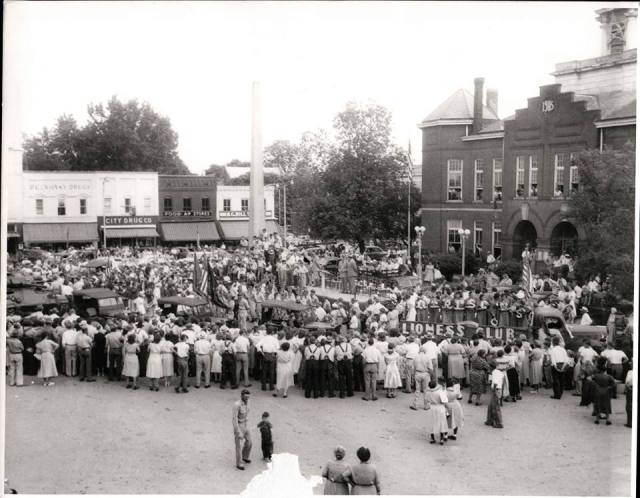
This photo is of a downtown event in the 1940s or 1950s on the north end of the Public Square in Lawrenceburg.

The photo can be dated by several clues, one of which is the presence of the 48-star flag in the color guard near the review stand. That design of U.S. flag was retired in 1959 when Alaska became the 49th state.

Do you have any fond memories of downtown events like this one?

12573694_955155334574794_8994710760655060094_n

Posted in Uncategorized | Leave a comment

Happy Amish Christmas!

Happy Amish Christmas!

You may notice today that many Amish businesses are closed for Christmas. That’s because many of Lawrence County’s Amish people observe the holiday known as ‘Old Christmas.’

Old Christmas is the name given to the date celebrated as Christ’s birthday in the days when all of Europe used the Julian calendar. When the Gregorian calendar was introduced in 1582, it bumped Christmas back 12 days.

Because the Amish and some other religious groups believed that the date of Christ’s birth was a holy day and should not be changed, they continued to observe the holiday 12 days after the new calendar specified.

In Lawrence County, the Old Order Amish continue this 400-year-old tradition each January 6 by fasting and reading Scripture together in the morning, and by visiting family members in the afternoon.

Posted in Uncategorized | Leave a comment

The Good Friday Freshet of 1902

This past week will be remembered for many years as one of the warmest, stormiest Christmas seasons in local history. The tragic tornadoes which tore through northern and western Lawrence County on December 23 were followed soon after by historic flooding, particularly in North Alabama and areas close to the state line.

The unusual ferocity of this year’s Christmas tornadoes and flooding brings to mind a topic which I wrote about in ‘Lawrence County History Trivia’ the book, when severe weather struck our region on another holiday.

Known as the ‘Good Friday Freshet’ by those who survived it, the Flood of Good Friday 1902 brought a great deal of destruction to our area. Below is my previous post about the topic, combined with further research pulled from the newspapers of neighboring Lauderdale County, Alabama.

March 1902 was a devastating month for Middle Tennessee. Massive thunderstorms dumped almost a foot of rain on the region in less than four days. The ground, already saturated from melting snow, was unable to absorb the excess water, resulting in record-breaking deadly floods across the mid-state which would claim dozens of lives and cause millions of dollars in damages. These rising waters culminated into the Good Friday Freshet on March 28, 1902.

The Cumberland River left its banks in Nashville, rising 13 feet in one day. According to a contemporary newspaper account posted on the Bedford County Genweb site, all but one of the steel bridges erected over the Duck River near Shelbyville washed away as the river crested at a depth of over 43 feet. Homes were flooded to their second stories. The water in the streets of Shelbyville was deep enough “to float the largest steamboat.”

Closer to home, the Elk River and Richland Creek in Giles County claimed lives and homes as those bodies of water reached their highest-ever crests. The Elk River, alone, reached a depth of almost 41 feet. And in Lawrence County, the waters of almost every creek and stream escaped their banks and caused an immense amount of damage, as can be seen in this picture of men repairing damage done to the railroad at Raven’s Bluff, where it crossed Shoal Creek and Coon Creek.

Shoal Creek reached a depth of 28 feet, which is 14 feet above flood stage. Those who survived the deluge never forgot it. W.W. Rhodes was ten years old and living on Sugar Creek near Mount Zion when the March 1902 flood occurred. Rhodes wrote the editor of the Democrat-Union late in life that he remembered the flood destroying the rail fencing on his father’s land, and how hard he and his family had to work to pull the rails from drifts in the ensuing weeks to rebuild the fences.

Cora Norman Renfro was a thirteen-year-old girl living in Maury County when the flood occurred. Later in life, after having moved to Lawrence County, she wrote the editor of the D-U that she recalled seeing only the roofs of houses sticking out of the water.

Thomas Kilburn was nine years old when the March 1902 flood happened. His family was living on Knob Creek, near West Point, when the water began to rise. Kilburn said that the water rose inside his grandfather’s barn to the point that they had to move the livestock to higher ground. The family’s supply of corn was soaked and had to be dried when the waters receded. Kilburn’s family watched as debris from miles around floated down the creek.

Kilburn said that, when the waters finally receded, his uncle Wild Kilburn found a barrel of molasses in the yard. The molasses was the property of Gus Kelley, and it had floated down the flooded creek from Piney. According to Kilburn, Kelley “came and got his molasses. They were still good.”

In Florence, the rainstorm reached its peak at around 2 p.m. At that time, the Florence ‘Times’ reports that the rain came down ‘in sheets’ on the already-saturated ground. Some area streams crested at 10 to 15 feet above their previously highest-ever recorded flood levels.

The floodwaters washed away six steel bridges in Lauderdale County; namely those which spanned Cypress Creek on Gunwaleford and Waterloo Roads, the two spanning Shoal Creek at Huntsville Road and Military Road, one crossing Bluewater Creek on Huntsville Road, and one which crossed Butler Creek at Pruitton. These six iron bridges alone are estimated to have cost $30,000 to replace.

In addition to the bridges, three mills and two school houses were destroyed in the deluge. Shoal Creek crested ten feet higher than it had ever before risen, destroying a $30-50,000 aqueduct. Along this creek, trees as thick as four feet in diameter were uprooted and washed, roots and all, down the raging waterway to the Tennessee River, which the Army Corps of Engineers reported as rising “higher than it ever has before.”

The March 1902 flood took the lives of eight people in Lauderdale County, all of the Brahan family who lived at the mouth of Cypress Creek.

1929991_946468372110157_6876371442694047564_n

Posted in Uncategorized | Leave a comment

Lawrence County Letters to Santa from 1926

Merry Christmas, friends!

Who doesn’t love a good letter to Santa? The following letters to Santa were written by Lawrence County children in 1926 and published in the ‘Democrat-Union’ that December.

“Dear Santa Claus:
I am 7 years old. Please bring me a set of dishes and a baby doll. Also a pair of skates and apples, nuts and candy.
Your friend,
Mary Emily Davis”

“Dear Santa Claus:
Please bring us a group of Sunday School lessons already studied.
With many thanks,
Tom Spencer
Alma McMurtrey
Louise Stutts
Elizabeth Spencer
Pauline Springer”

“Dear Santa Claus:
I am in the 2nd grade. I am ten years old. Please bring me a pair of skates and a pair of leggins and a 22 rifle.
Your friend,
Delton Moore”

“Dear Santa Claus:
I want a box of colors and some apples. Please bring me a doll bed.
Your friend,
Ludie Peppers”

“Dear Santa Claus:
I am a good girl. I want you to bring me a embroidery set and a pair of house slippers, and apples, nuts and candy.
Your friend,
Bonnie Belle Brown”

“Dear Santa Claus
I have been a good boy all the year. Please bring me a cap pistol and a wagon.
Your friend,
Claud Edward Smith”

“Dear Santa Claus:
I am in the 2nd grade and I have been a good boy all the year. Please bring me a banjo and some nuts, oranges, and book matches.
Your friend,
Teddy Spain”

“Dear Santa Claus:
I am in the 2nd grade. Please bring me a train and a story book and a banjo.
Your friend,
Thomas Liles”

“Dear Santa Claus:
I am nine years old and in the 2nd grade. Please bring me a banzo and a clock and a bylo baby.
Your friend,
Imogene Stutts”

“Dear Santa Claus:
I am a little girl nine years old and in the 2nd B grade. Please bring me a rain coat.
Your friend,
Virginia Harwel”

“Dear Santa Claus:
I am eight years old. Please bring me a doll and a set of dishes and a story book. Please bring my mother a big set of dishes and a new coat. I am in the 2nd B grade.
Your friend,
Opal Phillips”

10245490_941021202654874_6092209602570371448_n

Posted in Uncategorized | Leave a comment

Happy Birthday, E.O. Coffman!

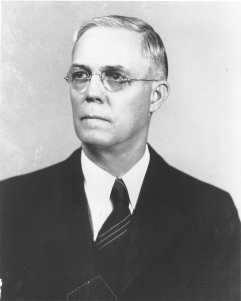
Happy birthday today to Professor E.O. Coffman, who was born on this day (December 6) in 1882.

Professor Coffman served the Lawrence County Schools System for an astonishing 52 years, including 38 years as the principal of Lawrence County High School. Lawrenceburg’s middle school, E O Coffman Middle School, is named in his honor.

But Professor Coffman didn’t just work at LCHS, he was also heavily involved in the fight to create it.

Not only was he one of the school’s first teachers, and one of its longest-serving principals, but he also was present at most–if not all–of the organizational meetings which resulted in the school’s creation.

However, despite his many years of dedication to LCHS and education in general, Coffman’s true passion was for the Gospel. He was baptized in 1900 and began preaching at local churches of Christ in 1909. Professor Coffman held Gospel Meetings throughout Lawrence County and also in Lauderdale County, Alabama.

Many of the students who were educated under his tenure in the Lawrence County School System remember Professor Coffman as a strict disciplinarian with no tolerance for misbehavior or anything which he saw as a distraction from academics. In fact, in the early days of LCHS, Coffman had it published in the local newspaper that he would personally deal with students who were seen loitering around the Public Square in Lawrenceburg or attending movies at the Princess Theater after school was dismissed for the day.

Do you have any memories of E.O. Coffman?

12295481_931348110288850_981990078133859934_n

Posted in Uncategorized | Leave a comment

Venison, Anyone?

Happy Opening Day to all of you deer hunters out there!

Hunting has always been a popular pastime in Lawrence County. During the Civil War, the city of Lawrenceburg was abandoned to such an extent that wild animals flourished in the town’s streets and buildings.

In the spring of 1865, when the war was over and people began to return to Lawrenceburg, a local man is said to have shot and killed a fine buck right on the Public Square.

But perhaps no Lawrence County hunter has a greater reputation than Colonel David Crockett. In the late 1810s or early 1820s, when Crockett was living in Lawrence County, a Giles County minister was preaching a sermon here one Sabbath.

His sermon made reference to Nimrod, whom the Book of Genesis called “a mighty hunter before the Lord.” But at the climactic moment, the preacher forgot Nimrod’s name. When he called out to his congregation, “Tell me friends, what is the name of that mighty hunter before the Lord?” an old man in the back shouted, “David Crockett!” which caused the congregation to erupt in laughter.

Do you have any hunting tales that you would like to share? Post them in a comment!

Posted in Uncategorized | Leave a comment

The Mexican War Monument At Dusk

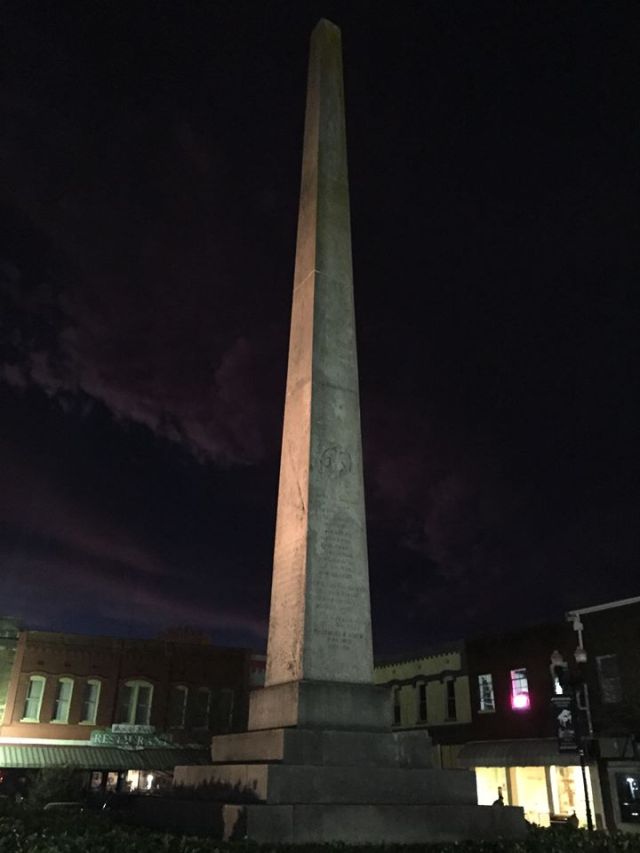
The Mexican War Monument in historic downtown Lawrenceburg was brilliantly illuminated by a beautiful sunset tonight. The monument, one of only a dozen or so in the nation, is also one of the oldest at 166 years old this year. It saved the Lawrence County courthouse and, consequently, all of Lawence County’s historic public records from the torch of Union soldiers in November 1863.

12246595_923193107771017_2357531035919883652_n

Posted in Uncategorized | Leave a comment

Lawrence County’s Spookiest Stories: The Dream of the Spotted Bird

Happy Halloween!

Did a local Civil War soldier foresee his own death in a dream?

One of Lawrence County’s most dangerous men was a blacksmith named Lewis Kirk. As a young man, Kirk volunteered to fight in the Mexican War with a local company of men known as the Lawrenceburg Blues.

In 1858, Kirk shot and killed a farmer from Giles County on the Public Square in front of more than 40 witnesses. The farmer had been slandering Kirk’s name around town all afternoon. For this crime, Kirk was sentenced to serve time in the state penitentiary.

However, to Kirk’s good fortune, while he was appealing his case, the Civil War began, and he received a pardon from the governor for agreeing to serve in the Confederate army.

Kirk quickly rose to the rank of captain in the Confederate army, and he commanded a company of the 9th Tennessee Cavalry, a regiment which included many local men.

Kirk’s wartime record (comprised of reports written almost exclusively by his Unionist enemies in contemporary newspapers) is full of tales of him murdering escaped slaves, forcing old men into the Confederate army, executing a Union general while he lay wounded and dying in an ambulance, and he even supposedly once shot a man for refusing to cheer for Confederate president Jefferson Davis.

Needless to say, Kirk was widely reviled by his adversaries. So when he survived the Civil War and was allowed to come home as though nothing had ever happened, it no doubt got under the skin of some Union officers.

Not long after returning home in 1865, Kirk and a party of men which included his friend John Hildreth went hunting south of Lawrenceburg. Kirk was distracted that day, and didn’t seem to be much interested in the hunt. Shortly after it began, he left his deer stand and went to Hildreth’s.

Hildreth told Kirk that he should go back to his stand, lest the deer slip past him.

Kirk shook his head and said, “John, last night I dreamed that a beautiful spotted bird came to me. The bird whispered something I dare not tell you, but I can’t stay off to myself.”

After the hunt, the men returned to Lawrenceburg, and gathered around the Square to talk. A squadron of Federal cavalry rode through town, spoke to the men, and then rode on. When they reached the intersection of Pulaski Street and Locust Avenue, the Federals turned around, went back to the crowd of men, and told Kirk to come with them to Pulaski.

No one ever saw Kirk again.

The Federal soldiers, who later claimed that they had only apprehended Kirk to use as a guide, gunned Kirk down on the Columbia Pike near Lynville and buried him in a shallow grave right beside the road, where he lay until he was re-interred in the Lynnville Cemetery at the turn of the 20th century.

They told their superiors that he tried to escape, which is the version of events that the northern press chose to believe. The story of Kirk’s execution was reported as far away as the New York Times.

What did the spotted bird in Kirk’s dream say to him that would make him not want to be alone on the day he was killed? We will never know. But whatever it was, Kirk seemed to know that his time was short that day in the woods.

Posted in Uncategorized | Leave a comment

Lawrence County’s Spookiest Stories: The Photo of Captain Gilbreth

We need not speculate about the faith of Captain W.J. Gilbreth–or lack thereof. He made sure that generations yet unborn would know that he was an avowed atheist by having a special plate inscribed and placed on his tombstone in Lawrenceburg’s Mimosa Cemetery.

Concerning his view of religion, the plate says that Gilbreth “made his life the best he could. No fear of gods, no love of Jesus, no thought of future punishment or reward controlled his acts. His mind was free from religious or other superstition. His sense of right and justice was the law he obeyed.”

As it was told to me long ago, the story of how Captain Gilbreth came to lose his religion in Lawrenceburg, Tennessee–where a church stands on every corner–is a tragic tale of personal loss.

Captain Gilbreth was one of the many Lawrence County men who rushed to the colors when the Spanish-American War broke out in 1898. He was deployed to the Philippines with his regiment, leaving behind two young children and a pregnant wife. As the story goes, Gilbreth prayed incessantly for his wife and unborn child while he was at war. Tragically, however, his wife lost the child, and when he found out about it, Gilbreth lost his faith.

He survived the war, came home, and although he and his wife went on to have one more child, Gilbreth permanently turned his back on God and all forms of religious belief.

As an open and avowed atheist, Gilbreth certainly must have stuck out in a small town like Lawrenceburg in those day. Regardless, he filled his life with civic activity and community-mindedness. Local newspapers from the turn of the 20th century show that he attended and helped organize almost every important community function, was an active proponent of the creation and advancement of Lawrence County High School, and served in several community leadership positions.

When he died in 1934, a large stone was placed at his grave, with that bold pronouncement of his disdain for religion at the center, and two black-and-white photos on each side–one of him, and one of his wife, who would outlive him by more than twenty years.

But it’s what supposedly happened to that stone that most people remember about Gilbreth.

As legend has it, not long after Gilbreth was buried, the skies turned dark and thunder began rumbling ferociously. But the storm that day supposedly produced only one bolt of lightning, which is said to have struck Gilbreth’s tombstone with a mighty fury, forever scarring and marring his photograph.

Whether the story of the lightning bolt striking the tombstone is true or whether the damage to Gilbreth’s photo is the result of vandalism, generations of the faithful have pointed to the legend as evidence that Gilbreth had angered God for openly flaunting Him.

Whether or not the legend is true, Gilbreth’s tombstone is certainly an anomaly in Lawrenceburg, Tennessee. In a sea of stones which commemorate the faithfulness of the deceased, Gilbreth’s stone stands out for its open dismissal of faith and religious belief.

Regardless of whether you agree with his conclusions or not, no one can deny that Gilbreth’s stone–and the legend that accompanies it–is certainly unique.

19923_915391645217830_129753582645107095_n

Posted in Uncategorized | Leave a comment

Lawrence County’s Spookiest Stories: Digging Up Bones

Have you ever found anything surprising–or shocking–while digging in Lawrence County soil?

Throughout our county’s history, people have accidentally disinterred or discovered human remains in surprising places. Here are three tales of local folks who, without meaning to, disturbed the final resting place of the deceased.

According to a very old oral tradition, the community of Henryville is said to have been built on the site of an ancient Indian village. Although this story has never been proven, local people have, indeed, found thousands of Indian relics concentrated in the vicinity throughout the years.

One old-timer recorded another dim memory in the Annals of the Lawrence County Historical Society in the early 1950s. According to a story told at one of the society’s first meetings, a grisly discovery was once made on a hill north of town, at the site of the old stand (a sort of antebellum inn where travelers could rest) which stood just outside of Henryville.

We don’t know how or when, but, as the story goes, someone once accidentally discovered a mass grave of several human skeletons buried in the yard of that stand. Due to the scant details recorded in the Annals, we can only speculate as to who these people were and why they were buried in the yard of the old stand.

If the discovery was made after the Civil War, then it seems that the most obvious answer is that these bodies belonged to men killed in the skirmish fought by Forrest’s cavalry along the Central Turnpike in November 1864.

But it could also be possible that those skeletons could have belonged to Indians who died many generations before whites settled the area, or that the bones disturbed were those of some of the area’s earliest settlers. Perhaps it was the result of some forgotten pestilence? Or perhaps it was foul play? All we can do is speculate.

There is no speculation, however, as to what a local man found near Ethridge one autumn day almost a century ago.

On November 16, 1916, a young man was looking over some land he had recently purchased about two miles east of Ethridge, “116 steps south of the Ethridge and Weakley Creek mail road,” when he came upon the scattered and bleached bones and tattered clothing of a recently-murdered man.

The coroner determined that the bones–which had been gnawed upon and scattered by hogs and dogs and other such scavengers–belonged to a white male, about 35 years of age who had been dead for about three or four months. His hat, which lay nearby, was full of thin slits, which corresponded to marks on the skull, leading authorities to the conclusion that he had probably been stabbed to death.

The clothing was identified as that of a young man named Marion Clifton, who had left Giles County about four months before bound for Texas, but whose family had not heard from him since. It is an eerie thought, indeed, that for months, these bones lay just feet away from people passing by on the busy road nearby.

Our final tale tonight comes again from the vicinity of Mt. Zion and Appleton, from the battlefield of Sugar Creek. On the day after Christmas, 1864, when a thick fog shrouded the valley, General Nathan Bedford Forrest dealt a stinging blow to pursuing Federal forces there. The Battle of Sugar Creek left more than 150 men and horses dead on the field, in the woods, and no doubt in the creek, itself.

Locals still discover bullets, buttons, buckles and other Civil War paraphernalia from the area. But perhaps the most gruesome discovery happened completely by accident, some eight decades after the smoke had cleared.

While plowing corn in one of his fields near Sugar Creek in the 1940s, local farmer Steve Ball–who, in a twist of fate, was the grandson of a Union cavalryman who had fought at Sugar Creek–accidentally dug up the remains of one of the soldiers who fell at the battle. There was nothing present with the remains to indicate to Mr. Ball if the skeleton was Union or Confederate. The body was later given a proper burial at the nearby Puncheon cemetery.

Have you ever dug up anything strange in Lawrence County?

Posted in Uncategorized | Leave a comment