The Legend of Granddaddy Creek

Have you ever wondered where the name ‘Granddaddy Creek’ and ‘Granddaddy Road’ came from? We may never know for sure, but early Lawrence County newspaper writer W.P. Oliver had a fanciful explanation for it in 1906.

That spring, Oliver (who wrote under the pen-name of ‘Fleetwood’) wrote that a great tragic love story lay behind Granddaddy Creek and the naming of it. According to Oliver, in about 1749, a Scottish hermit came to the rough frontier country that would one day become western Lawrence County.

As the story goes, the hermit made his home in a large cave at the head of a beautiful stream. At the time, this area was deep in the heart of Indian territory, but the hermit was friendly with the Indians, and he never caused anyone any trouble. He often went north for weeks at a time to get supplies and ammunition, and two or three times a year, he would go west to trade his furs at a trading post in the modern location of Clifton.

One day, the hermit brought a beautiful young woman back with him from his trip north, presumably to be his wife. The hermit told the young woman to call him Granddaddy, and he said that one day the stream which flowed near his cave would be known as ‘Granddaddy Creek’ in memory of him.

The couple was happy, and the woman loved Granddaddy. But one day, while he was gone to get supplies, a wicked Indian chief named White Eagle rushed the cave with his warriors and kidnapped the beautiful young woman, taking her far away, telling everyone he passed that he was going west to find gold.

When Granddaddy returned to find his young bride had been taken, he vowed revenge, left all of his goods behind in the cave except for his rifle, and rode west to rescue the young woman. He never returned, and no one ever heard from either of them again, but the cave is still in Lawrence County. In 1906, it was “near the Kelso farm,” presumably in Deerfield, and, sure enough, the creek–and now the road that crosses the creek–still bears his name.

How much of this old legend is truth and how much came from the mind of Fleetwood is subject to interpretation. However, he claimed that he heard the tale from some of old folks of the area. Regardless of its accuracy, it makes for a great story!

Posted in Uncategorized | 1 Comment

Heroes of Lawrence County: The Lawrence County Sheriff’s Department

The Lawrence County, Tennessee Sheriff’s Department has been in existence since the county was founded in 1817. But the modern, professional, trained force that protects the people of Lawrence County today is a far cry from the department’s humble beginnings. As this photo of the Lawrence County Sheriff’s Department in 1906 shows, standard uniforms are a relatively new innovation, and it would be impossible for even the best sheriff to preserve the peace today with only four deputies on staff.

Our current sheriff, Jimmy Brown, is the 55th sheriff of Lawrence County, in an unbroken line going back almost 200 years. And just as our county has changed a great deal in those two centuries, so has the job of enforcing its laws.

David Crockett wrote in his autobiography that, before the government of Lawrence County was organized by the state, the settlers of the area had no law, and “so many bad characters began to flock in on us, that we found it necessary to set up a sort of temporary government of our own.”

This “temporary government”–sometimes known as the Shoal Creek Corporation–consisted of several men being chosen as magistrates and constables at an informal public meeting. When Crockett was chosen as one of the magistrates, it was the beginning of his political career.

This system seemed to succeed in establishing law and order in the area. Later, when the county government was officially organized, the men chosen as constables and magistrates were officially commissioned as officers of the local government. At this time, Lawrence County’s first sheriff, Luke Grimes, was elected. Not much is known about Grimes, other than that he served as sheriff for just one year, in 1817.

The county’s first sheriffs definitely had their work cut out for them. When local blacksmith Lewis Kirk shot and killed Thomas Westmoreland on the Square in Lawrenceburg in 1858, the sheriff was Robert J. Kelley. It was Kelley’s duty as sheriff to round up a jury for Kirk’s trial. However, due to the controversial nature of the trial, the men of Lawrence County suddenly became very hard to find when he came to visit.

Sheriff Kelley, after several days of riding across multiple districts, finally reported to the judge that he was unable to raise a jury from Lawrence County. He said that everywhere he went, the eligible men at every home were either suddenly gone to town, helping a neighbor far away, or were simply hiding in the woods. Due to these circumstances, the venue of the trial was changed to Columbia.

Due to limitations in manpower, it was not uncommon in those early days for the sheriff to deputize random citizens on the spot when the need arose. Such was the case in 1876, when Sheriff James K. Garner deputized Circuit Court Clerk John B. Kennedy to help subdue a drunken W.B. Chaffin.

When Sheriff Garner and Kennedy approached Chaffin, Chaffin pulled his pistol and aimed it at the sheriff. Acting fast, Kennedy struck Chaffin with a nearby shovel, a wound which would later kill him. Kennedy was acquitted for his actions in Chaffin’s death.

Sheriff Cleve Weathers, who was murdered in the county jail by an inmate in 1943, is the only Lawrence County sheriff who has ever been killed in the line of duty. But each person who has ever worn the badge of the sheriff’s department has placed his or her life at risk for the safety of our community.

Lawrence County History Trivia is proud to support local law enforcement, and we appreciate the sacrifices our men and women in blue make for us each day.

11988333_887985567958438_8487438341145640873_n

Posted in Uncategorized | Leave a comment

Happy Birthday, Davy!

Happy birthday to Colonel David Crockett, who was born on this day 229 years ago! Crockett began his political career in Lawrence County, where he was elected magistrate, colonel of the county’s militia regiment, and state representative.

David Crockett

This image of the King of the Wild Frontier by S.S. Osgood was personally endorsed by Crockett to be the most accurate one of him ever drawn from life. Source: Wikimedia Commons.

Posted in Uncategorized | Leave a comment

Changing Lives: This Teacher’s 1905 Letter to the Editor will Inspire Educators Today

Has teaching changed much since 1905?

In the spring of that year, one local schoolteacher sent a letter to the editor of the Lawrence ‘Democrat’ explaining the teacher’s role in the community as he saw it, and what behaviors and habits he thought a good teacher should adopt.

The author, J.J.W. Starr, taught school for many years at the Quercus community in northern Lawrence County.

Since we have recently begun a new school year in Lawrence County, I thought our county’s great teachers would enjoy reading an excerpt from this 110-year-old article, which remains surprisingly relevant to the 21st-century classroom.

49800281_2234230089942132_797648364001820672_n

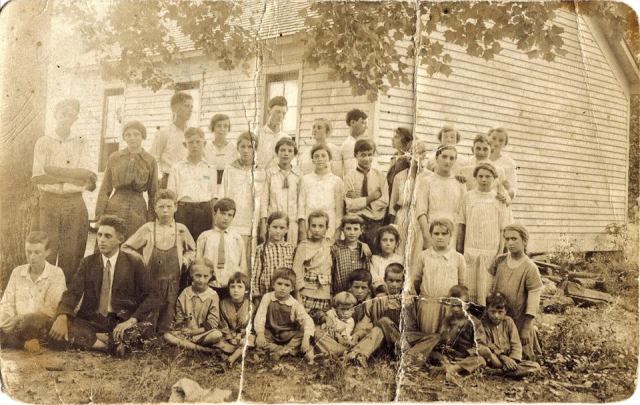
Red Hill School, 1915  Source: Old Jail Museum

“The teacher receives the children at the most plastic period of life, when they are not capable of judging between truth and falsehood, and all he says to or teaches them is accepted as solemn truth, and it moulds their lives for the future.

“In the power for good or evil the teacher is far ahead of the preacher. An immoral man in the pulpit will do far less harm than one behind the teacher’s desk. The teacher’s calling is the noblest and most influential of any, and those who do not so regard it are out of place in the schoolroom.

“The teacher should love his work, and only those who love it should be employed. While in it he should give it his time and strength.

“If he is his own janitor he should be at the schoolhouse at least an hour before school time to have the room comfortable for the pupils when they arrive, and he should always be as polite to them as he expects them to be to him. The whole five days each week should be fully employed in school work, not closing school early on Friday to go home to return late Monday morning. He should always be the first at the school house and the last to leave it, and remain with his pupils during the noon hour.

“He should do all in his power to make the children happy by taking interest in their sports as well as their studies. He should interest them in the current events of the day through newspapers or by other means, and as much as possible he should place new reading matter before them, for children, like adults, soon tire of reading the same thing over and over.

“From the experience of many years I am the decided advocate of newspaper-reading in the schoolroom to make young people intelligent, to expand their minds, and give them something to think of and converse about. In our school work we too often get into ruts and find it hard to get out.”

–From “Our Public Schools” by J.J.W. Starr, Lawrence ‘Democrat,’ May 26, 1905

Posted in Uncategorized | Leave a comment

Heroes of Lawrence County: the Lawrenceburg Fire Department

The Lawrenceburg Fire Department was established in 1898, in the aftermath of a massive blaze which completely destroyed more than 1/4 of the Public Square. The Florence ‘Times’ published that the fire was believed to have been started by an errant cigarette.

In the 19th and early 20th centuries, fire was a real concern. Most homes and businesses were heated by wood- or coal-burning stoves, and practically all cooking was done over the open hearth or, later, on wood-burning ranges. Add all of that to the fact that most structures were shoddily-constructed frame buildings of wood, and you can see why fire was such a scourge to early Lawrence County.

Before there was an organized fire department, the city’s only means of combating fire was for every man in town to keep a bucket ready, and the alarm would be shouted from house to house if fire was spotted.

An example of how this system worked can be seen in how Lawrence County court official William T. Nixon handled such an alarm in 1880. On the evening of March 23, he wrote in his journal, “I went down to see Mrs Edmiston and while there an alarm was raised that old Mrs Johnson was over at schoolhouse and burning up all the wood. I went over but Shff Sanders had got there before I came up and had taken her over to town. She was put in jail on charge of vagrancy and she is now there. She threatens to burn the town.”

And again on December 16, 1882, Nixon wrote, “Today I attended in the office until near 10 O’clock when an alarm of fire was raised which was occasioned by the accidental burning of the Kitchen and smoke house at father Parkes’ old homestead.”

Unfortunately, it took a huge disaster like the 1898 fire for the city to realize that its system of citizens carrying buckets was not sufficient to battle the scourge of fire. While the ashes from that 1898 blaze still smoldered on the Square, city leaders met and agreed to purchase ladders, a fire-bell for the top of the courthouse, and eventually a fire engine.

This photo was made in 1923, and shows the Lawrenceburg Fire Department as it had evolved from 1898, in their leather jackets and helmets, with a modern fire engine to help battle blazes.

We at Lawrence County History Trivia salute all of our county’s brave firemen and other civil servants.

11817156_869830529773942_8088203570995900983_n

Posted in Uncategorized | Leave a comment

Do the Amish Pay Road Taxes?

Readers, if you will allow me to share some current local history with you tonight, I made this graphic to help clear up some confusion about the Amish and their role in maintaining our county roads.

As you see, because the funds for road repair come from the general fund, the Amish do, in fact, pay the same amount of taxes toward local road maintenance as everyone else who owns property.

11831814_865285413561787_349194294646129470_n

Posted in Uncategorized | Leave a comment

Billy Pierce: Lawrence County’s Little Giant

One Lawrence County war hero started his military career by throwing an embarrassing public tantrum. But when the smoke finally cleared at war’s end, he had proved himself to be one of the bravest men in the county.

On July 9, 1861, at the beginning of the Civil War, a group of young men assembled on the Public Square in Lawrenceburg to volunteer for service in the Confederate army. The first group of volunteers from Lawrence County had left for training in May, but many young men were still eagerly flocking to the colors of the fledgling Confederacy.

Among the men who showed up to volunteer on that hot July day was William A. Pierce. Like the others, the 18-year-old Pierce was eager to serve. But at 5’1″ tall, he immediately stood out from the other young men. Payton Sowell, who reminisced about the incident in the Lawrence ‘Democrat’ many years later, recalled that Pierce’s head scarcely reached the shoulders of the other men who volunteered that day.

When George H. Nixon, the officer in charge, called Pierce’s name on the roll, he took note of his small stature and said, “Billy Pierce, you are too small. You cannot go.”

After this harsh denial, Pierce walked to the sidewalk in front of what is today Bills Bluegrass (Weather’s Brothers Music) and cried like a baby as the shocked townspeople watched. Between sobs, Pierce begged the officers to allow him to go. Apparently it was a scene as extraordinary as it was embarrassing, because several of those present remembered it well into their twilight years.

When it became clear that Pierce would not stop crying until he was allowed to enlist, Captain W.B.J. Moore approached him and said that he would allow him to go with them to camp. When they arrived at Camp Trousdale for training, Pierce answered the roll as though nothing had happened, and no one raised any objections to his presence.

Over the course of the Civil War, Pierce more than proved his worth as a soldier. Because Moore had personally ensured his place in the army, a friendship developed between the two. At the Battle of Shiloh, Pierce’s arm was shattered in combat. As Pierce lay on the battlefield, seriously wounded, Captain Moore was cut down by enemy fire, and he fell to the ground across Pierce’s legs, where he died.

Pierce survived the battle, and was taken to Louisiana by Captain Moore’s brother to recover from his wounds. When he had recovered, he reenlisted in the Confederate army, this time in Nixon’s Cavalry.

Like Moore, Nixon grew to greatly respect Pierce, and he often entrusted him with very important and dangerous missions; he once ordered Pierce to spy out the location of a group of Federal soldiers. In obedience to the order, Pierce crawled on his hands and knees through half a mile of tall weeds to discover the enemy’s position. When he found them, he opened fire on them before retreating back to Nixon’s headquarters to report on their activities.

Pierce was captured near Florence, Alabama in the summer of 1864, and spent most of the rest of the war in Rock Island Prison in Illinois. No doubt when he returned, the townspeople had great respect for the blood he had shed for his country, but few of them would ever forget the many tears he had first shed in order to serve.

Posted in Uncategorized | Leave a comment

Murray Ohio and Lawrenceburg: The Power of Community Spirit

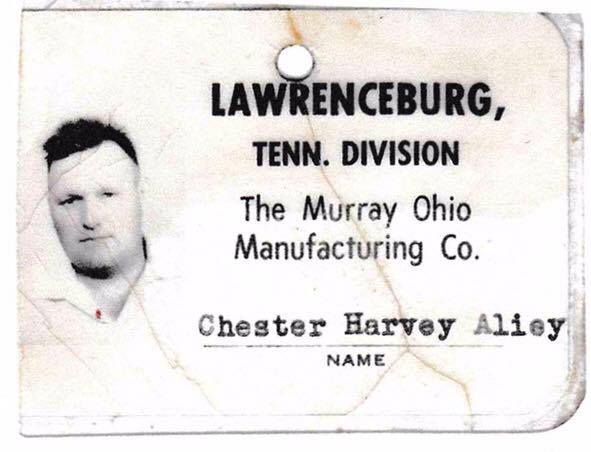
How many of you can remember wearing name badges that look like this?

This badge belonged to Chester Alley, who began work at Murray Ohio in 1956, when the Lawrenceburg plant was first built.

The story of Murray Ohio coming to Lawrenceburg is the story of a community working together for the greater good. According to Cromer Smotherman, Lawrenceburg was the last site that the company was planning to visit on their tour of Tennessee, and most of the executives had already decided to build the new plant in another city in Tennessee.

At the behest of their guide, however, the Murray executives visited Lawrenceburg, and they were impressed not only by the progressive attitude of the elected officials, but by the positive attitudes and friendly dispositions of the people of Lawrence County. The warm welcome they received in Lawrenceburg made them change their minds about building in another city, and so they decided to bring Murray to Lawrenceburg, and changed the history of our area forever.

Making the decision to build the new plant was not as easy as it might seem. The city of Lawrenceburg agreed to pay for the building of the plant, but it did not have the resources on hand to foot the $2 million bill for the massive construction project.

On October 14, 1955, the people of Lawrenceburg went to the polls to vote on whether or not to approve of the issue of $2 million worth of industrial bonds by the city of Lawrenceburg. The measure needed 75% of the vote in order to go into effect.

Needless to say, it was a leap of faith on the part of the citizens of Lawrenceburg. But after a brief and frenzied voter-education campaign on the part of the Chamber of Commerce and local elected officials, the people of the city voted 2,346 to 5 to approve these bonds–although ground had been broken on the site more than a month before, and the people did not yet even know the name of the company!

In addition to building the plant, the city had to deal with the issue of housing the 52 families which had to move to Lawrenceburg from Cleveland to work as supervisors at the new factory. At that time, the city of Lawrenceburg did not have enough rental houses to accommodate those 52 families until they could build or buy homes of their own.

In response to this problem, several local people pitched in and built 25 new brick houses to help house the families from Cleveland.

As a result of these different segments of our community working together, building each other up, and relying on each other’s support, Lawrence County experienced its greatest economic expansion to date. The money brought in by Murray helped to fund a swath of municipal improvement projects, which in turn helped to attract more industry and improve the quality of life for local people like Chester, who–along with his wife Iler Mae–eventually retired from Murray.

If I (Clint Alley) may take a moment to make an editorial comment, I believe that one of the greatest lessons we can learn from the arrival of Murray in Lawrenceburg is that bringing jobs and attracting industry to our area is not just the job of our local elected officials. Improving our community is everyone’s shared responsibility.

You may not be a member of the county commission or the chamber of commerce, but you never know who might be listening when you criticize or belittle Lawrence County, just as you never know who might be listening when you take time to brag on the positives of our community.

Look out for your neighbor. Volunteer your time to help keep our community clean and our children in school and out of trouble. Buy local. Encourage out-of-town friends to visit David Crockett Park or Laurel Hill Lake. Work with local government instead of pulling against it. We all want to live in a place where our children can find work and make a good living. We all want a better community.So let’s start building that community today, one positive action at a time.

10984600_860361790720816_8474976365485145656_n

Posted in Uncategorized | Leave a comment

Name That Historic Lawrence County Floor!

Can anyone name this historic Lawrence County building just from its floor pattern?

11695801_857498337673828_6374825396551407852_n

Photo credit: Clint Alley

Posted in Uncategorized | Leave a comment

A Traffic Jam in Downtown Lawrenceburg

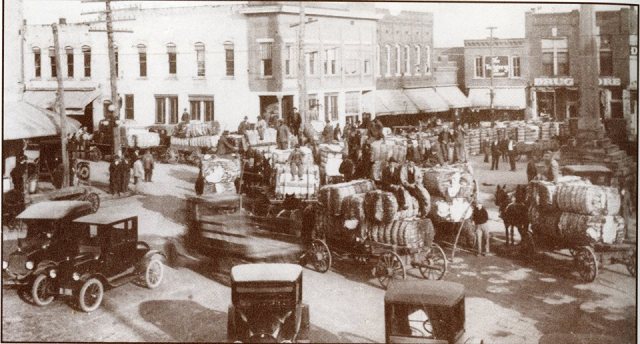
How is traffic this afternoon?

As you can see in this image from the 1920s, traffic could get a little hectic in downtown Lawrenceburg in the days when cotton was king, especially not long after harvest, when cotton markets were sometimes held on the Square.

This image shows the north side of the Square, with the Mexican War Monument at right and the Toggery in the northeast corner. The word ‘toggery’ is a quaint old term for a shop that sells clothing.

11760076_857606760996319_2701418308688194906_n

Photo credit: Lawrence County Historical Society

Posted in Uncategorized | Leave a comment