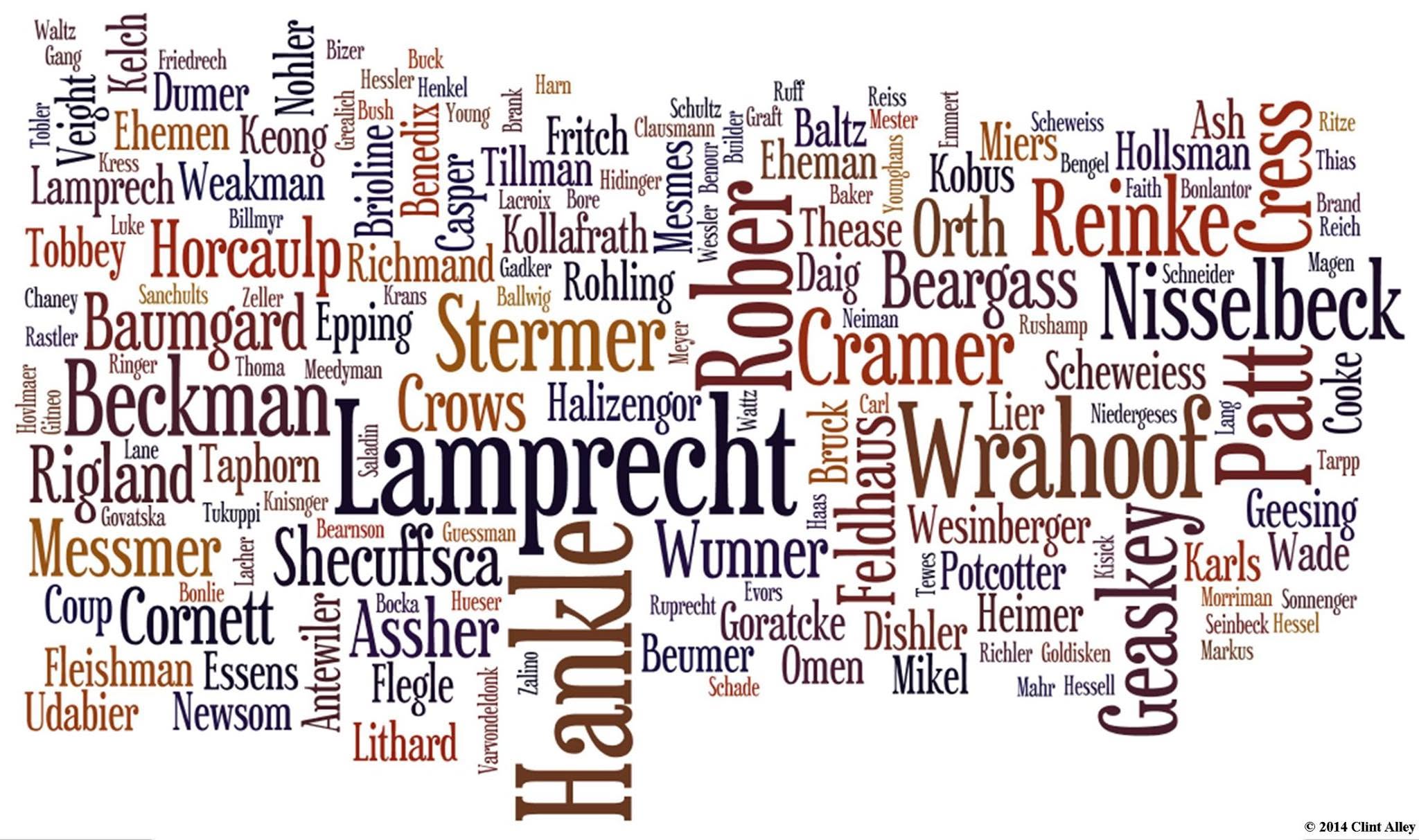
Do you have any German heritage? Happy Word Cloud Wednesday!
Beginning in 1870, Lawrence County experienced a massive influx of German families. The Cincinnati-based German Catholic Homestead Association purchased several thousand acres of land in Lawrence County at that time and convinced hundreds of newly-arrived German families to relocate to Lawrence County and begin farming the land.
These families brought their language, customs, and religious traditions with them. The German Migration is responsible for the founding of every Catholic Church in Lawrence County. Today, all three of these places of worship are listed on the National Register of Historic Places.
The German Migration continued for at least two more decades, finally slowing near the end of the 19th century. The 1880 census gives us a glimpse of the migration near its peak, when there were 284 German-born people living in Lawrence County.
This word cloud shows the surnames of every German-born person living in Lawrence County in 1880. The larger the name, the more frequently it appears in the census. Many of the spellings are not correct by modern standards, and some names appear more than once in different spellings, but they have been left as the census enumerators wrote them to preserve historical authenticity.
Many of these surnames are still very common in Lawrence County. Let us know if you see your own or one to which you are related!
One of the most consequential elections in Lawrence County history occurred on May 17, 1879. That day, the people of the county voted 1,266 to 217 in favor of subscribing to the Nashville & Florence Railroad.
Local leaders pushed for the railroad to come to Lawrence County for many years. In addition to the benefits of faster travel, many believed that the county’s iron ore deposits could be tapped for maximum profit if a railroad ran through the county to ship it faster.
As William T. Nixon wrote in his diary a few months after the vote, “Every industry and energy seems to be suspended upon the success of this enterprise.” Nixon’s father, Colonel George H. Nixon was instrumental in bringing the railroad to Lawrence County.
According to the Nashville ‘Daily American,’ “The election passed off very quietly, and it was not until the returns came in sufficiently to remove all doubt of success, that the people gave way to their enthusiasm. At night, the town was illuminated, anvils were fired, speeches were made, bonfires kindled, and the whole town seemed intoxicated with enthusiasm or–something else.”
The vote authorized the county court to pay $50,000 to the Nashville & Florence Railroad to build a railroad the length of Lawrence County, from the Maury County line to the Alabama line.
The first passenger train arrived in Lawrenceburg in the autumn of 1883. That day, the people of the county came out in full force to celebrate with a massive public barbecue. Nixon confided to his diary again after the barbecue that it was a “fine day for old Lawrence and marks an epoch in her history. The old town with her sleepy ways is dead, a new town with new life activity and energy is ours.”
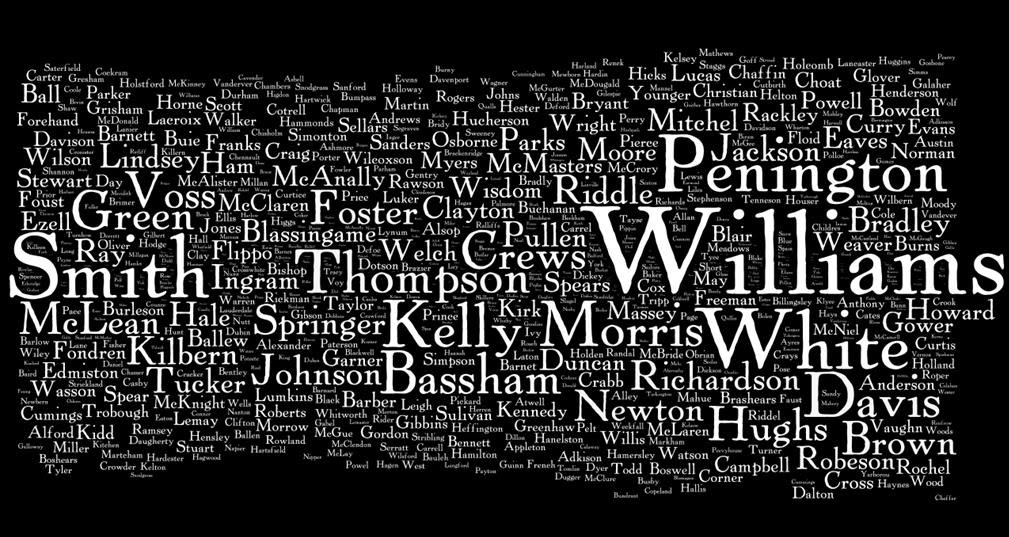
A population that more than doubled in thirty years? That was Lawrence County, two-hundred years ago. Happy Word Cloud Wednesday!
In 1820, when David Crockett was still living in Lawrence County, the county had a population of 3,271 people.
To put that in perspective, every single soul living in Lawrence County in 1820 could have, at the same time, fit in the stands of Ralph Benson Memorial Gymnasium at Lawrence County High School with room to spare for about 900 folks.
Lawrence County’s 1820 population density was only about 5 people per square mile, or about the same as modern Wyoming. Today, Lawrence County’s population density is about 71 people per square mile. By that metric, we are still a very rural county, but we were, indeed, the wild frontier in 1820.
And, within 30 years, the population of Lawrence County skyrocketed by nearly 184%!
By 1850, 9,280 souls called Lawrence County home. This word cloud contains all of the last names listed on that census. The larger the name on the cloud, the more people with that last name lived in Lawrence County in 1850.
Do you see your name or a family name in the cloud? Mention it in the comments!
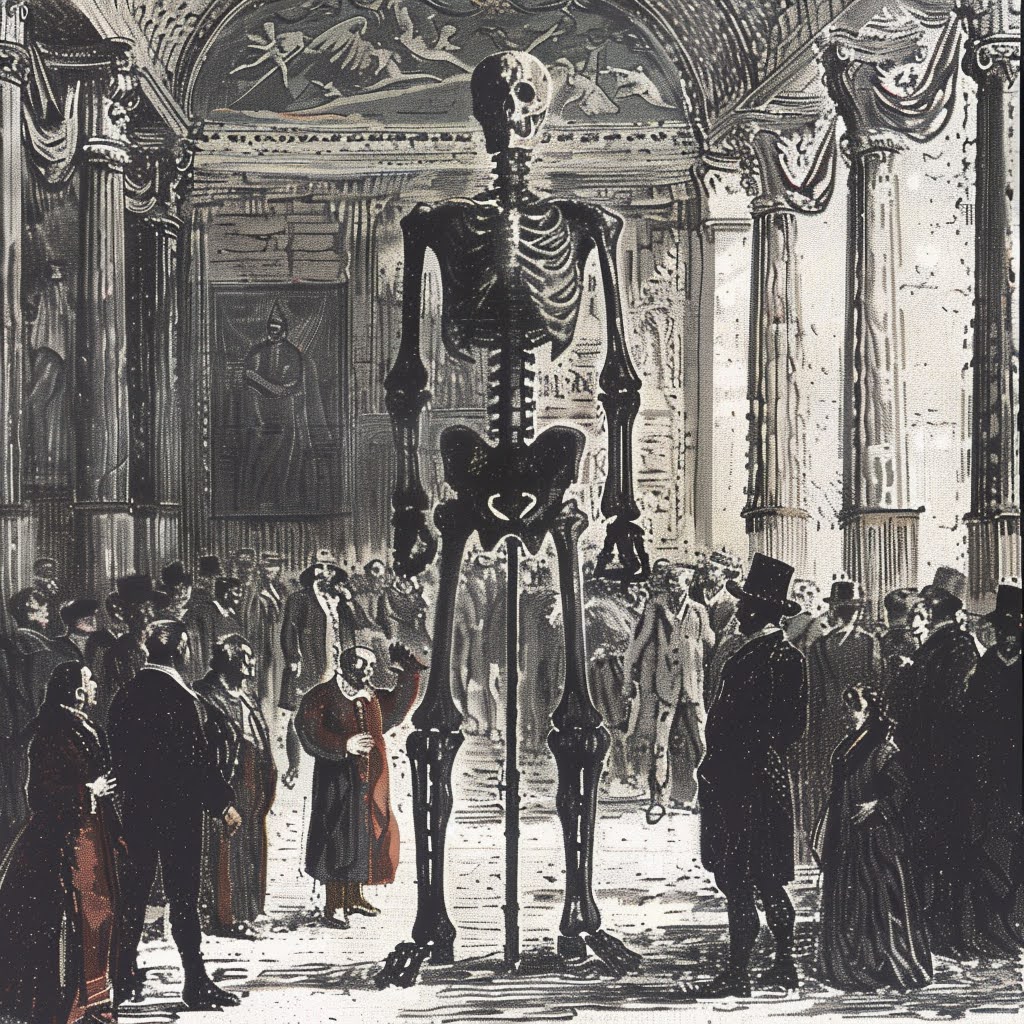
In the autumn of 1845, a traveling exhibition made its way into the muddy streets of Lawrenceburg claiming to contain a truly unusual cargo: the bones of a long-dead, eighteen-foot-tall giant.
Contemporary newspaper accounts claim that the skeleton was discovered some fifty feet beneath the earth by a group of men digging a well on the farm of William Shumate, south of Franklin. When assembled, the bones measured a staggering eighteen feet in height. The thigh bone is said to have been five feet long, and the skull “about two-thirds the size of a flour barrel, and capable of holding in its cavities near two bushels.”
The discovery of the giant caused a sensation throughout the region, convincing many that the area had once been home to a race of long-extinct giant men.
The owner of the bones claimed that he was offered $8,000 for the skeleton, but decided instead to exhibit the bones for a year. He had them wired together, and sometime in the autumn of 1845, the show made its way to Lawrenceburg en route to New Orleans.
Although we don’t know where the skeleton was displayed in Lawrenceburg, we know that in other places it was “erected in a high room; the skeleton was sustained in its erect position by a large upright beam of timber” with a normal human skeleton displayed alongside for scale.
According to the fantastic book Mastodons to Mississippians: Adventures in Nashville’s Deep Past by Aaron Deter-Wolf and Tanya M. Peres, admission was “thirty cents, though with a fifty percent discount for servants and children.”
When the show made it to New Orleans, the party ended. Dr. William D. Carpenter, a respected professor, was invited by Shumate to examine the bones on New Year’s Day 1846. Carpenter later wrote, “At a glance it was apparent that it was nothing more than the skeleton of a young mastodon.” Wooden ribs, teeth, and pelvic bones had been built to make the skeleton appear more complete.
Word reached Lawrenceburg in April 1846 of the skeleton’s true identity. The Shumate Mastodon is one of a number of mastodon skeletons recovered in Williamson County. Since 1977, paleontologists have discovered portions of the skeletons of four of the mighty beasts at the Coats-Hines Site in Brentwood. The finds are especially important because they are some of the only mastodon skeletons east of the Mississippi River which show direct evidence of hunting by humans.
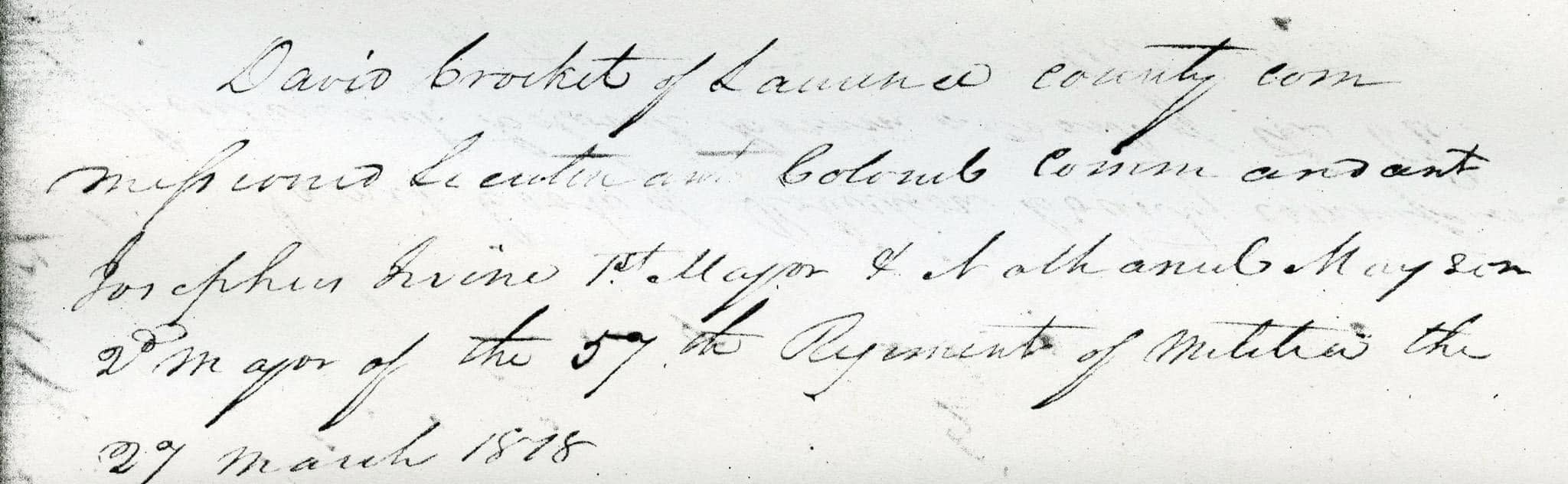
On this day in 1818, David Crockett was commissioned as the Colonel of Lawrence County’s 57th Tennessee Militia Regiment. Elected not long after the county was organized in the fall of 1817, Crockett was the first commander of Lawrence County’s militia.
In those days, each county had a militia regiment. In theory, the militia system was there to safeguard the early republic against invasion and uprising without the cost of equipping and training a standing army. By state law, most able-bodied men were required to meet at certain times of the year to train for militia duty. Officers, like Crockett, were elected.
As military exercises, however, these musters were often great comical failures that began with mostly-unarmed companies performing sloppy maneuvers in an open field and ended with most of the men getting drunk and fighting each other, which is why the militia system was gradually replaced over time.
We aren’t sure how Crockett drilled his regiment, but we do have descriptions of how the militia trained in the surrounding area in Crockett’s time.
James Simpson described muster days he saw in his childhood in nearby Florence, Alabama like so: “In the early days of Florence we had what we called ‘Muster days’ and the men felt that they must come and train. Some carried guns, some big sticks on their shoulders. They had musters about two or three times a year. It was always a jollification and more fights than you could think of. In those days they had plenty of good whiskey at 10 cents a quart.”
Crockett described his election to the office in his autobiography. According to Crockett, an early Lawrence Countian named Matthews attempted to trick Crockett into running against his son for major of the regiment, believing Crockett would be easy to defeat for the post. When he learned about the plot at a corn-husking given by Matthews, Crockett announced to the crowd that he was, instead, running for Colonel against Matthews. He won the contest handily.
Crockett continued to use the title of ‘Colonel’ for the rest of his life.
Image courtesy of Tennessee State Library and Archives, Commission Book 4, page 96.
On this day in 1965, a St. Patrick’s Day tornado pulled part of the roof from Lawrenceburg Public School–while 725 children were inside.
At that time, LPS was still at its Jackson Avenue location (the building currently houses the Public School Apartment complex). According to School Superintendent Charles Holt, the storm struck the building during a morning devotional a little past 8:00 a.m.
Holt told the ‘Tennessean’ that the tornado made “absolutely no noise” as it lifted segments of the roof from the building, and that the first clue faculty and staff had that something was wrong was a sudden torrent of rainwater rushing into the building from above (the storm dumped more than 8/10″ of rain in less than an hour in neighboring Giles County),
Holt went on to say that all 725 of the school’s students were rushed to the basement
as the storm shattered windows throughout the building, uprooted huge trees in the yard, and tossed part of the roof “some 50 yards from the building.”
Miraculously, not a single child was reported injured during the storm, and one report says that school dismissed immediately after.
The storm went on to destroy Charles Leonard’s stock barn on Highway 64 and caused damage to several structures in Giles County.
The LPS tornado received national media attention, with most news outlets mistakenly referring to the school as the ‘Rosemont Elementary School.’ Rosemont is the name of the addition to the city of Lawrenceburg in which the building is located.
Were you there during that storm? Share your memories in the comments!
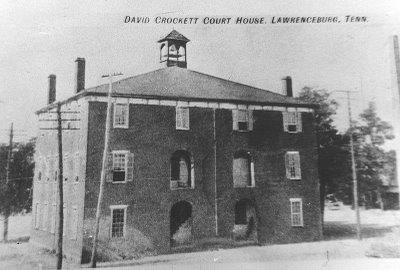
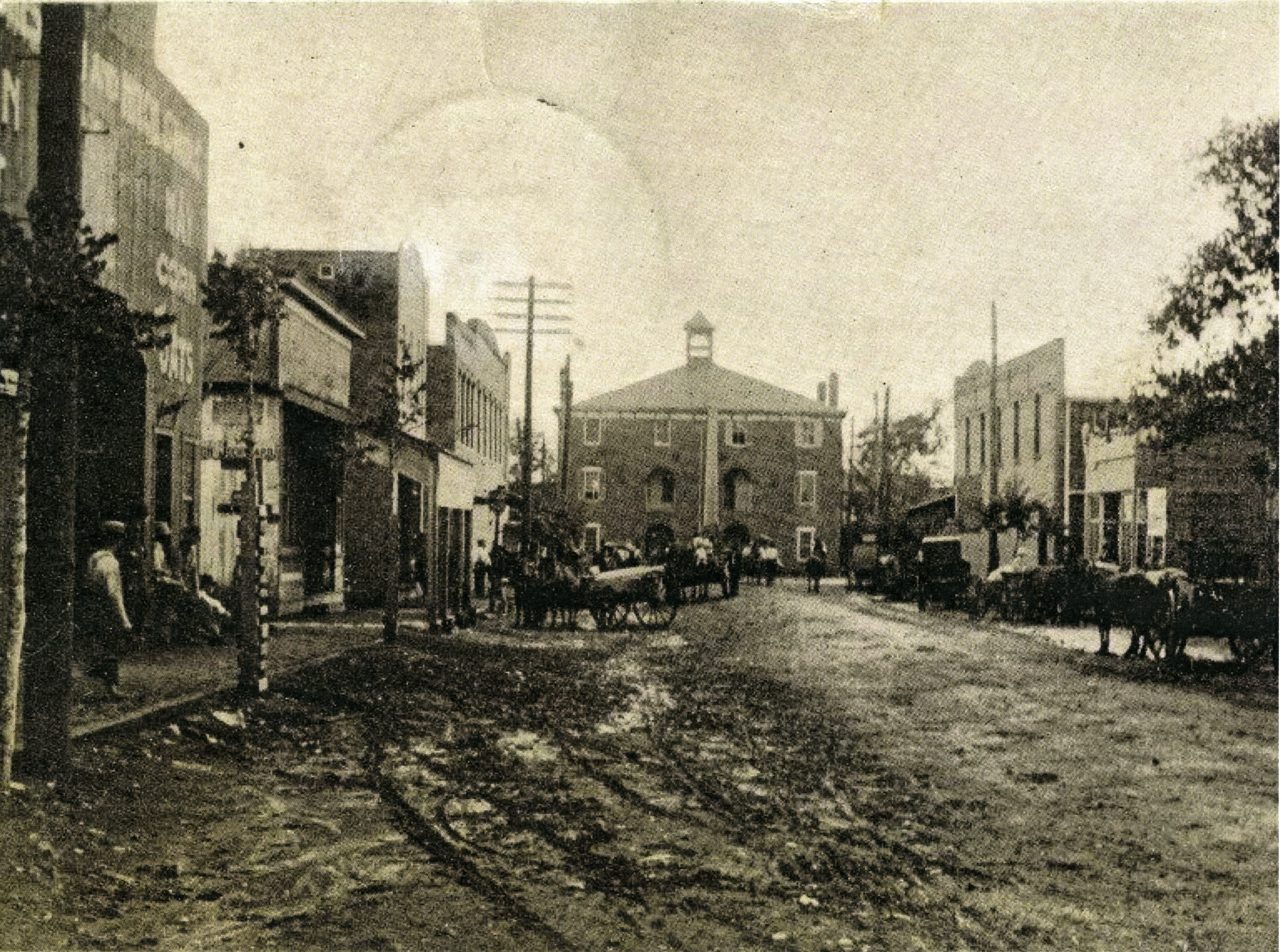
On this day in 1905, the demolition of Lawrence County’s first courthouse was underway. The building was torn down to make way for the much grander 1905 Courthouse.
Located at the center of the Public Square in Lawrenceburg, according to an article in ‘The Heritage of Lawrence County, Tennessee,’ the core building of this courthouse was built in 1821, and was intended to be a temporary fix until a better courthouse could be built.
However, far from being temporary, that building was constantly repaired and renovated until 1848, when the county court decided to build an addition around the old courthouse instead of replacing it with a new one. The Masons and Oddfellows paid for the addition of the third floor of this courthouse. For many years, these organizations used this third floor as meeting space.
The courts closed soon after the Union army took control of Tennessee and remained closed for much of the Civil War.
On November 3, 1863, Major Thomas Fitzgibbon of the 14th Michigan Mounted Infantry was preparing to order his men to burn this courthouse, but citizens of Lawrenceburg persuaded him that burning the courthouse would damage or destroy the nearby Mexican War monument. The major, being a veteran of the Mexican War, and eager to get back on the road anyway, decided to spare the building. As a result, most of Lawrence County’s original records are today extant to the county’s founding, although the courthouse was ransacked at least once during the Civil War, and many original documents were tossed into the streets.
The courthouse underwent several more repairs after the Civil War. Newspapers from the 1890s record that the goats of T.H. Meredith often slept in the open outer hallways of the courthouse. In 1904, it was determined that this courthouse was no longer big enough to meet the needs of the county.
On January 2, 1905, the County Court voted to appropriate $20,000 for the construction of a new courthouse. The old one was sold to the Lewman & Co. Architectural Firm of Louisville, Kentucky, who purchased the building’s materials for $225. The courthouse was demolished from March 13 to 17, 1905
David Crockett lived in Lawrence County for four years. He came here as an anonymous, semi-literate backwoodsman when the area had only recently been opened to white settlement by the Chickasaw Cession of 1816.
While here, Crockett was elected a justice of the peace, colonel of the county’s militia regiment, and state representative. He also served as one of the first commissioners of Lawrenceburg, when that body was appointed the task of selecting a site for the county seat. He set up an extensive grist mill, powder mill, and distillery operation at Crockett Falls on Shoal Creek, just west of Lawrenceburg.
But when a flood of Shoal Creek destroyed his mill and distillery operation in 1821, Crockett sold out, paid his creditors, and moved to West Tennessee, where his reputation in politics as “the poor man’s friend” earned him a seat in the U.S. House of Representatives in 1827.
After moving west, Crockett’s extant records don’t mention Lawrence County much. Indeed, we can’t be sure of the date of his last visit to Lawrence County–if, indeed, he ever returned again. But we can be assured that the area was still very much on his mind, even when he made it to halls of Congress.
On January 17, 1828, Crockett proposed a resolution in Congress that, if successful, would have altered the course of Lawrence County’s history. He wanted the Army to build a Federal Armory on par with those in Springfield, Massachusetts or Harper’s Ferry, Virginia on either Buffalo River or Shoal Creek in Lawrence County.
The text of his resolution read:
“Resolved, That the committee on Military affairs be instructed to inquire into the expediency of authorizing the Secretary of War to appoint one or more skillful Engineers to examine several points on Big Shoal Creek, and Big Buffaloe, in Lawrence county, in Tennessee, and to report upon the fitness of these places respectively as a site for a National Armory, similar to the Armories of the United States at Springfield and Harpers ferry.”
According to an article from the Jackson, Tennessee ‘Gazette,’ Crockett extolled the virtues of Lawrence County as the site of a Federal Armory by saying it “was situated not more than 30 or 40 miles from the Muscle Shoals and there was no place in the West which combined greater advantages.”
However, not to be outdone, Crockett’s resolution was amended by Gabriel Moore, a new representative from Huntsville, Alabama, to include the words “and the Cypress Shoal Creek, in Lauderdale County, in Alabama.” Moore made the argument that this location was “preferable to the site offered by the gentleman from Tennessee” because it was actually at the location of the Muscle Shoals, instead of 30 or 40 miles away from it.
The resolution was then further amended by a representative from Kentucky who wanted an Armory built in his state.
The ‘Gazette’ article mentions that Crockett “accepted the amendment as a modification of his resolution.”
In the end, a Federal Armory was never built either in Lawrence County nor in Lauderdale County, Alabama. Although we can’t say exactly why neither location was chosen by the Army, it is fascinating to imagine how the presence of an operation as extensive as the Federal Arsenal at Springfield, Massachusetts would have impacted our county.
In addition to the economic and population boost such an operation might have provided the area, it would almost certainly have been seized by Confederate forces at the outset of the Civil War, and might have made Lawrence County an area of more strategic importance during the war.
Crockett eventually fell out with fellow-Tennesseans James K. Polk and then-President Andrew Jackson over a variety of issues (including Indian removal, which Crockett opposed) and lost his congressional seat to a Jackson loyalist. He famously left Tennessee and continued west to revolutionary Texas, where he died defending the Alamo in 1836.
In a twist of fate, Crockett eventually did add to Lawrence County’s economic prosperity when the acreage surrounding his onetime mill operation was declared a state park in 1959.
With more than 1,300 acres, a 40-acre lake, and over 100 campsites, David Crockett State Park is a vital part of our local economy, and, according to the park’s strategic management plan, it brought more than half-a-million visitors to Lawrence County in 2022.
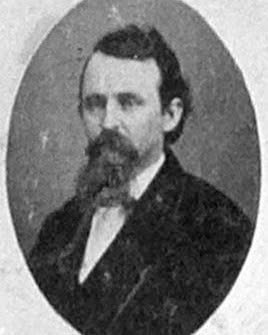
Captain Thomas D. Deavenport of Lawrence County had an illustrious career of public service that was cut tragically short by his personal demons.
Deavenport was born on September 18, 1837. He began life working on his father’s Lawrence County farm. He attended Jackson College in Columbia, completing all but his final session there due to his father’s death in 1844.
Deavenport went to Kansas after his father’s death. While in Kansas, he witnessed the period of that state’s history known as ‘Bleeding Kansas,’ when proslavery and antislavery partisans shed blood over the issue of whether Kansas would enter the Union slave or free.
He returned to Tennessee in 1857, and began reading law in Florence, Alabama the same year. In 1858, he taught school in Lawrenceburg until he was admitted to the bar and began practicing law.
When the Civil War began in 1861, Deavenport helped to raise a company of men from Lawrenceburg to serve in the Confederate army. When the company was mustered into the 32nd Tennessee Infantry, Deavenport was commissioned as a lieutenant, and was promoted to captain on November 4, 1861.
Deavenport was taken prisoner at the fall of Fort Donelson in 1862, and exchanged several months later. Although he fought bravely with his company throughout the war, his military career was effectively ended in late August 1864, when he was shot through the lungs with a Minié ball at the Battle of Jonesborough, Georgia.
He survived his wounds and continued practicing law in Lawrenceburg after the Civil War. He was elected to serve as Lawrence County’s delegate to the State Constitutional Convention of 1869, and then to the State Senate in 1877. Deavenport was a man of unquestionable talents and leadership ability.
Unfortunately, despite his stellar record of public service, Deavenport was also a heavy drinker. He was frequently publicly intoxicated, and had at least one public confrontation with his wife while drunk (his wife, interestingly enough, was the daughter of a Union veteran). His law partner, W.T. Nixon–whose unshakeable sobriety no doubt made the firm an odd pairing–recorded Deavenport’s frequent drunkenness in his journal.
Nixon mentions Deavenport 104 times throughout the journals, and many of those references mention Deavenport’s struggle with alcoholism.
On January 25, 1880, Nixon wrote:
“Capt Deavenport is still drinking and they say he was drunk on the square again today. This is shameful and I regret it so much for there is no finer man when sober.”
On August 23, 1880, Nixon wrote:
“Had a trial of trying to reconcile Capt & Mrs D. Capt drunk again – bad drunk. “
On March 17, 1881, Nixon wrote:
“I am out done with Deavenport & Love who have now been drunk for nearly three weeks. I do not see how they stand it.”
On March 9, 1884, Nixon wrote:
“Capt Deavenport and Bill Love [the Register of Deeds] are down town drunk as fools. Tried to make some arrangement to get Capt’n a place to sleep but failed only for Pete Smith who says he will not let him lie out. If anybody thinks whiskey will not utterly ruin a man, body and soul, let him look at Captn D.”
Despite his troubled personal life, it cannot be denied that Deavenport was a patriotic public servant, and Nixon seemed to place total trust in him as a business partner.
Captain Deavenport passed away on February 11, 1889 at the age of fifty-two, leaving a wife and five children. He is buried in the Old City Cemetery on Waterloo Street in Lawrenceburg.







 Lawrence County History Trivia