The Battle of Lawrenceburg

On this day 162 years ago, Federal soldiers surrounded the courthouse in Lawrenceburg with torches at the ready after a brief fight in the streets. But quick thinking on the part of a local citizen saved our courthouse and our county’s early history.

On November 3, 1863, Union and Confederate soldiers squared off in a brief skirmish near downtown Lawrenceburg that has come to be known locally as “The Battle of Lawrenceburg.”

It began when Confederate forces under Colonel Albert G. Cooper recaptured Lawrenceburg from a small occupying force of Federal soldiers.

The Confederates, numbering about 500, used the Lawrence County jail to house, according to the Union officer in charge of the action, “…many Union citizens who refused to join the rebel army, as also some Federal soldiers…” When word reached Major Thomas Fitzgibbon of the 14th Michigan Mounted Infantry, stationed in Columbia, he set out with a force of 128 men to free the captive Unionists.

After a botched attempt at surprise, Fitzgibbon’s force reached Lawrenceburg at daybreak on November 3. When he came within a mile of Lawrenceburg, Fitzgibbon was informed by local slaves that the Confederates were waiting for them. According to Fitzgibbon, the slaves “volunteered their fears of my destruction, as Cooper had ‘over 500 men’ ready to receive me…[the Confederate commander] was told (they said) of my coming, and ‘got ready to lick me.'” Fitzgibbon’s men engaged Confederates fortified behind cotton bales along what Fitzgibbon called the “Mt. Pleasant Road.” After a fierce fight, the Confederates were driven from town, having released the prisoners roughly an hour before Fitzgibbon’s arrival.

Fitzgibbon’s men burned the jail, and ordered loose cotton strewn inside the courthouse to prepare it for firing, as well. But some citizens of Lawrenceburg pointed out that burning the courthouse might destroy the nearby Mexican War monument. Fitzgibbon had no desire to harm the monument, as he was a veteran of the Mexican War, himself. This, coupled with Fitzgibbon’s desire to quickly remove his outnumbered force from Lawrenceburg, convinced him not to burn the courthouse, saving the building and all of its local records from destruction.

As Fitzgibbon wrote, “the citizens begged that I would spare the court-house, as its destruction would disfigure and perhaps mutilate and destroy a monument close by, erected in memory of those of its former residents who died on the plains of Mexico defending the Republic.”

As Fitzgibbon left town, the Confederates reformed and attacked again with about 150 men. At this point, Fitzgibbon’s horse was shot out from under him, as were the mounts of many of his officers. During this counter attack, Fitzgibbon’s men probably encountered the famous Rebel Yell. As he put it, “the fierce yells of my assailants gave warning of their near approach.” The Confederate troopers attempted a final charge, which was shattered by a surprise attack from Fitzgibbon’s men in nearby woods, who had been ordered to “take no more prisoners.”

At 6:00 p.m., his command returned to Columbia, having accomplished their mission. Fitzgibbon attributed his success against such an overwhelming force that day to the bravery of his men, the disorganization of his enemy, and his men’s use of “breech-loading rifles and revolvers.” Fitzgibbon’s men captured 26 Rebel prisoners. By his estimate, the 14th Michigan sustained three wounded men and seven killed horses, which he says they “soon replaced from the stables of adjacent farm houses.”

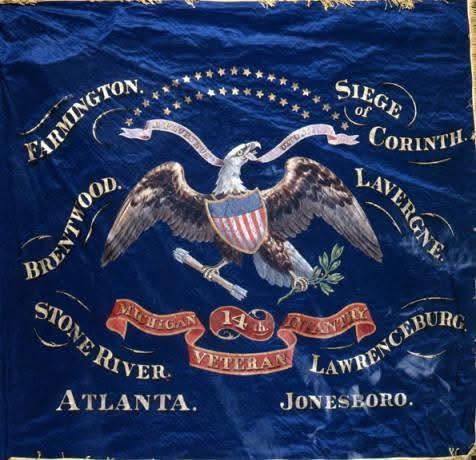
The 14th Michigan Infantry memorialized the fight at Lawrenceburg as a battle honor on their regimental flag, which can be seen in this image.
Posted in Uncategorized | Tagged , , , | Leave a comment

A Yankee Spy in Lawrenceburg

A Confederate spy, a black market for clandestine cotton, and a town just as defiant in the middle of the Civil War as it was at the beginning? According to one eyewitness on this day 162 years ago, that was Lawrenceburg in 1863.

In the fall of 1863, a northerner named John C. Smith traveled through Lawrence County in the midst of the Civil War. The letter he wrote to a Union general about his journey revealed that our county was not only still defiantly pro-Confederate at that stage of the war, but that it was also home to a Confederate spy and several factory owners who had duped the Union out of thousands of dollars worth of cotton.

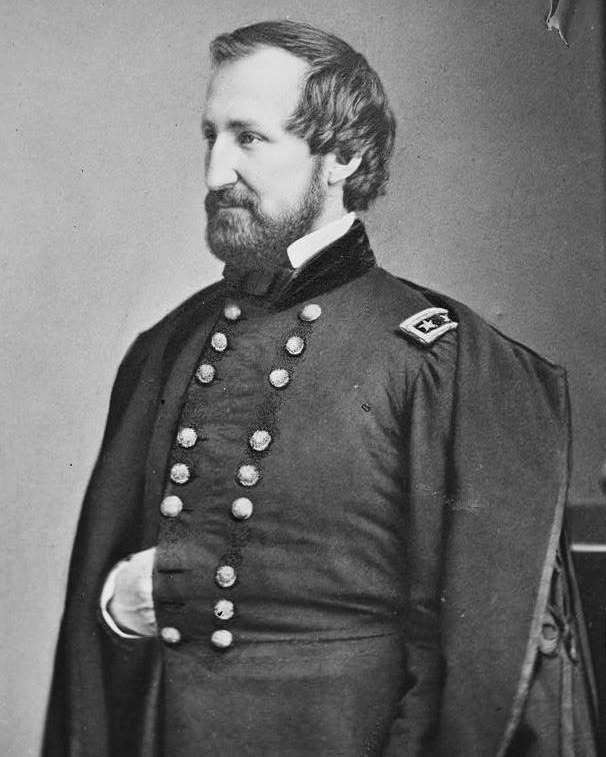
Writing to Union General W.S. Rosecrans (pictured here) on October 14, 1863, Smith reported that, from Clifton to eastern Wayne County, “I found two-thirds of the people for the Union and no mistake and willing to take up arms for the old flag, and many of them have already done so.”

But Smith found a different political landscape entirely when he approached Lawrenceburg. He said, “When I got within 8 miles of Lawrenceburg, and all the way and in the place, I found all rebels.” This loyalty to the Confederate cause is especially remarkable at this stage of the war, given the major Confederate defeats that summer at Gettysburg and Vicksburg.

During his journey, Smith found one of the few openly Unionist men in Lawrenceburg and stayed the night at his house. Although he doesn’t tell us the name of his host, he does divulge the things he learned about Lawrenceburg’s clandestine Confederate black market while staying there.

According to Smith’s host, some of the owners of the cotton factories surrounding Lawrenceburg had taken the oath of loyalty to the Union the previous year, but had continued to secretly furnish the Confederate quartermaster at Huntsville with “thousand upon thousands of yards of cloth and hanks of thread to sew with.”

These factory owners received as payment from the Confederate army “captured cotton from the U.S. Government,” which they secretly picked up “at the tunnel between Pulaski and Huntsville on the railroad.” Much of the cotton, according to Smith, was branded as belonging to the Confederate government. He urged Rosecrans to confiscate these factories for the Union, as he reckoned that the contents thereof “would be enough to pay 50,000 soldiers for six months’ service.”

Smith goes on to say that the town of Lawrenceburg was generally “nearly deserted, and in a dilapidated condition.” Among the other peculiar personalities Smith was informed of by his host was Birney Chaffin, who was no doubt the court clerk W.B. Chaffin. According to Smith’s mysterious host, Chaffin “pretended to be a Union man and has taken the oath…but [he] is undoubtedly a southern spy.”

The evidence against him? Smith’s host said that Chaffin “has always a number of [pro-Confederate] bushwhackers with him in his house.” Smith went on to say that Chaffin “is the worst man and most dangerous spy the rebels have there.”

Posted in Uncategorized | Tagged , , , , | Leave a comment

A Brief History of the Central Turnpike

Can you imagine paying a toll to get from Summertown to West End? Let’s travel through time on the Central Turnpike.

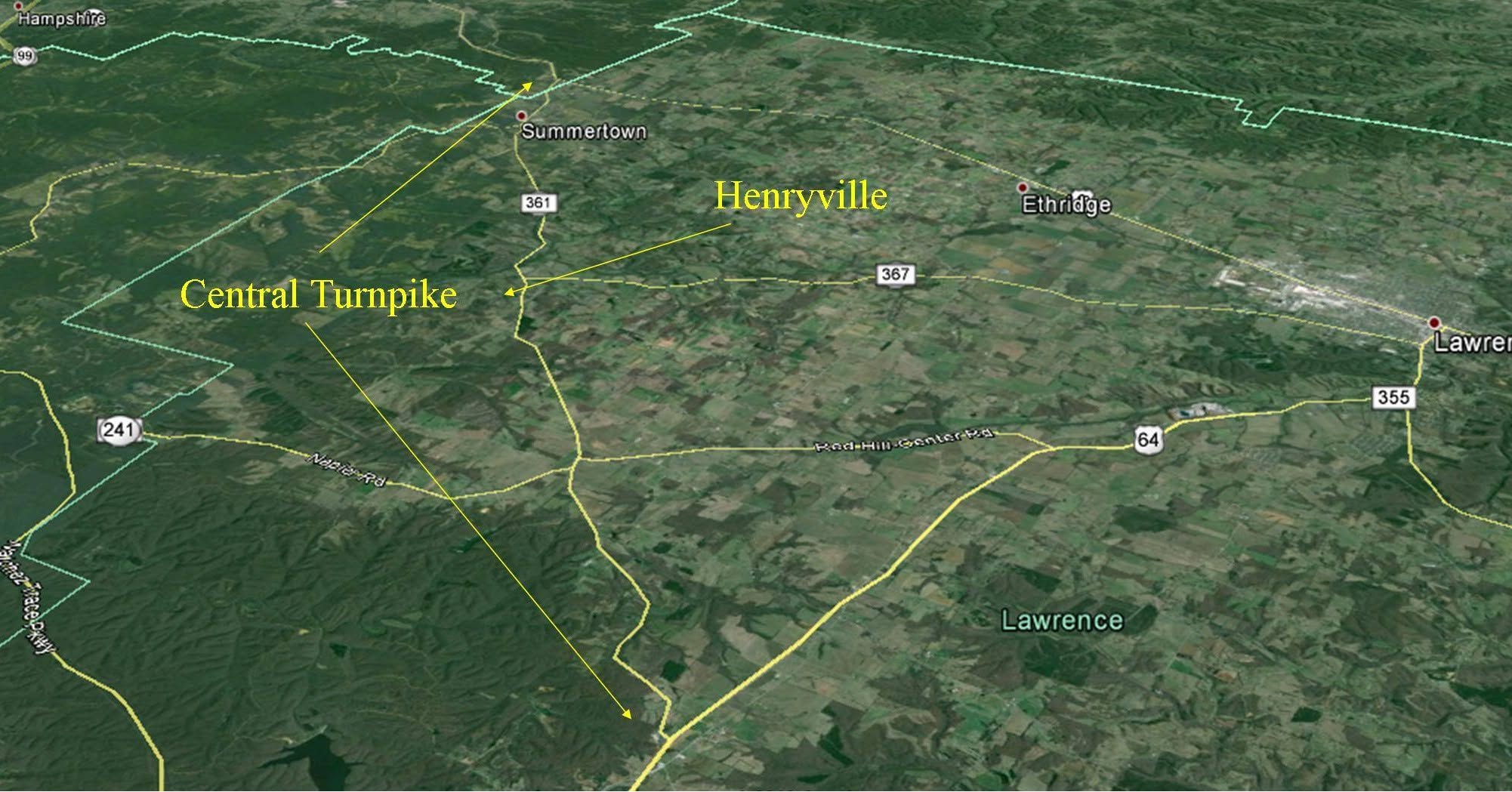
The Turnpike, which runs from West End Fire Hall to Henryville to Summertown in Lawrence County, was originally a portion of a road built by a private corporation for the purpose of charging travelers a fee for its use.

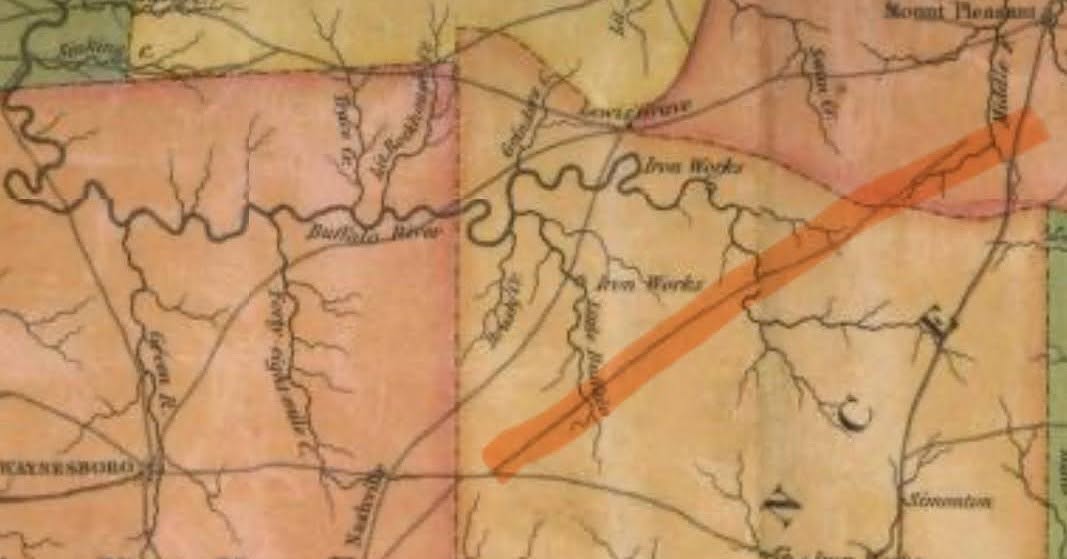
Chartered in 1837 (but most of the route visible here on Rhea’s 1832 map of Tennessee), the Central Turnpike was a privately-owned toll road that went from Mount Pleasant, through northwest Lawrence County, to the Waynesboro Road, which travelers could then take to the Tennessee River in Clifton. On February 15, 1840, the Nashville ‘Republican Banner’ reported that “the most difficult part of the Columbia Central Turnpike, to the Tennessee River, is made and now travelled upon.”

The Turnpike was used extensively by both Union and Confederate armies during the Civil War, including a skirmish in November 1864 between retreating Union soldiers and Forrest’s advance-guard during the Nashville Campaign. Union soldiers who died in this skirmish on the Turnpike were buried in Summertown Cemetery, and many of their markers are still there today. Captain James Littleton Cooper recorded of the Turnpike in his wartime diary that “…in a day or two began to see evidences of the Yankees, in the dead horses and men along the road, where Forrest’s cavalry had been skirmishing with them.”

This wartime history was memorialized in 2005 when the Turnpike was dedicated as the “Army of Tennessee Memorial Highway” in a ceremony which included state representative Joey Hensley.

According to local historian Bobby Alford, in his “History of Lawrence County,” some of the tolls for traveling the Central Turnpike were as follows:

* Footmen (each person traveling on foot)….. 6 1/4 cents

* Each man and horse….. 12 1/2 cents

* Each chair-horse (single buggy)….. 25 cents

* Each four-wheeled riding carriage….. 50 cents

* Every cart with horses….. 25 cents

* Every wagon and team…… 50 cents

* Each led horse or work ox….. 6 1/4 cents

* Each head of neat (domesticated) cattle….. 2 cents

* Each head of hogs and sheep….. 1 cent

Posted in Uncategorized | Tagged , , , , | Leave a comment

The Chickasaw Cession of Lawrence County

Can you imagine paying only two cents per acre for land in Lawrence County? What about almost the ENTIRE county, plus most of the counties around it?

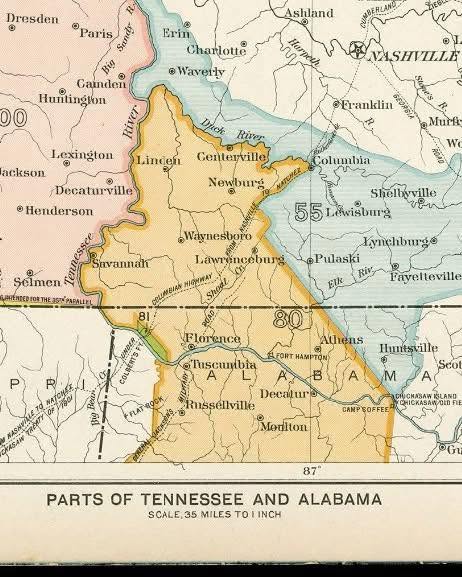
Most of Lawrence County was legally opened for white settlement by a treaty signed on this day in 1816, when the Chickasaw Tribe of Indians ceded around 9,300 square miles–6 million acres–of land to the United States.

The United States agreed to pay the tribe $120,000 over a period of ten years for this incredibly valuable tract of territory, making it almost a literal steal for the United States. That sum comes to about two cents per acre for land that encompassed not only all of modern Lawrence County, but also most of modern Maury and Wayne Counties, and the bulk of northwestern Alabama.

According to an article published by the Chickasaw TV Video Network, “General Jackson, riding a crest of popularity, led the U.S. negotiations at Chickasaw Leader George Colbert’s home. The Chickasaws might have expected better since they had fought with General Jackson against the Creeks and because the Chickasaws showed him a charter given to them by President Washington guaranteeing them their land in 1794. But Jackson coldly told them, ‘The hunt is over, the game is gone.’ “

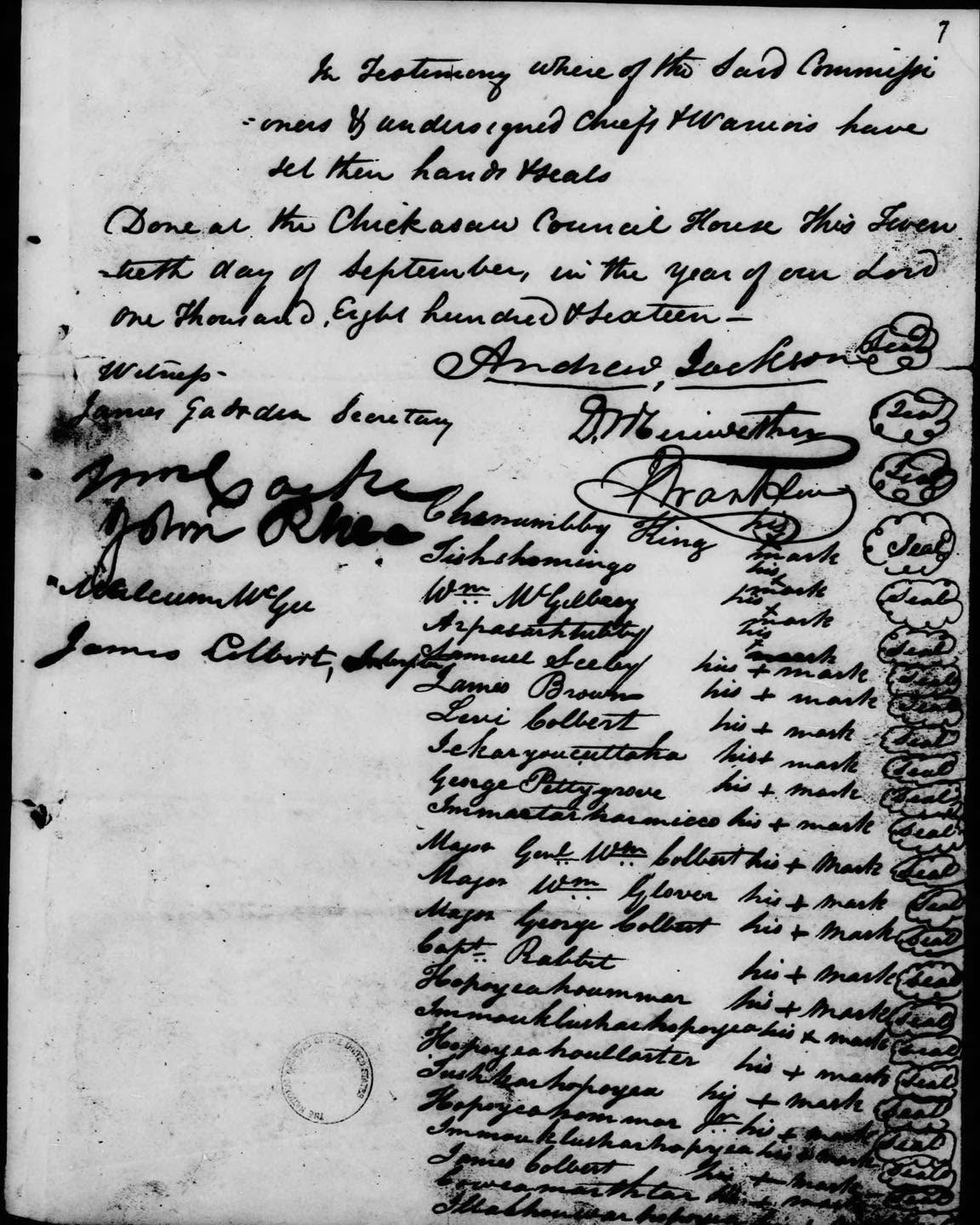
This signature page of the original treaty shows the signatures and marks of not only Andrew Jackson and the other white negotiators, but also of many of the chiefs and elders of the Chickasaw Nation who agreed to the deal, including several members of the powerful Colbert family, who arranged for the treaty to include bonus sums and land reservations for themselves.

The white men who organized the land-grab were also motivated by the prospect of a quick fortune. The shallow place in the Tennessee River that would become Florence, Alabama was part of the territory ceded by the 1816 treaty. That land eventually made tidy profits for Jackson and his closest friends, who invested heavily in lots which they sold to settlers for high speculative prices. And at least one Jackson family friend speculated in huge tracts of land here in Lawrence County when it first became available for purchase.

The trickle of illegal pre-treaty white settlement became a flood of legal white settlement in the winter months after the land was ceded by the Chickasaw. Among the wanderers who came to the unorganized territory that would become Lawrence County that winter was David Crockett, who “became so well pleased with the country about there, that [he] resolved to settle in it.” Crockett’s role in helping to bring law and order to the fledgling county would catapult him into a political career that would culminate in his service as Congressman from West Tennessee.

Posted in Uncategorized | Tagged , , | Leave a comment

When the Klan Showed Up at Cumberland Presbyterian Church

On this day 102 years ago, the parishioners of Cumberland Presbyterian Church in Lawrenceburg witnessed an unusual masquerade.

As the Lawrence ‘News’ reported, Dr. John R. Morris was ending his sermon that night when “five white-robed men came in at the south door of the church, marched down the aisle, passed in front of the preacher, placing a sealed envelope on the table which was in front of the pulpit and quietly marched out of the north aisle of the church and out of the door.”

Visiting the church that night was Rev. A.P. Moore, the pastor of First Baptist Lawrenceburg. Dr. Morris asked Rev. Moore to open the envelope. Inside he found a typewritten letter “wrapped around a roll of bills” totaling $50. The letter said that the money was “a token of our appreciation” from the Ku Klux Klan of Lawrenceburg.

This was one of the oldest tricks in the Klan’s playbook, and it happened again and again throughout the United States in the early 20th century. By staging dramatic visits to Protestant churches, the Klan sought to bolster its reputation as a Christian organization and fill its ranks with the faithful.

Three weeks later, on October 7, the routine was repeated at First Baptist Church Lawrenceburg. This time, twenty-nine of the “white-robed men” interrupted the church’s revival service to deposit the same typewritten note and $50 in the guest preacher’s hand.

The Klan of the early 20th century in Lawrence County had a ladies’ auxiliary and a post office box. It sponsored public lectures in churches and school gymnasiums, and organized public cross-burnings which ended with fireworks demonstrations. They wore matching robes and went to great lengths to make prospective members think that they were an upright and civically-conscious organization. There is also evidence that some of the city’s most prominent and powerful leaders were members of the organization.

Make no mistake, however, despite their cultivation of a “good-guy” image, the Klan was a reprehensible organization whose aim, both nationally and locally, was the subjugation and degradation of people of color, immigrants, and other marginalized people.

Posted in Uncategorized | Tagged , , | Leave a comment

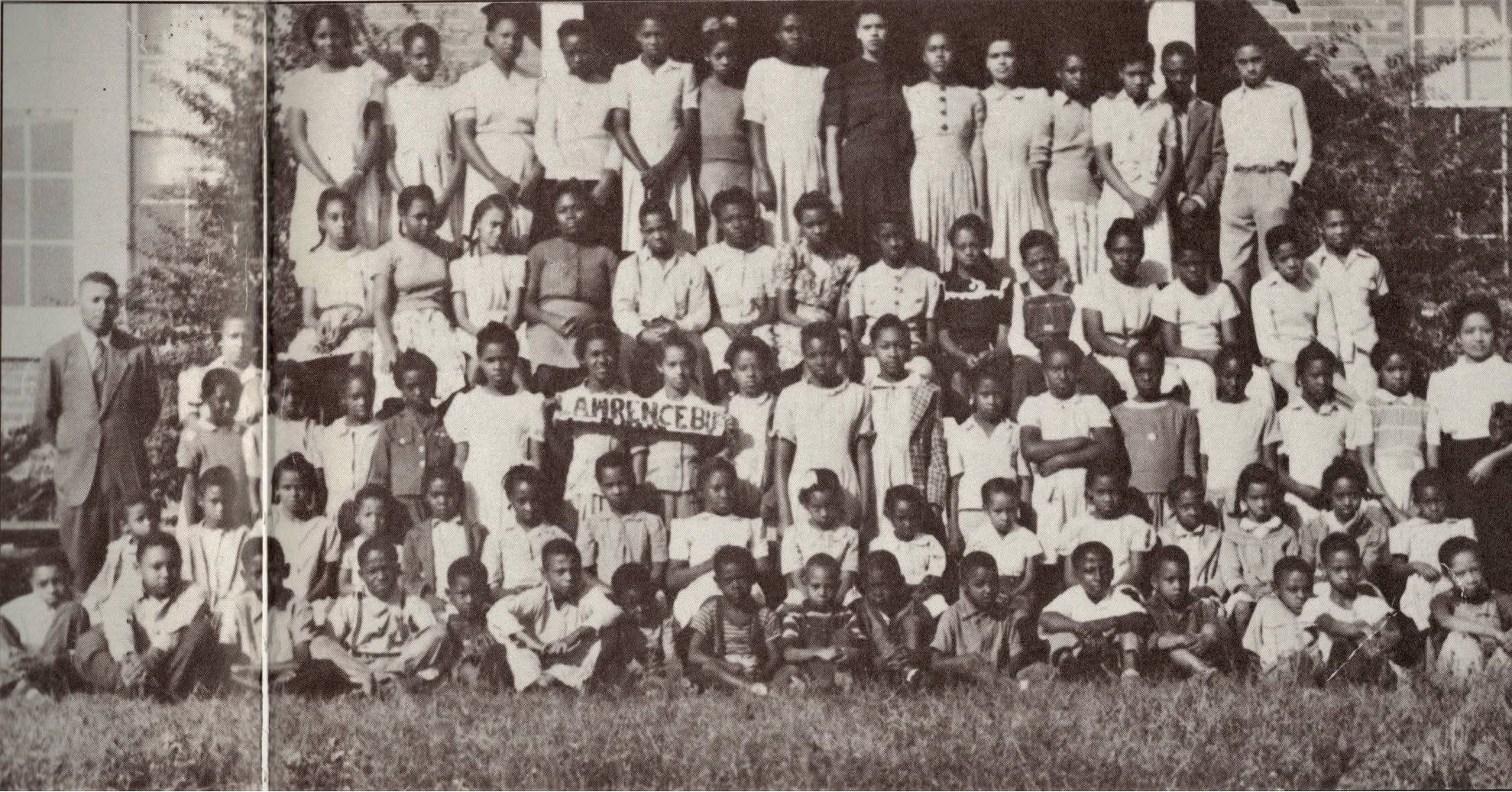
The Rebirth of West Gaines School

Did you know that a school built for African-American children during the Jim Crow era in Lawrenceburg is still standing? And that there is a fantastic group of people working to preserve it?

Since 2019, the West Gaines School Community Center group has worked to purchase and preserve what was once known as the “West Gaines Colored School.” According to the WGSCC website, preservation of the building is particularly crucial because “the black community in Lawrenceburg considers it the last public landmark of their past.”

The building, indeed, has a storied past.

Beginning in 1866, just one year after the abolition of slavery, Tennessee’s segregation laws prohibited white and black children from attending school together. It was one of the first in a line of Jim Crow laws intended to create a racially segregated society in the wake of the Civil War.

Lawrence County, whose population of African Americans plummeted after emancipation, never had a large number of black schools. There were just 5 such schools in the entire county by 1875, including a small frame building erected behind St. John’s Methodist Church on what was then the western edge of Lawrenceburg.

This building served as Lawrenceburg’s black school until, challenged by overcrowding, the Lawrence County Board of Education appointed a committee to explore the construction of a new black school in 1928. By 1929, the committee had selected teachers and gathered funds ($500 from the Rosenwald Fund and $200 from the the city’s black citizens) and was prepared to proceed with construction.

But, in 1931, the project was stopped in its tracks when a complaint was filed by some white citizens. At issue was the location of the building on a 3-acre tract on West Gaines Street. The complaint took issue with the building because it supposedly “was depreciative of property values in this immediate section and against the peace, tranquility and general welfare” of the area’s white inhabitants. The case went all the way to the Tennessee Supreme Court, which ruled that the school was not a nuisance and that the court could not stop its construction.

However, the delay brought about by the lawsuit dealt a blow to the committee’s funding plan. By the time the court handed down its decision, the Rosenwald money was no longer available, prompting the board of education to adjust its plans. By 1937, the school was finally completed at the West Gaines location, thanks in part to funding obtained from the New Deal.

The school served grades 1-8, and a gym and additional classrooms were added in the early 1950s. Black students who wished to attend high school had to take a bus from the West Gaines School to Mt. Pleasant in Maury County, the closest black high school in the area.

The West Gaines School closed its doors in the 1960s when the Lawrence County School System was desegregated. For several years, the building was used as the central office of the Board of Education.

The Lawrence County Commission voted unanimously to give the property to the WGSCC on September 24, 2024, and on November 26 voted “to give a previously budgeted $45,000 toward a new roof for the building.” The WGSCC is currently in the process of renovating the building, and, according to their Facebook page, plan for the building to include “a state-of-the-art museum showcasing the history of Black residents…educational programs for students of all ages focusing on Black history, culture, and current events…[and] community events and gatherings such as lectures, film screenings, and cultural celebrations.”

To donate to the organization’s efforts to renovate the West Gaines School, follow this link: https://westgainesscc.org/your-donation-will-help-us…/

Posted in Uncategorized | Tagged , | Leave a comment

Fightin’ Joe Fights in Lawrence County

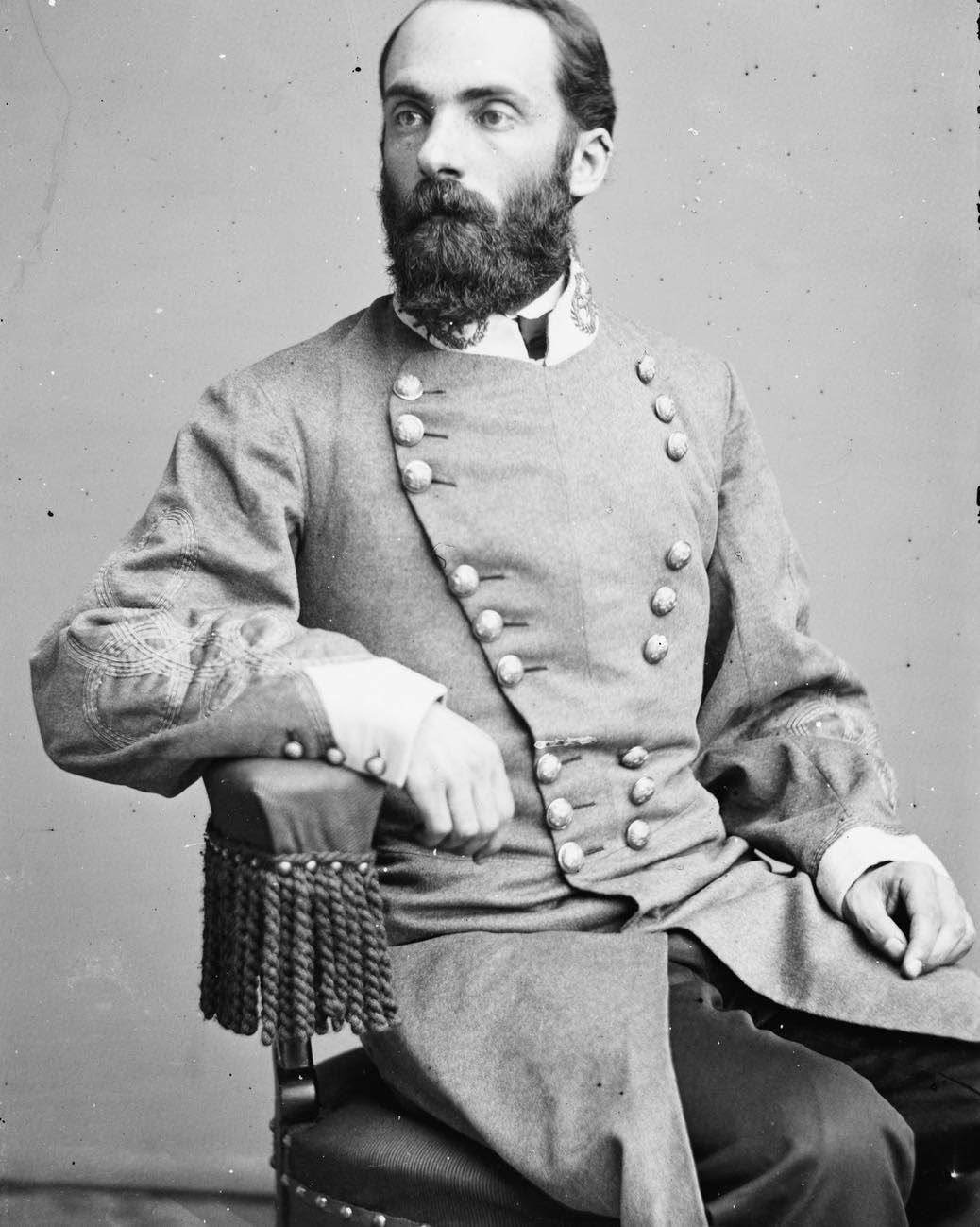
On this day 161 years ago, Confederate General “Fightin'” Joe Wheeler was fightin’ in Lawrence County.

The months leading up to Hood’s ill-fated Nashville campaign in the fall of 1864 saw a noticeable surge in Confederate guerrilla activity in Middle Tennessee, emboldened by raids from Confederate cavalry. Lawrence County, which had been a hotbed of guerrilla activity throughout the Civil War, likewise saw an increase in Confederate presence. That increased presence did not go unnoticed by Union forces.

After a campaign of destroying railroads and doing all he could to disrupt Union forces in Tennessee, on September 6, 1864, General Joe Wheeler’s (pictured here) Confederate cavalry skirmished with Federal cavalrymen under command of General Lovell Rousseau some “thirteen and a half miles from Lawrenceburg” on Lamb’s Ferry Road.

Wheeler, using General Roddey’s force as a shield, beat a hasty retreat into Alabama and across the Tennessee River. Union General R.S. Granger reported to Rousseau that “I have been unwell all the morning…The enemy is about an hour in advance of us. I have very little doubt but he will go to the river to-night and attempt to cross. As Roddey’s command has been up the road he will keep Roddey as a shield to him while he crosses the river. Roddey will probably be fresh enough to get away.”

Wheeler’s was not the only Confederate cavalry presence in the area in the leadup to the Nashville Campaign. In late September, Union scouts reported that Confederate Colonel Jacob Biffle was at Lawrenceburg, with 700 men and two artillery pieces. Biffle was a native of Wayne County, and commanded the 9th Tennessee Cavalry Regiment (sometimes called the 19th Tennessee Cavalry Regiment), which included many men from Lawrence County.

On October 3, 1864, Forrest, himself, and a contingent of his men camped eleven miles east of Lawrenceburg. This flurry preceded the flood of activity that would occur in November 1864, as Hood’s army made its way toward Nashville, in hopes of liberating the city from Union control.

All in all, Lawrenceburg changed hands between the two armies at least seven times in the last four months of 1864.

Posted in Uncategorized | Tagged , , , | Leave a comment

The First Tractor in Lawrence County

This weekend was the annual Crossroads of Dixie Antique Tractor & Engine Club’s annual tractor show in Lawrenceburg! Did you get a chance to see it?

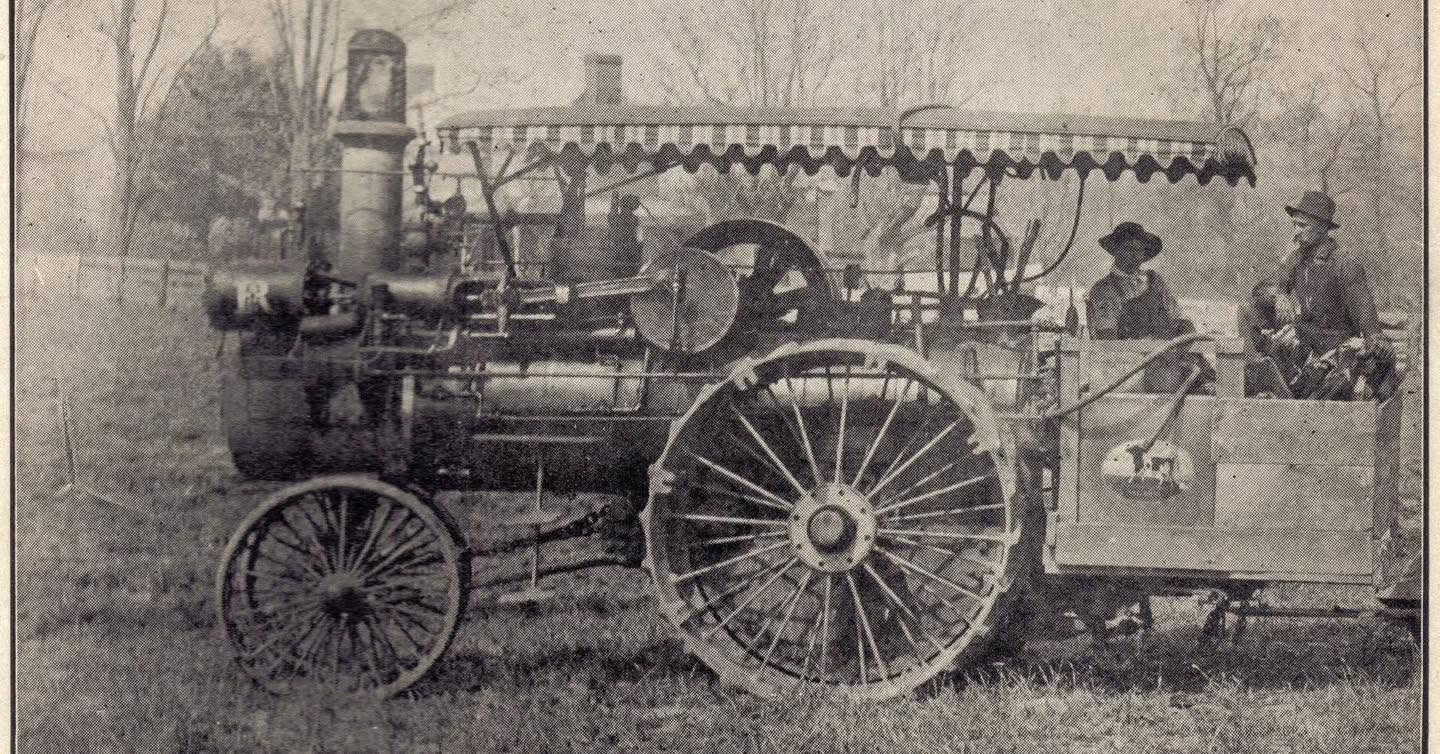
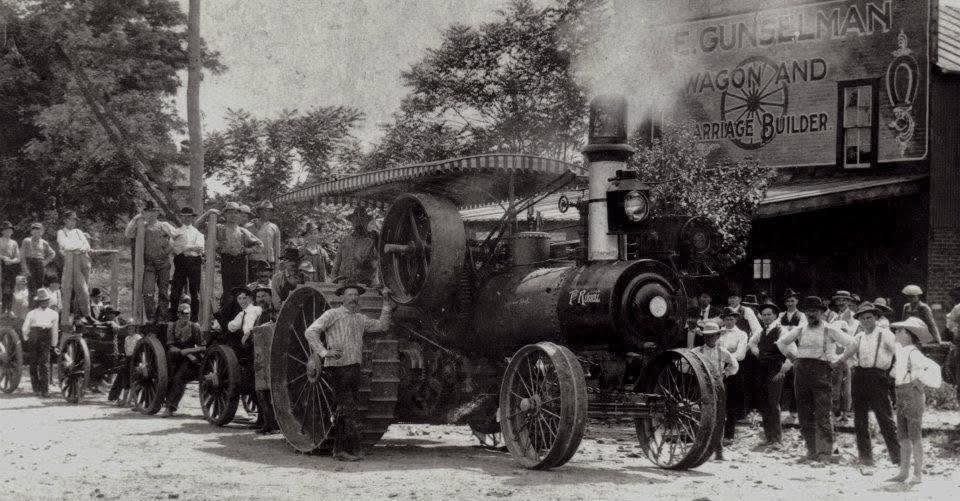
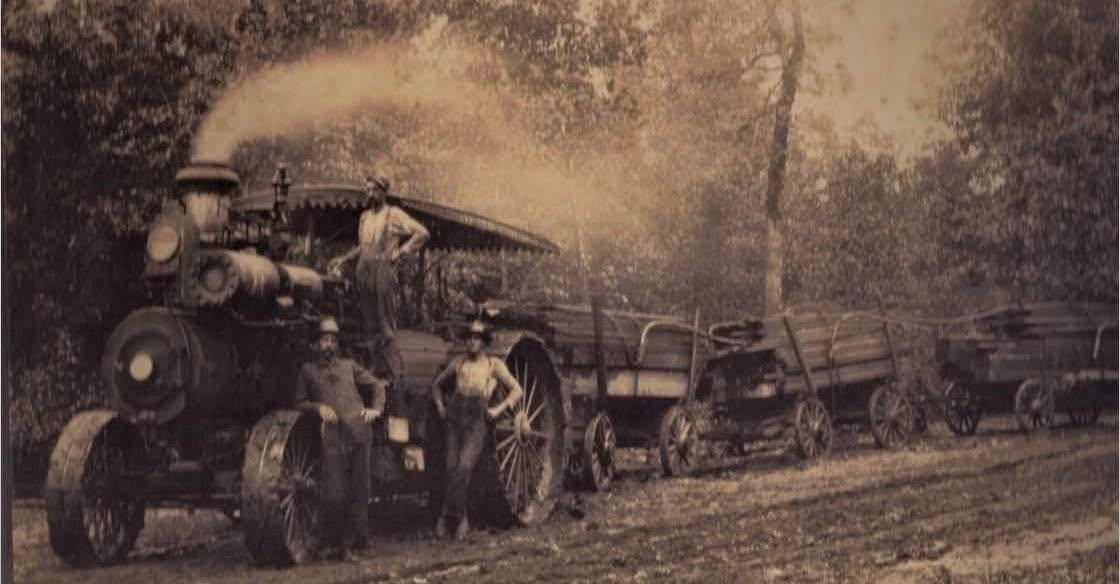
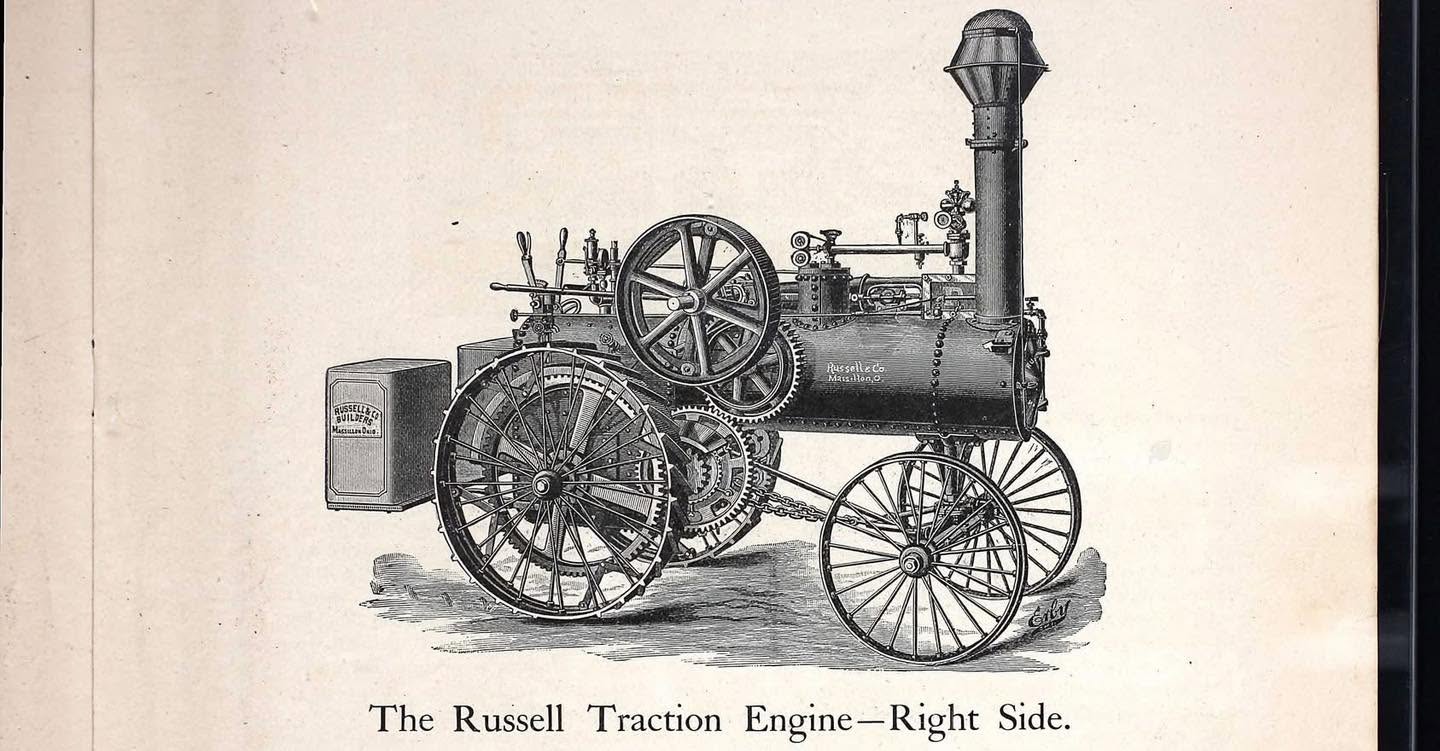
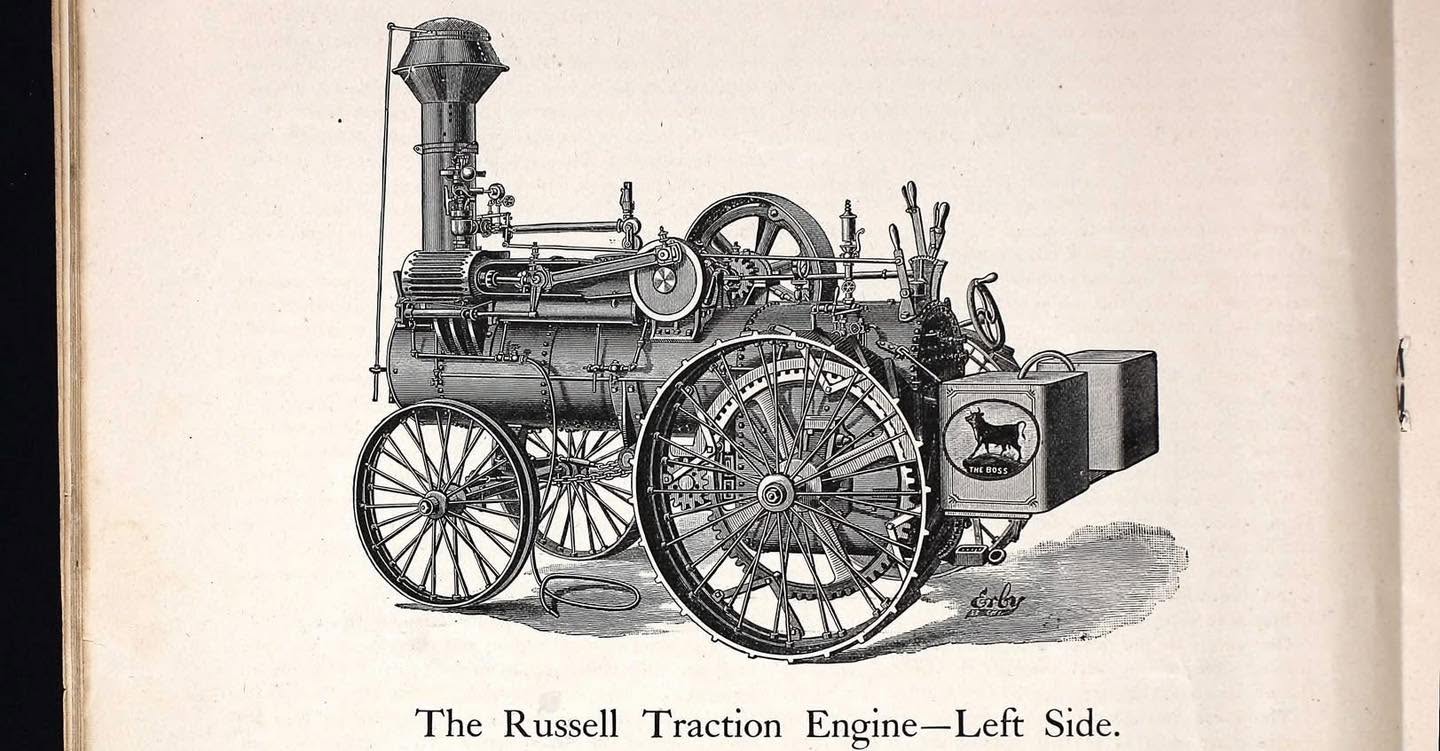
The tractor first came to Lawrence County around the turn of the 20th century. Local banker and philanthropist J.H. Stribling purchased a Russell Traction Engine to use on his farm and to haul cross ties for railroad construction.

Stribling was a proponent of agricultural experimentation. His farm was featured in magazines in the early 20th century for growing large yields using scientific farming methods. When Stribling purchased the Russell, Lawrence County’s farms were predominantly powered by mule as they had been for generations. The Russell was a steam-powered machine, and models in their 1890 catalog ran between 6 and 16 horsepower.

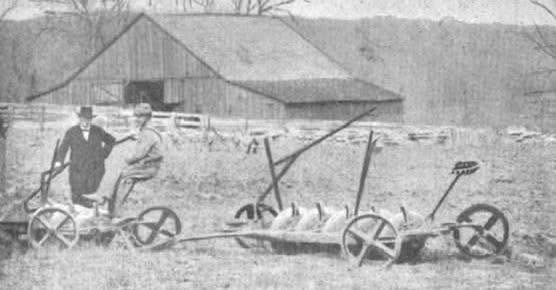
Russells were known for being incredibly heavy, but they could pull an impressive load. Photos here (courtesy of the Old Jail Museum) show Stribling’s Russell pulling loads of lumber, three empty wagons, and a gang plow (pictured separately).

The tractor symbolized a major shift in American agriculture. Its versatility, power, and eventual affordability literally and figuratively changed the landscape of rural America.

In 1900, almost every farmer in Lawrence County used methods and tools that would have been recognizable to their 18th-century ancestors. By 1950, however, there were 928 tractors in use on 22% of Lawrence County’s farms. Of those farms where tractors were in use by 1950, a full 1/3 relied solely on tractors with no horses or mules.

The culture of Lawrence County, like that of every other rural county in America, was changed forever by the tractor.

Do you have any cool tractor stories? Let us know in the comments!

Posted in Uncategorized | Leave a comment

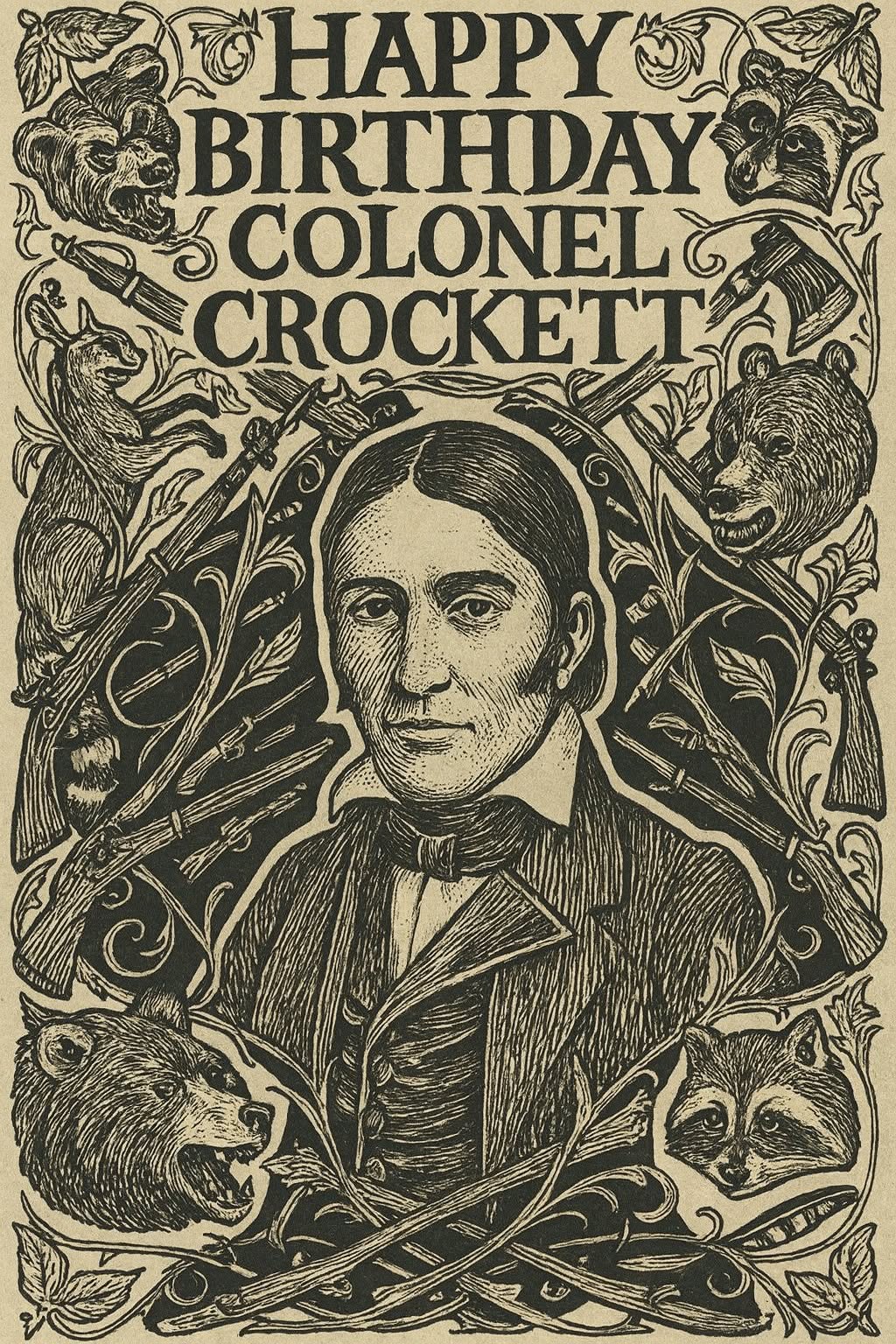
Happy Birthday, Colonel Crockett!

Happy birthday to Colonel David Crockett!

Born on August 17, 1786 in Greene County, Tennessee, Crockett was a larger-than-life figure who spent his life moving steadily westward. In 1816, he explored a section of frontier that had recently been purchased by the Federal government from the Chickasaw nation. As he told it in his autobiography:

“I went on to a place called Shoal Creek…and here again I got sick. I took the ague and fever, which I supposed was brought on me by camping out. I remained here for some time, as I was unable to go farther; and in that time, I became so well pleased with the country about there, that I resolved to settle in it.”

The country which so well pleased Crockett would become Lawrence County in less than a year. And even he probably could not have predicted at that time what a turn his life would take in Lawrence County.

Crockett, who could barely read and write when he settled near Shoal Creek, was elected as a magistrate in Lawrence County. Over the next four years, he was elected colonel of the county’s militia company, one of the first commissioners of the city of Lawrenceburg, and state representative.

In his own words, shortly after his arrival in Lawrence County, Crockett “began to take a rise.”

Crockett also borrowed a large sum of money to build a gristmill, powder mill, and distillery in Lawrence County, at Crockett Falls in modern David Crockett State Park. Unfortunately for Crockett, his industrial operations–and his aspirations to financial stability–were short-lived. A flood of Shoal Creek destroyed Crockett’s mill and distillery in 1821. The disaster precipitated his move from Lawrence County to West Tennessee.

In West Tennessee, Crockett’s meteoric rise continued as he was elected to two terms in the U.S. House of Representatives. When the voters denied him a third term, he went to Texas to try to start over. Just a few months later, he met his end at the Alamo in San Antonio, Texas while fighting for Texas independence.

Crockett’s legacy is everywhere in Lawrence County. As Lawrence County’s most legendary resident, his name can be found on street signs, theater marquees, statues, parks, schools, and museums.

Happy birthday, Davy!

Posted in Uncategorized | Tagged , , , , | Leave a comment

Lawrence County’s Last Revolutionary Soldier

Did you know Lawrence County’s last Revolutionary War veteran died less than ten years before the Civil War began?

By the early 1850s, there were few Revolutionary War veterans left in the United States. Indeed, on the 1850 census, only 67 Lawrence Countians were left who said that they had been born before 1776, and only six of those people had been 15 or older when the Revolutionary War began.

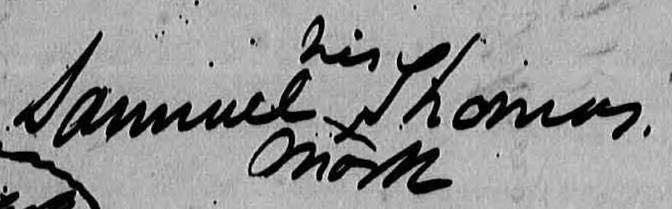
But Lawrenceburg resident Samuel Thomas was one of them. In fact, he was the last surviving veteran of the Revolutionary War in Lawrence County.

Born on March 10, 1759 in Dinwiddie County, Virginia, Samuel was 19 years old in August 1778, when he marched off with his militia company from Anson County, North Carolina, to fight for American independence. As his obituary states, “he served his country faithful, and at the close of the war was honorably discharged, and retired to private life, to enjoy, in common with his co-patriots of the revolution, the fruits of his toils and privations.”

His obituary, however, only tells part of the story.

In his pension application testimony, Samuel tells tales of fighting Tories, marching through the backwoods of South Carolina, doing battle with redcoats, marching with George Washington’s army, and being present at Yorktown on the day that the British surrendered.

Samuel was 90 years old when he applied for his pension in Lawrenceburg. At that time, he said that he had lived in Tennessee since 1816.

Samuel died in Lawrenceburg on December 14, 1853, at the home of prominent citizen George H. Nixon. According to his obituary, he was the last surviving veteran of the Revolutionary War to live in Lawrence County. Samuel was buried with full military honors. The local volunteer militia company of Captain Burkett escorted Samuel’s body to the grave.

The Methodist minister Reverend Noah Parker preached ‘an appropriate Divine service,’ followed by a stirring patriotic eulogy from H.H. Rose. Some excerpts of that eulogy are as follows:

“It is needless for us to ask, why this array of arms around the peaceful grave? Why that banner, with its time honored stars and stripes, is now waving over this ‘city of the dead?’ We are around a soldier’s grave, and these are the fit emblems of a soldier’s burial….

“To day we have conveyed and laid in the silent grave the last soldier of of the Revolution in our county. He has been blessed with long life. He lived to see his country great and happy; extending the blessings of freedom, from the Atlantic to the golden shores of the Pacific ocean…

“We should be thankful that he has lived to enjoy the fruits of his own toil, and to see its blessings extended to a mighty nation–we should be thankful that he has lived to see that tree of liberty, which in youth he assisted in planting in freedom soil, extend its branches from the Atlantic to the Pacific ocean, and from the frozen north to the burning sands of the Rio Grande of the south…we should be thankful that he has lived to see that flag in the hands of his descendants, waving victorious upon the battlements of Monterey, Vera Cruz and Mexico; we should rejoice that he has lived to see his country one of the most powerful nations upon earth–the land of the free and the home of the oppressed of every country.”

Posted in Uncategorized | Tagged , , , , | Leave a comment