Watch Night in Lawrenceburg

The Nashville ‘Globe’ was one of Tennessee’s most prominent African American-owned newspapers in the early 20th century. In publication from 1906 to the 1930s, it occasionally reported stories from Lawrence County’s African American community.

In January 1917, the paper’s Lawrenceburg correspondent wrote an article detailing how several local African American families spent Christmas 1916. The picture it paints is of an active, organized, and close-knit group of people celebrating, worshiping, and serving together during the holiday season.

The article says: “Christmas was the quietest witnessed in the history of Lawrenceburg. Drunkenness was put away by those who are frequent users of rum. Xmas day was a great day. Sunrise meeting at St. John M.E. Church was spiritual in the highest form.

“Mr. and Mrs. J.H. Bumpass entertained at breakfast Christmas day. Mr. and Mrs. M.L. Wigfall entertained at dinner Rev. and Mrs. Sebastian Xmas eve. Mr. and Mrs. George Symington entertained at supper Christmas evening Dr. and Mrs. Sebastian. Dr. and Mrs. B.L. Burrows Christmas night was one of the greatest events of Xmas, by way of a concert, led by Mrs. B.L. Burrows and Mrs. J.W. Sebastian.

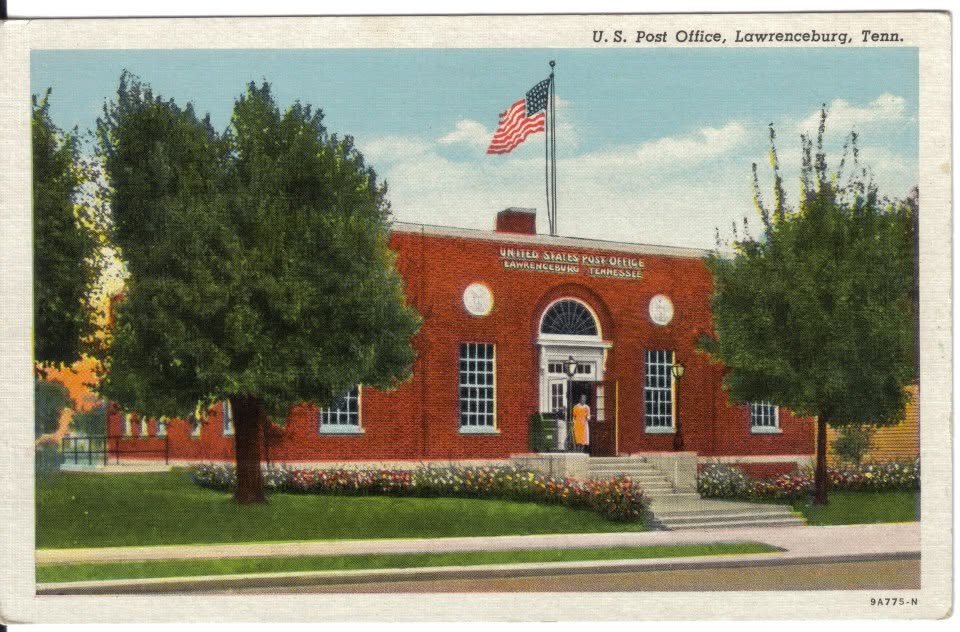
“The post office which afforded the presents, was heavily laden. The presents were managed and distributed by Dr. B.L. Burrows. Everybody’s heart was made happy as their names were called. On Tuesday Dr. and Mrs. B.L. Burrows were highly entertained by Mr. and Mrs. Robert Linam at dinner.

“All the churches Sunday had their doors thrown ajar, with their pastors at their posts respectively with few exceptions. St. Paul Baptist Chruch had a lively meeting. Rev. W.M. Watts filling the pulpit in the absence of the pastor, Rev. C.C. Cade. Rev. J.W. Sebastian was on duty Sunday morning, preaching from Micah 2:10. Sunday watched the old year go out and the new year come in with a high, spiritual wave and a heart full of thanksgiving to God for the past year’s blessings.

“Rev. J.C. Carter delivered the Watch Meeting sermon. Mr. and Mrs. W.L. Wigfall entertained Dr. and Mrs. Burrows Sunday. Mr. and Mrs. J.A. Bumpass entertained Rev. and Mrs. J.W. Sebastian at dinner.”

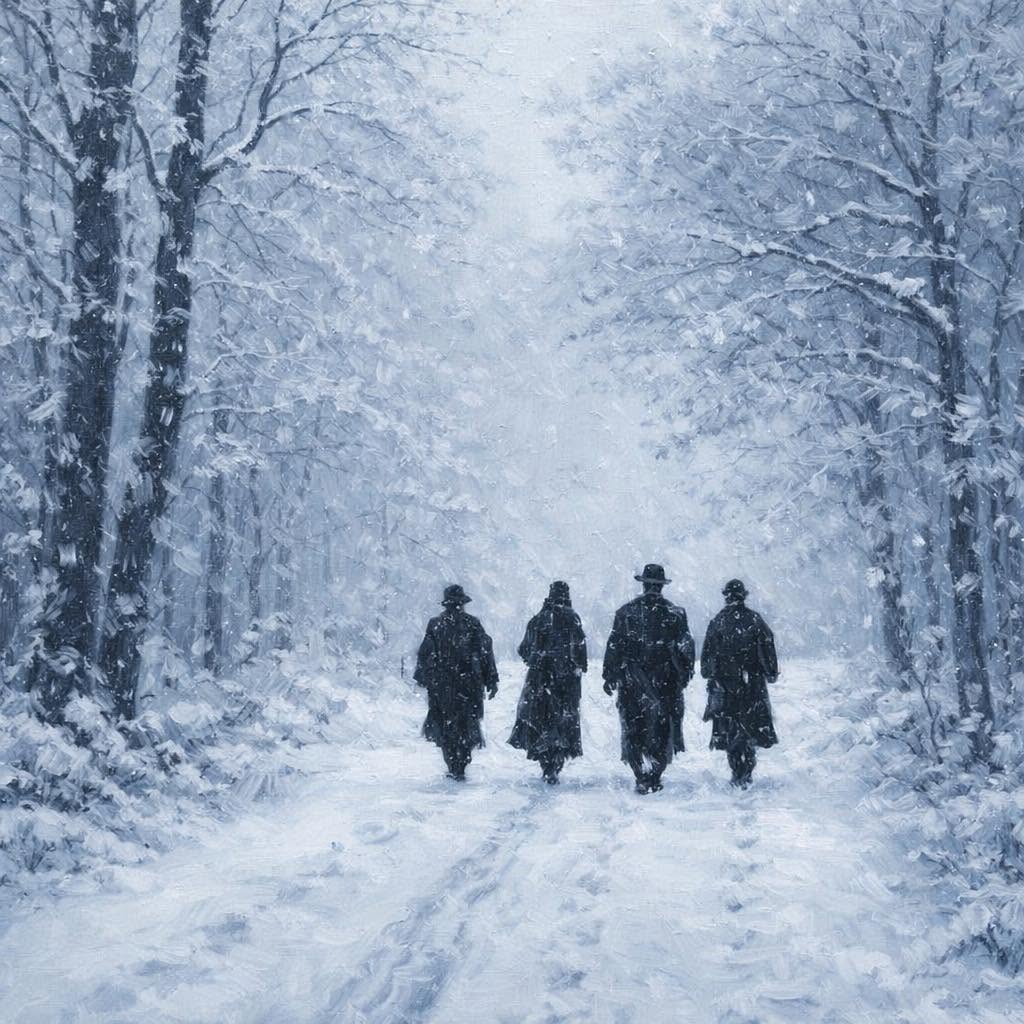
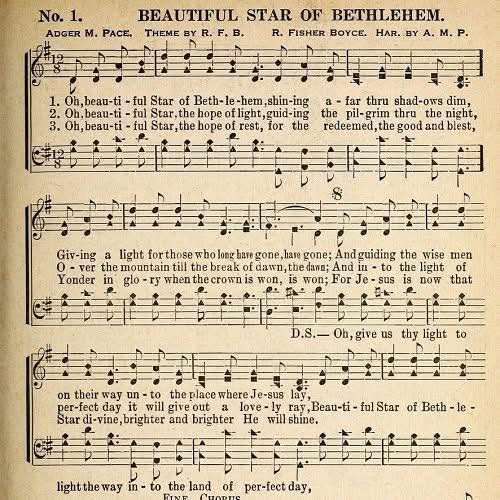
The Watch Night tradition is observed across the country in African American churches. A commemoration of the Emancipation Proclamation, which took effect on January 1, 1863, the Watch Night service, according to the Smithsonian Institute, “typically begins around 7 pm on December 31 and lasts through midnight, as faith leaders guide congregants in praise and worship.

“Many congregants across the nation bow in prayer minutes before the midnight hour as they sing out ‘Watchman, watchman please tell me the hour of the night.’ In return the minister replies ‘it is three minutes to midnight’; ‘it is one minute before the new year’; and ‘it is now midnight, freedom has come,’ to bless their transition into the new year.”

Have you ever attended a Watch Night service? Share your memories in the comments! 

Posted in Uncategorized | Tagged , , , , | Leave a comment

The New Jackson Highway Goes East

That view has certainly changed!

This undated view of Locust Street in Lawrenceburg looking north from the Pulaski Street intersection is part of the Old Jail Museum’s collection of more than 150 historic local postcards.

Although today Locust Street is the hub of much of the city’s commercial activity, this image captures a time when it was still relatively deserted, save for a few residential buildings.

The “longest red light in the world’ at Cyclone Corner is visible in the distance.

From Lawrenceburg’s founding to the mid-1930s, the main commercial center of town was the Public Square and North Military Street. That changed in the spring of 1934, when a new route was chosen for the Jackson Highway, or what we now know as Highway 43.

This massive infrastructure project was a fascinating–and successful–endeavor to rebuild Andrew Jackson’s original Military Road as a modern, paved highway between Nashville and New Orleans. There was only one problem for the people of Lawrence County: the state had decided to completely pass over the county’s historic business districts along the original Military Road in favor of a less-obstructed, more easterly course of Locust Street.

Despite a spirited protest by the businessmen of Lawrenceburg and Loretto to keep the highway running through the cities’ main streets–including at least one petition drive that netted over 200 signatures–the route of the massive new Jackson Highway was set for Locust Street in Lawrenceburg, and bypassed the business district of Loretto and the town of Ethridge completely. The reason? Railroad tracks.

In an effort to save money and create as unobstructed a pathway as possible for the new road, state highway officials set a course for the highway that completely avoided crossing the L&N railroad altogether.

The result was a harsh blow for downtown businesses in Lawrence County. While Military Street would continue to serve as the seat of local commerce for a few more years, that dominance rapidly and inevitably shifted to the new Jackson Highway.

Posted in Uncategorized | Tagged , , , , | Leave a comment

An Immigrant Girl’s Story: The Adventurous Life of Louise Hovelmeier

Louise Schnettgocke cried as she boarded the ship for America. Although excited by the opportunity that awaited her, the 25-year-old felt a profound sense of “utter loneliness” as she stood on the dock in Bremen, Germany the spring of her twenty-fifth year.

Born in 1856 in the village of Recke, Germany, Louise went to work at fourteen as a housekeeper and cook for a butcher, a job for which she was paid “one pair of wooden shoes, two dresses, and the German equivalent of one dollar in cash” in her first year.

She understood loss and hard work at an early age.

Her twin brother convinced her to come to America. She spent almost every penny she had to book passage, and met him in Baltimore after a seventeen-day sea voyage that she made by herself. When she landed, she couldn’t speak a word of English. Soon she moved to Indiana, where she got a job at a shoe factory. Children sometimes ran behind her, calling her “Green Dutch” because she spoke no English, an insult that caused her much pain.

Louise learned English by speaking with her coworkers at the shoe factory. She recalled, “When someone taught me an English word I say to them that I pay them a penny to teach me more.” Louise learned English at a penny a word.

Her life changed forever when she met Joseph Hovelmeier in Indiana. Hovelmeier, himself a German immigrant, had purchased a lot in the German Catholic Homestead Association’s German Addition to the city of Lawrenceburg in 1877. In 1882, Louise joined him in Lawrenceburg, where he was working as a blacksmith. The pair were married on September 19, 1882.

In 1871, during the Franco-Prussion War, Louise had been part of a group of girls who were “required to knit and spin for the soldiers” twice a week. Her adopted nation fought two world wars against her native country during her lifetime. But when Percy Priest interviewed her for the ‘Tennessean’ in 1940, shortly after Adolf Hitler invaded Poland, she did not mince words on her opinion of the dictator. “Hitler, I do not like him,” she told Priest “with some vehemence.”

In Lawrenceburg, like many other settlers with the German Catholic Homestead Association, the Hovelmeiers carved out their own version of the American dream, and their descendants are still among us in Lawrence County, today. Married until his death in 1907, the pair had many children, and Louise lived to the age of 91.

Posted in Uncategorized | Tagged | Leave a comment

In His Own Words: Forrest in Western Lawrence County

On this day 161 years ago, one of the South’s most formidable cavalrymen engaged the Union army on the Turnpike in northern and western Lawrence County.

As General Nathan Bedford Forrest’s cavalry screened the movements of the infantry of the Army of Tennessee during Hood’s push to Nashville on this day in 1864, he encountered Federal resistance at the place where modern Greenwood Road meets the Central Turnpike.

Forrest’s full report of the action is below. The area around Summertown is referred to in his account as Foust’s Springs or Fouche Springs. At Summertown, Forrest, himself, accompanied only by his escort, charged Union cavalrymen and forced their retreat toward Mt. Pleasant.

“I bivouacked my command at Shoal Creek [near modern St. Florian, Alabama] until the morning of the 21st, when, in obedience to orders from General Hood, I commenced a forward movement. My command consisted of three divisions–Chalmers’, Buford’s, and Jackson’s. I ordered Brigadier-General Chalmers to advance via West Point, Kelly’s Forge, Henryville, and Mount Pleasant. Brigadier-Generals Buford and Jackson were ordered to move up the military road to Lawrenceburg, and thence southeastward in the direction of Pulaski. Both these divisions had several engagements with the enemy, and were almost constantly skirmishing with him, but drove him in every encounter.

At Henryville, Brigadier-General Chalmers developed the enemy’s cavalry and captured forty-five prisoners. At Fouche Springs the enemy made another stand. I ordered General Chalmers to throw forward Rucker’s brigade and to keep up a slight skirmish with the enemy until I could gain his rear. I ordered Lieutenant-Colonel Kelley to move by the left flank and join me in rear of the enemy. Taking my escort with me I moved rapidly to the rear. Lieutenant-Colonel Kelley being prevented from joining me as I had expected, I made the charge upon the enemy with my escort alone, producing a perfect stampede, capturing about 50 prisoners, 20 horses, and 1 ambulance. It was now near night, and I placed my escort in ambush. Colonel Rucker pressed upon the enemy, and as they rushed into the ambuscade my escort fired into them, producing the wildest confusion. I ordered Colonel Rucker to rest his command until 1 a.m., when the march was renewed toward Mount Pleasant…”

–‘Official Record of the War of the Rebellion’, Series 1, Vol. 45, Part I, pg. 752.

Posted in Uncategorized | Tagged , , , | Leave a comment

The Bombardment of Lawrenceburg

In honor of the 161st anniversary of Hood’s push into Lawrence County, please enjoy these stories told by men who was present with the army during the action, in their own words.

Robert L. Morris was part of the cavalry screen for the easternmost column of Hood’s army as it pushed into Lawrence County, which traveled the Military Road directly to Lawrenceburg. Writing in the ‘Military Annals of Tennessee’ about twenty years after the War, he recalled the fighting faced by his 21st Tennessee Cavalry outside of Lawrenceburg:

“About the 21st of November found the regiment, still in the van, encamped for the night within five miles of Lawrenceburg. Early next morning, about daylight, Capt. Withers, with a picked body of men, numbering about twenty-five, went forward to drive in the pickets and feel of the enemy in the town of Lawrenceburg, as they were thought to be in considerable force there.

The pickets were driven in, and the town found to be alive with the enemy, to the number of four or five thousand, in command of Gen. Hatch. A courier was dispatched to Col. Hill with the information, and position was taken by Wither and his little command on a hill overlooking Lawrenceburg and across the road leading south.

In a little while a pretty heavy skirmish line was put forward by the enemy, when, falling still farther back, a better position was obtained by Capt. Withers where the road led up a narrow valley. Word was here received from Col. Hill that Jackson’s division was yet several miles in the rear; that he was fortifying with rails, and for him (Withers) to check the advance of the enemy if possible.

It was soon discovered that the Federals were making a reconnaissance in force, as they approached in pretty solid column, with their flanks well extended. Waiting until they were well in the narrow valley and had begun the ascent of the hill, the command to charge was given, and, spurring their horses, the little band boldly struck the head of the column, and penetrated some distance into their lines.

For a few minutes a desperate hand-to-hand fight ensued. Turning, the company made its way out with the loss of only one man, but nearly every horse was more or less badly wounded. Several of the Federals were slain. The Confederate killed in this encounter was Mac Halfacre, of Co. F, recently transferred from the signal corps–a brave and gallant soldier.

The attack was sufficient to check the advance of the enemy, and they retired to Lawrenceburg. With the appearance of Jackson his artillery was favorably stationed and fire opened on the town. In the afternoon, with the troops dismounted, an assault was made. The Twenty-first Tennessee and Twenty-eighth Mississippi, occupying the center of the line, bore the brunt of the engagement. So swiftly and hardly were the enemy pressed that their camp was taken and a good deal of valuable material and much-needed rations captured.”

Among the men near the rear of the central column was Sgt. Edmund T. Eggleston of the First Mississippi Artillery. Eggleston kept a diary of the army’s movements. On November 22, he remarked that he and his men entered Tennessee in the evening.

“Tuesd 22d

Marched at 11 A.M. in a snow storm, our teams are nearly used up. Made 15 miles by 11 o’clock P.M. with some of the pieces but one or two did not get up until 4 A.M. We suffered very much with the cold but it was clear and our sufferings would have been greater had it been windy & snowy.”

Posted in Uncategorized | Tagged , , , , | Leave a comment

The Army of Tennessee in Western Lawrence County: A Veteran’s Account

In honor of the 161st anniversary of Hood’s push into Lawrence County, please enjoy this story told by a man who was present with the army during the action, in his own words.

John Johnston, from West Tennessee, was a private in the Fourteenth Tennessee Cavalry. Around the turn of the 20th century, assisted by his diary, he wrote his memories of the Nashville Campaign in Lawrence County.

He was part of the cavalry screen serving Stephen D. Lee’s Corps in the central column of the army, which came through Lawrence County by way of West Point and what is now Hood Road and Greenwood Road, which he said “was hilly and the roads were wet and rough.”

Johnston recounted a funny incident that happened around the evening of November 22.

“We reached, at night, a little place called West Point, where we went into camp. I remember very little about it, except that I spent the night on picket. It turned colder and the next day was bright and clear.

Finding a blacksmith shop there, Wharton and I stopped to have our horses shod, while the command went ahead. As this consumed several hours, we were left far behind and traveled rapidly all the remainder of the day to catch up. About night, we caught up with the rear of our men going into camp along the sides of a valley on each side of a small stream. Having been told that our regiment was ahead, we rode rapidly on until we had passed entirely beyond all the encampments of all soldiers on the road.

It was now dark and, thinking our regiment must have gone still ahead of us, we rode on and on through the dark, until we must have gone three or four miles. We then concluded that we had better go back as it was evident we had gone wrong and we were in a dangerous country.

Turning about, we rode back in a rapid walk for several miles, when upon plunging into a small stream across our road, we were greeted with a loud and excited call to halt from a sentinel sitting his horse some fifty or a hundred feet away; but whom we could not see through the dark. Answering his challenge and assuring him that we were friends, he allowed us to approach. When we got up with him, we found him ramming home a charge and handling his gun in an excited manner, and he said to us, ‘If I had had my gun loaded, I would certainly have shot you.’

We were duly thankful that his gun was not loaded, but thought it somewhat ludicrous that he should be standing sentinel away out in the dark and in the enemy’s country with an unloaded gun. We frequently laughed over the incident afterwards.

The pickets had been put out after we had gone out beyond the camps. We were sent back under guard to the colonel commanding the guard and were immediately released and bivouacked alone on the side of a hill where we passed a quiet night.”

Posted in Uncategorized | Tagged , , , | Leave a comment

The Army of Tennessee Moves North: How Hood Road Got Its Name

On this day 161 years ago, Lawrence County was full of soldiers, and their presence left a lasting memorial in the name of a local road.

General John B. Hood’s Confederate Army of Tennessee pushed north from Florence on November 21, 1864. The army marched in three columns, with Forrest’s cavalry screening the movements of the infantry behind it. On November 22, the three columns of the army were packed into Lawrence and Wayne Counties as they wound their way north toward Nashville.

Hood Road in western Lawrence County’s Deerfield community is named in honor of General Hood, whose army used the route during the Nashville Campaign. Several years ago, local historian Anna Burns preserved an interesting bit of local lore about Hood’s brief presence in the area that won’t be found in the War Department’s Official Records.

As the story goes, local boy Jim Bryant sat on a split rail fence and watched as elements of Hood’s army forded Granddaddy Creek in the same place that South Hood Road crosses it today. Shortly after fording the creek, the army struggled to move its artillery and equipment up a steep hill, while little Jim watched on.

According to the story, the troops made camp at the crest of the hill and stayed there for two days. Incidentally, two of the soldiers are said to have died while encamped there and were buried in unmarked graves nearby.

The fascinated boy watched the army while it was encamped on the hill, and took possession of one of the soldier’s hats, having never owned a real hat of his own. The hat, it was said, was riddled with close-call bullet holes.

When the army struck camp and moved on, the soldier whose hat young Bryant had taken saw the boy and repossessed the hat. The boy was so upset at having lost his prize that he followed the army step-for-step for a distance, crying and protesting at the top of his lungs.

It is said that General Hood, himself, intervened on the boy’s behalf to stop his crying. He ordered the soldier to give his hat back to the boy, who then scampered back home.

Posted in Uncategorized | Tagged , | Leave a comment

The Unclaimed Land Grant that Became Lawrenceburg

On this day in 1786, the people of Nashville were afraid. And they were taking up arms.

But what connection does that long-ago militia mobilization have to downtown Lawrenceburg? It’s a long story, but an interesting one.

A confederacy of Native American tribes in the Northwest Territory (modern Ohio, Indiana, Illinois, Wisconsin, and Michigan) renewed hostilities with the United States in 1785. At issue, among other things, was who controlled the land north of the Ohio River.

The British had ceded that land to the United States after the Revolutionary War, but they still maintained forts and trading posts there, and supplied the Indians with weapons. Many of the tribes in the region had sided with the British during the Revolution, and still held unbending hostility toward the United States for the brutality of Washington’s army against their villages during that war.

Adding to the tension was the westward flood of settlers seeking new land. As these settlers continued to encounter hostile Indians, the number of skirmishes and raids between the two groups increased. In 1785, members of several of the northwestern tribes met at Fort Detroit and formed the Western Confederacy, proclaiming the boundary between their land and American land to be the Ohio River. This subsequently led to an increase in the frequency and violence of the raids conducted by both sides.

Eventually, after a series of defeats in which thousands of poorly-trained American militiamen were killed, George Washington sent a well-trained regular force of American soldiers into the area under General “Mad” Anthony Wayne. This army dealt the Indian Confederacy a crushing blow at the Battle of Fallen Timbers in 1794, bringing an end to Native dominance in the region.

Although Davidson County was far from most of the heavy fighting during this war, it was still a frontier outpost surrounded–and vastly outnumbered by–potentially hostile Indians. Many of the Cherokee Indians in what would become East Tennessee supported the tribes of the Western Confederacy during this conflict, and some Cherokee leaders actually sent warriors to support their efforts.

In response to the fears of the people of Davidson County, on November 18, 1786, the North Carolina legislature authorized the county to raise “two hundred and one men” to be “enlisted and formed into a military body, for the protection of the inhabitants of Davidson County.” These 201 men were to rendezvous at the “lower end of Clinch mountain” and remain enlisted for two years.

The purpose of this small force was to defend settlers in Davidson County from the same types of Indian raids that were occurring north of the Ohio River, and to attempt to stop the Cherokee from rising up in support of their allies in the north.

One of the men who enlisted in that force was Private John Thompson.

We know extremely little about John Thompson, other than he served his time in the defensive force and was rewarded with a land grant of 400 acres for his service. It was a land grant that he would never claim.

The warrant pictured here was made to Thompson on April 14, 1792. It was an order to survey 400 acres which, for whatever reason, was never surveyed. Because Thompson never claimed his land, the claim reverted to the state.

On December 14, 1820, the state granted the warrant for Thompson’s 400 unclaimed acres to the commissioners of the new town of Lawrenceburg, who surveyed part of that land into the lots that we now know as the Public Square of Lawrenceburg. Although the survey was completed less than a year later, the General Assembly of Tennessee did not officially deed the land to the commissioners until January 16, 1823. The commissioners were responsible for striking the lots off to any who would purchase them, and to use the funds raised by the sale to build a courthouse, jail, and public stocks.

In addition to the land grant, the deed pictured is the deed showing that the state granted Private Thompson’s land grant to the first commissioners of Lawrenceburg. It is recorded in Deed Book A in the office of the Lawrence County Register of Deeds.

Posted in Uncategorized | Tagged , , | Leave a comment

How Lawrenceburg’s Location Was Chosen

After the first commissioners of Lawrenceburg selected the site of the new city, surveyed it, and obtained the property from the State of Tennessee (although the deed would not be recorded until 1823), they held a public auction to sell lots of the new county seat. According to this ad from the Nashville ‘Clarion,’ that auction was scheduled for April 4, 1821.

Noticeably absent among the names of the first commissioners of Lawrenceburg is David Crockett, who had stormed out of the commission meeting in a rage in November 1819 when they voted 3-to-2 to situate the new city in its present location on Shoal Creek and the Military Road instead of the geographic center of the county, as the state legislature had instructed.

Crockett and another commissioner went to work immediately, circulating a petition with hundreds of signatures of citizens to have the site changed to the center of the county (which would have placed the Public Square of Lawrenceburg near the modern Gandy Fire Hall).

But Crockett’s work was to no avail. When the commission’s decision was approved by the Legislature, Crockett resigned from the commission. Although personal pride no doubt played a large part in his decision to resign from the commission, Crockett’s decision to run for the state legislature probably helped.

Among the other attributes of Lawrenceburg listed in this ad, the commissioners touted that the 400-acre site included “about one dozen of never failing springs of as good water as any on earth.” In addition to the springs, the commissioners pointed out the fertile soil found in the tract and its access to the Military Road, as well as the abundance of iron ore in the country surrounding the town.

Said the commissioners, “all those who regard a pleasant [site] for life, in a line of trade or public house keeping, are desired to attend the sale and buy for themselves.”

Posted in Uncategorized | Leave a comment

The Man Who Owned Three Square Miles of Lawrence County

How many people can say that they have owned over 3 square miles of land in Lawrence County AND had an American hero as a squatter on that land?

John Christmas McLemore (1790-1864) was one of the most powerful men in early Lawrence County–and it’s possible that he never set foot here. In the months following Lawrence County’s organization, McLemore purchased thousands of acres in the new county. One massive tract contained 2,100 acres of land (that’s over 3 square miles of territory!), which he then struck off into dozens of smaller tracts for a tidy profit.

Most of the people who settled Lawrence County were not like the wealthy and powerful McLemore (who was good friends with Andrew Jackson, and went on to marry Jackson’s niece and become even wealthier by purchasing Jackson’s stake in the land that would become Memphis). Indeed, many of Lawrence County’s early pioneers were squatters–penniless folk who settled, cleared, and cultivated land they didn’t own in hopes of saving enough money to one day purchase their home-place from the owner.

One of these early squatters was none other than David Crockett. Although Crockett used some of his wife’s small fortune to purchase several hundred acres of Lawrence County land outright, he laid claim to hundreds of other acres that he hoped to one day pay for with the profits of his mill. And some of the acreage Crockett claimed belonged to McLemore.

On October 26, 1820, Crockett wrote a letter to McLemore from Lawrence County, explaining that his “powder factory have not been pushed as it ought and I will not be able to meet my contract with you.” Crockett had promised McLemore payment by November 1 for one 320-acre tract of McLemore’s massive holdings, on which Crockett was claiming occupancy.

Apparently Crockett had already paid for a separate 60-acre tract from McLemore, but had received no title, and was unable to pay for the 320-acre tract because of delays in constructing his Shoal Creek milling and distillery operation. Crockett’s letter goes on to say, “I dont expect I can pay you the hole amount until next Spring if you confide in me you can Sent the warrant by male as soon as posable and my letter can Stand as my note.”

Crockett’s struggle to obtain ownership of his occupancy claim on McLemore’s land was a familiar story to most of the poor folks who settled the Tennessee frontier with no money but a solid work ethic and a fighting spirit. This personal experience with occupancy rights in Lawrence County no doubt inspired his later actions in Congress.

Years later, Crockett built his congressional career on a complicated bill which sought to, among other things, reform the corrupt bounty-land system and give squatters in Tennessee a fair chance to lay claim to the land they had worked. His devotion to this cause cost him his political career, as it estranged him not only from the rest of the Tennessee congressional delegation–which was made up of wealthy men who did not see the plight of the common man as urgently as Crockett did–but also drove Crockett away from President Andrew Jackson, who was a legend among land speculators.

[The above excerpts from Crockett’s letter to McLemore were taken from the stellar book ‘David Crockett in Congress: The Rise and Fall of the Poor Man’s Friend’ by James R. Boylston and Allen J. Wiener]

Posted in Uncategorized | Tagged , , , | Leave a comment