On this day in 1862, Union and Confederate soldiers met in Lawrenceburg in one of the first recorded fights of the Civil War in Lawrence County…and it ended with Union troops hauling off thousands of pounds of captured bacon.
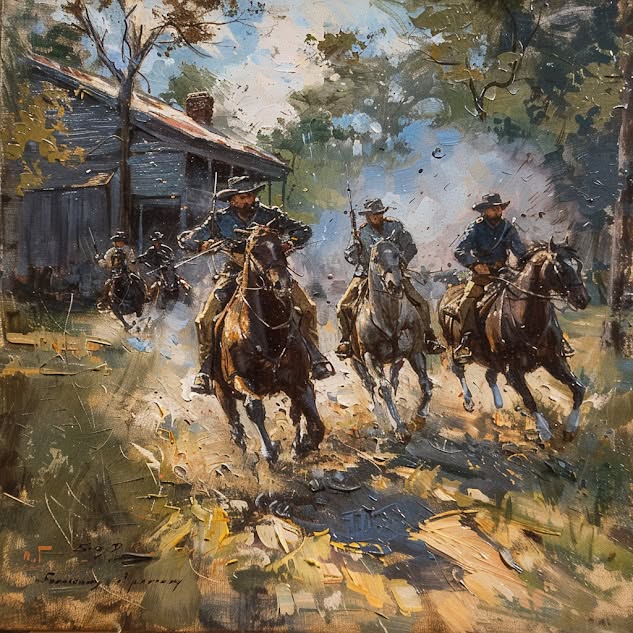
On April 4, 1862, Union Brig. General Milo S. Hascall was ordered to capture a force of Confederate cavalry at Lawrenceburg, a force which his commanding officer told him numbered around 500. Hascall proceeded cautiously in the rain, leaving cavalrymen at every house they passed to prevent word from spreading of their arrival.
Approaching Lawrenceburg from the west, Hascall learned that the number of Confederate cavalrymen in Lawrenceburg actually numbered between 50 and 100. Hascall sent the infantry back to their camp and ordered a charge on the town by Lt. Col. Murray with the cavalry.
The Confederates split up on the Military Road, some going north and some going south. Hascall’s men pursued them for eight miles, but could not keep up with their fresh horses. Two of the Confederates were wounded, as evidenced by the blood upon their horses, which fell into Union hands.
Hascall reported that they captured “6 cavalry horses and saddles, about 4,000 pounds of fine bacon, a dozen or two shot-guns and squirrel rifles, and 2 drums.” He goes on to say that Union sentiment is high everywhere he went, except Lawrenceburg. His men then camped near Lawrenceburg and “procured wagons in the neighborhood with which to transport the captured bacon.”
Colonel John T. Wilder of Indiana (a future mayor of Chattanooga) was present at the skirmish. In a letter to his wife, he said his men were sent from Columbia to Lawrenceburg to disperse a gang of rebels. According to his letter, they captured “5,000 lbs of bacon, a couple dozen guns two drums a flag, 6 horses & saddles and wounding two secesh cavalry also getting their mail—the balance ran.”
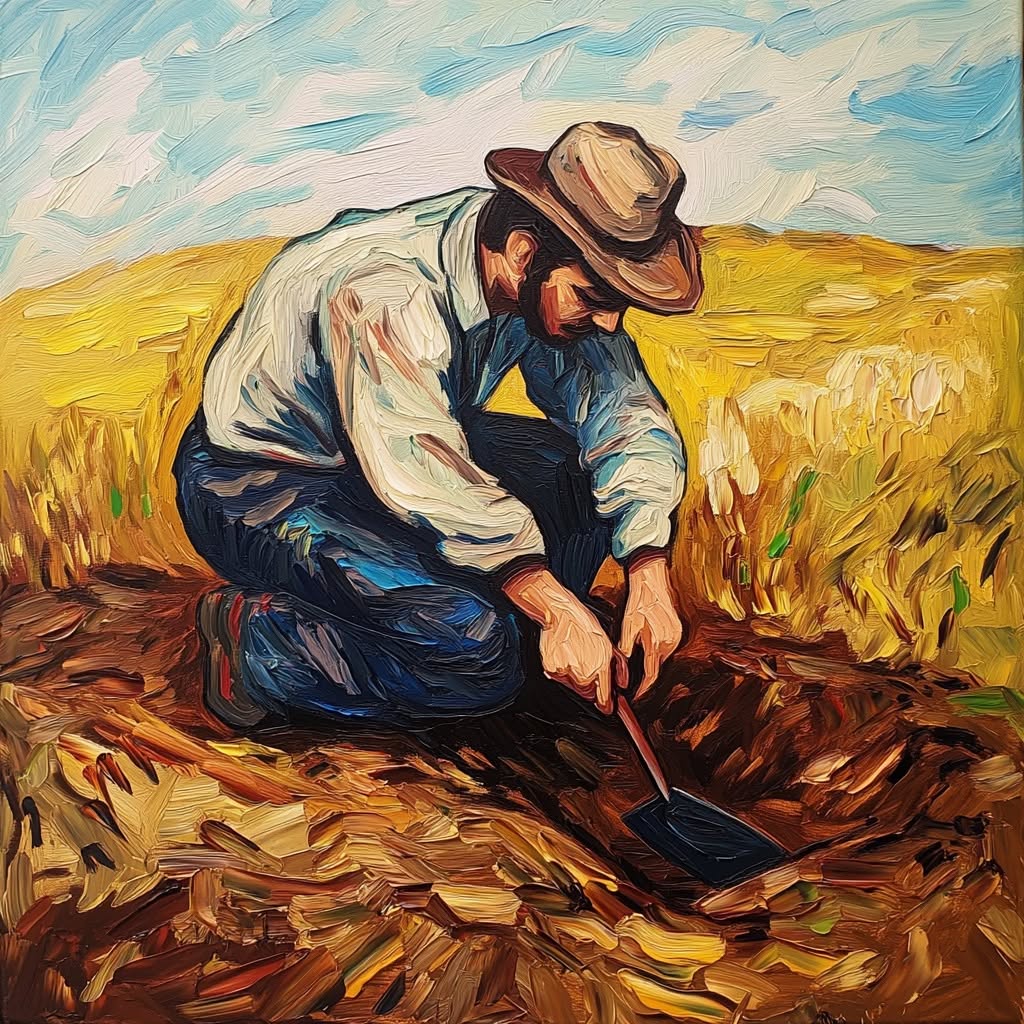
Did you know that there was a band of snail-eating Native Americans living between modern West Point and Iron City a few centuries before the birth of Christ? On March 25, 1962, three archaeologists conducted the first-ever archaeological dig in Lawrence County history to learn more about them.
The dig occurred at the site of a 2-acre mound of snail shells on the western bank of Shoal Creek, on land owned by Dr. J.W. Danley. For years, according to Danley, people had found arrowheads near the site and sold them to collectors. The mound of snail shells on Danley’s property constituted a midden, or ancient trash-heap of garbage discarded by the nearby Native American settlement.
The archaeologists dug 4 five-foot sections at the mound. Their excavations uncovered three main pits of discarded materials, each rounded and roughly 18″ in diameter. The first pit yielded a Narrow Stemmed Adena Point, a Cotaco Creek variant, six flake knives, and one Wheeler Punctate potsherd, among other artifacts.
The only human remains found in the midden were in the second pit, which contained a human humerus bone. The third pit contained 200 snail shells and 5 flint flakes. Among the other artifacts dug from the midden were 1 Flint Creek point (which the archaeologists recognized as a common find on other Shoal Creek sites where a large number of digging and chipping tools are found), 2 Benton Stemmed points, 3 pebble hammers, 2 bifaced knives, and 31 flake knives.
Due to the large quantity of deer bones and snail shells found in the midden, the archaeologists determined that the settlement of Native Americans at the Danley Site ate mostly venison and freshwater snails as a protein source. The archaeologists also determined that the settlement existed in the late Archaic or Early Woodland periods, which would date the site at its most recent to several hundred years before the birth of Christ.
While the remains of agricultural implements such as primitive hoes were found in the midden, the archaeologists believed that these implements were indicative that the people of the Danley Site probably did “extensive digging for roots” as opposed to large-scale crop cultivation.
For more information about the dig, and to see a complete listing of the artifacts recovered from the site, check out the article written by the archaeologists in ‘Tennessee Archaeologist,’ vol. XVIII, no. 2, pages 66-69.
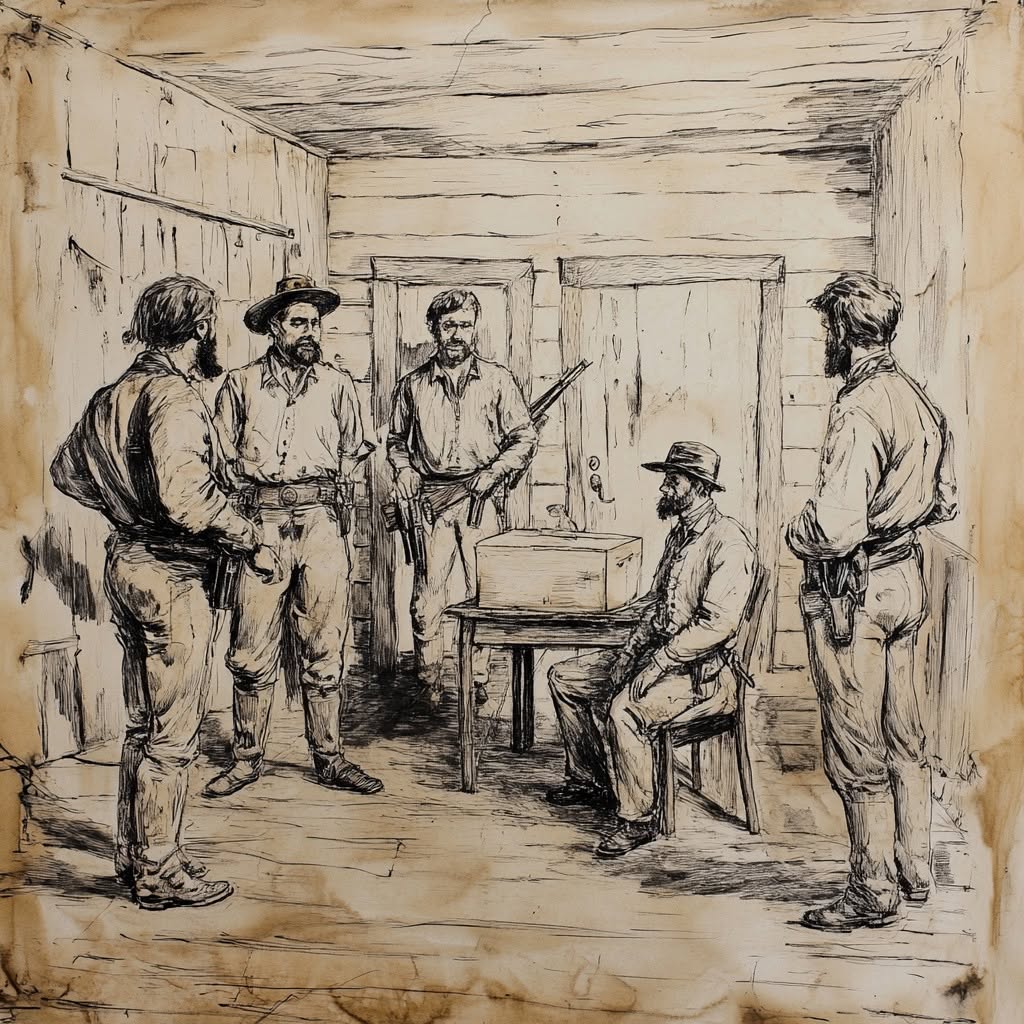
Today is the 160th anniversary of the end of slavery in Tennessee. And, according to one source, the men of Lawrence County who turned out to vote for its abolition had to arm themselves at the ballot box for fear of attack.
The Emancipation Proclamation freed slaves in areas controlled by the Confederate government on January 1, 1863. As a wartime action, it encouraged enslaved people to flee towards approaching Union armies. In this way, the Proclamation undermined the Confederate economy and destabilized the Southern war effort from within. But as a wartime executive action, it would cease to be in effect by the war’s end, and it did not take effect at all in areas controlled by the Union army, which at that time included Tennessee as well as the border states and the parishes around New Orleans.
To ensure the demise of slavery, a constitutional amendment was necessary. After a hard-fought campaign in Congress, the 13th Amendment passed the Senate on April 8, 1864 and the House of Representatives on January 31, 1865. It was then sent to the states, where it required a ¾ majority for ratification. By the end of February 1865, it had the approval of 18 of the required 27 state legislatures necessary for ratification.
In the meantime, on February 22, 1865–while the Civil War continued to rage and many of Lawrence County’s native sons were still away fighting–the Unionist government of Tennessee called for a referendum to decide the fate of slavery in the state. But it wasn’t as simple as showing up to the polls and casting a ballot. Tennessee was very much a state divided, and in order to vote, one had to first swear a complex 189-word oath that pledged unwavering loyalty to the United States Constitution and government, denounced the Confederacy, and committed to the suppression of the rebellion until complete restoration of the Union.
This oath aimed to disenfranchise Confederate soldiers and sympathizers. On the day of the election, 275 Lawrence County men–only about 3% of the county’s 1860 population–swore this oath and voted in favor of the abolition of slavery in Tennessee.
Statewide, the motion passed with overwhelming support (only 45 votes were cast against the measure in the entire state). The results of this referendum have been criticized because much of the measure’s opposition was disenfranchised by the pro-Union oath.
Still, the referendum accomplished what the Unionist state government wanted it to do: Tennessee became a free state nine months before the ratification of the 13th Amendment.
Lawrence County’s voters were singled out in a speech made by State Representative S.M. Arnell, who praised the courage of the county’s Union men, who went to cast their vote that day armed in case of pro-Confederate guerrilla attacks. Such attacks were a very real possibility, as Lawrence County saw frequent guerilla activity during the Civil War.
Tennessee’s state legislature became the twentieth to ratify the 13th Amendment on April 7, 1865, and it became law with Georgia’s ratification on December 6, 1865. Mississippi–whose legislature rejected the amendment in 1865 but voted to ratify it in 1995–officially completed the process on February 7, 2013, meaning that the 13th Amendment eventually received the approval of all 36 states which existed at the time of its proposal.
Our county government was founded on October 21, 1817 by the state legislature.
But did you know that it was re-founded 47 years later?
On February 13, 1864, a group of local Union sympathizers met at the courthouse in Lawrenceburg “to re-organize [county government], by the election of county officers, on the 1st Saturday in March 1864, as required by the Constitution and laws of the State.” Their purpose was to institute a new local government loyal to the Union cause.
When Tennessee seceded from the Union in 1861, new elections were held. In fact, less than three years before, local planter and attorney Lee M. Bentley had accepted the nomination to run for the Confederate House of Representatives in the same courthouse where local Unionists would meet in 1864 to restore loyal government to the county.
After the fall of Fort Donelson in February 1862, Nashville became the first Confederate capital to fall into Union hands. Just weeks later, Abraham Lincoln appointed Andrew Johnson as Military Governor of Tennessee. Although Confederate influence in the state would wax and wane depending on the fortunes of the Confederate army, Lawrence County’s local Confederate government would remain in place until at least September 1863, as evidenced by surviving court records.
On January 26, 1864, Johnson issued a proclamation ordering that elections be held across the state on the first Saturday in March 1864 to elect loyal “Justices of the Peace, Sheriffs, Constables, Trustees, Circuit and County Court Clerks, Registers and Tax Collectors.” To “secure the votes of [the Union’s] friends, and exclude those of its enemies,” Johnson required all voters to swear a long and complex oath claiming that they “ardently desire the suppression of the present insurrection and rebellion against the Government of the United States, the success of its armies and the defeat of all those who oppose them.”
The gathering of Unionists in Lawrenceburg on February 13, 1864, announced that they would obey Johnson’s proclamation to reestablish local government in the county by holding an election to “select proper persons to fill the offices of Clerk of the Circuit and county Courts, Sheriff, Register, Tax collector and County Trustee.”
The election was held on March 5, and the county’s new Unionist officers were in office by the beginning of April. Only 543 men took the oath and met Johnson’s criteria to vote in Lawrence County, compared to the nearly 1,200 who voted in June 1861 to secede from the Union.
It is important to note that the war was far from over when Lawrence County’s Unionist government was re-formed. Just four months after the election, Union troops would execute Andrew Blakemore in Lawrenceburg after accusing him of bushwhacking, and Hood’s Nashville Campaign that November would see hundreds of thousands of soldiers choking Lawrence County’s roads and fighting in her fields.
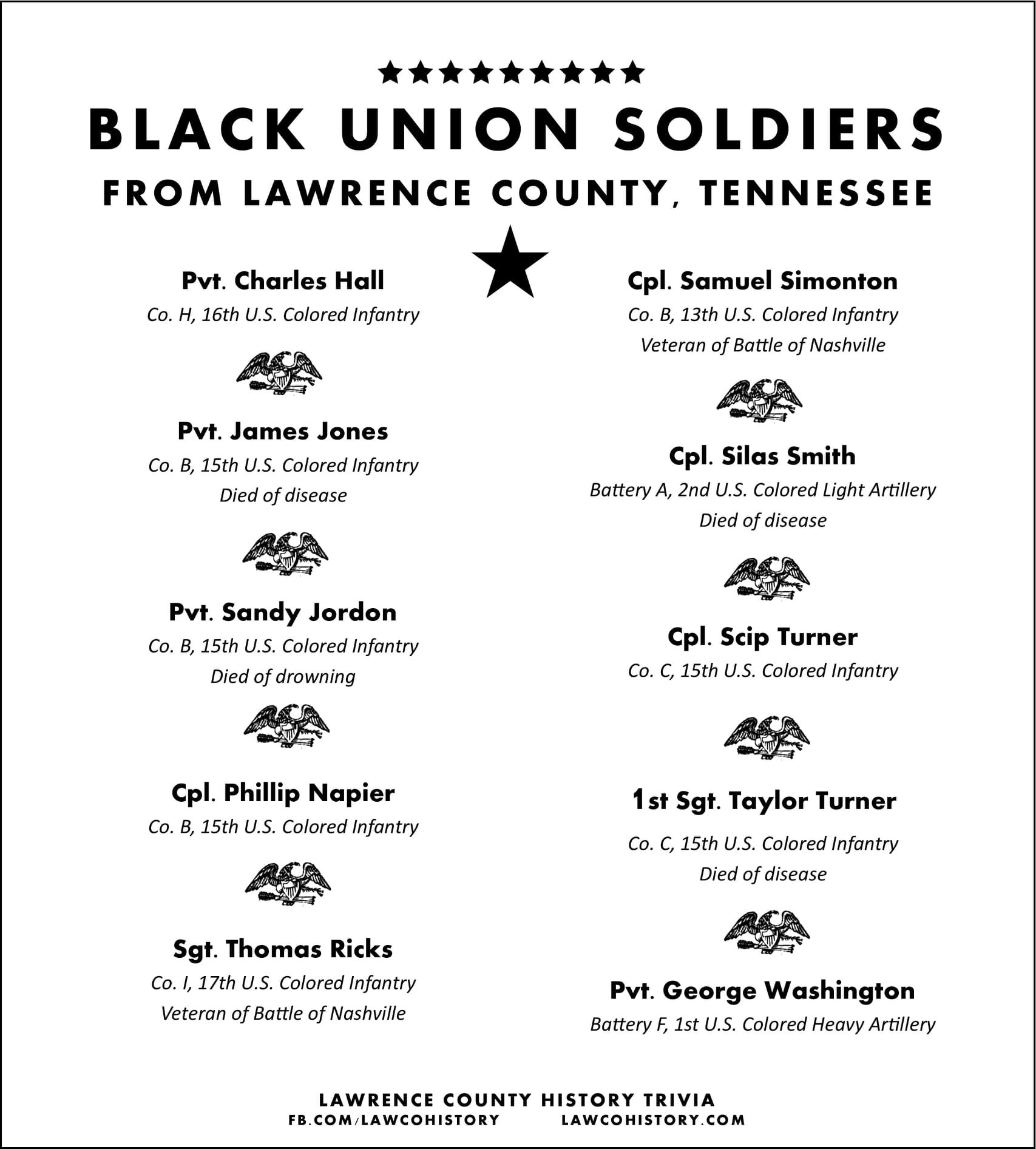
They are perhaps Lawrence County’s most-overlooked veterans.
Indeed, the very names of these men, not to mention the sacrifices they made in service to their country, have been practically forgotten by most local people.
Most of us probably learned in school that the Emancipation Proclamation freed the slaves. But did you know that that is only part of the story?
In addition to paving the way for the liberation of hundreds of thousands of enslaved people as Union forces made their way across the South, the Emancipation Proclamation helped to supply a pressing wartime need for the Union: manpower.
The Proclamation made it possible for the Union to begin recruiting, training, and putting into service thousands of black combat troops. This gave Union forces crucial manpower at a critical juncture in the war.
At least ten African-American men from Lawrence County volunteered to serve in these new regiments of the United States Colored Troops (USCT) of the Union army between 1863 and 1865. Four of those men made the ultimate sacrifice in the service of their country.
By war’s end, more than 180,000 black men from across the country would take up arms for the Union. Roughly 40,000 of those men died in uniform.
In the month of February and all through the year, I am proud to tell the stories of these ten local men who left Lawrence County to join the USCT. Please take a moment today to remember these men, and to reflect on their courage, sacrifice, and bravery.
A few veterans’ accounts of the Battle of Sugar Creek in southeastern Lawrence County survive. At least two are found in the book ‘The Military Annals of Tennessee.’
In the mid-1880s, a Nashville educator and civic leader named J. Berrien Lindsley began to collect stories from Tennessee’s Confederate veterans about their respective units’ experiences during the Civil War. He sold the multivolume work by subscription and relied on survivors of the war to submit their units’ histories for publication.
The result was a series of books called ‘The Military Annals of Tennessee.’ Written twenty years after the Civil War, the unit histories are prone to overemphasize the heroism and sacrifice of Confederate soldiers, and the accounts sometimes suffer from hazy memory. That being said, the books offer some details about the war that aren’t found anywhere else.
C.W. Heiskell of the 19th Tennessee Infantry recalled this about Sugar Creek:
“On this retreat [from Nashville] the Nineteenth was in two engagements–one near Pulaski, where Forrest captured two cannon with horses and caissons and brought them off; and the other engagement after crossing Sugar Creek. There it lost one man killed. The fight near Pulaski occurred on Christmas-day, 1864. The regiment was barefooted and ragged, and that day had marched twenty-four miles. As it neared camp, about eleven o’clock at night, marching in the darkness and drizzling rain and sleet, Col. Heiskell, whom some of his men had often asked to have the regiment mounted, said to them, “Well, boys, how do you like the cavalry?” One said, “O this is not regular cavalry.” Another replied, “I think it has been pretty regular of the last forty-eight hours.
“The Federal cavalry gave us no more trouble after Sugar Creek.”
Polk G. Johnson of the 49th Tennessee Infantry wrote:
“[The 49th Tenn. Infantry] moved with Hood to Nashville, and took part in the engagement there, Dec. 16, 1864, and retreated with his army after its defeat, in Walthall’s division. On the 20th of Dec., 1864, it came under the orders of Gen. Forrest, commanding the rear-guard, and was engaged on the 24th in the battle south of Lynnville, and the engagements at Anthony’s Hill and Sugar Creek. Another has said: ‘Each Confederate officer and soldier appeared to act and fight as if the fate of the army depended on his individual conduct. And never were there manifested higher soldierly virtues than by Forrest’s heroic band–including the infantry…The men marched barefooted in many cases, often waist-deep in ice-cold water, while sleet beat upon their heads and shoulders.’ The same writer says of Sugar Creek: ‘The creek was about saddle-skirt deep, and through it the Federal cavalry dashed rearward without regard to any ford, and after them followed Walthall’s dauntless men, charging waist-deep through the icy water.'”
John Johnston, a Confederate cavalryman from West Tennessee wrote a memoir of his wartime experiences in the 1890s, recalled this about the fight at Sugar Creek:
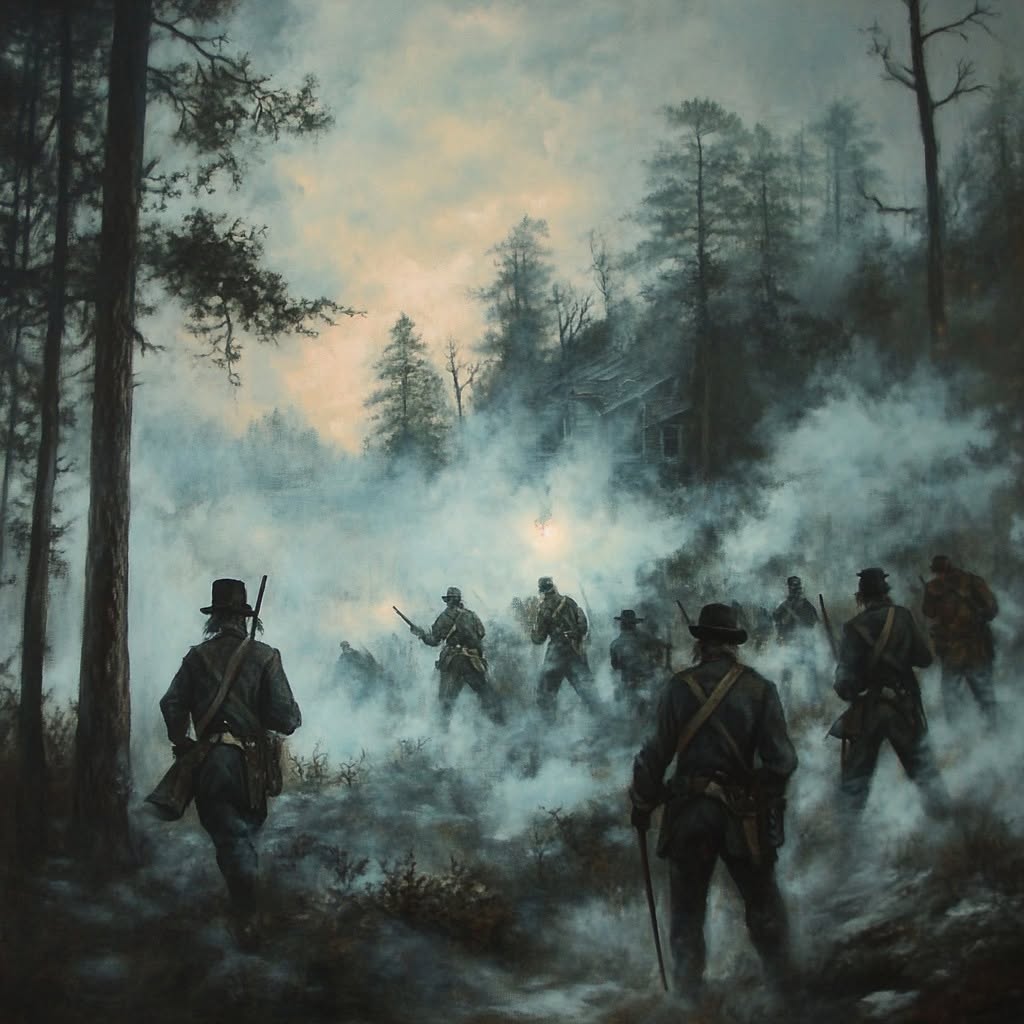
“That night Gen. Forrest and our main body marched on until after midnight and went into camp at Sugar Creek, fourteen miles from where they had the fight at Anthony’s Hill–as the place was called. Here our men were put in position, which was fortified by piles of rails and logs and such material as they could pile up, and laid in wait for the enemy.
It was said that the morning was very foggy, and our men at their breastworks were concealed from the enemy. As they came on early that morning, our small cavalry force retired before them, and they were drawn very close to our line before they knew of the presence of our men. Here again they were met with a terrific volley from our men, which threw them into disorder, whereupon our infantry left their breastworks and charged them and put them to rout.
This was the last fighting that was done on this famous and remarkable retreat, and it was here that poor Johnson Penn was killed.
Our army marched on undisturbed from that point to the Tennessee River, with the exception perhaps of a few skirmishes between their advance guard and our extreme rear. I believe that our part of the command was thrown to the rear at one time to keep back their advance, but it amounted to nothing.
My memory is dim as to our further marching, except that I remember that we, with Col. Kelly and perhaps a hundred men, continued on the 25th and 26th to follow a parallel route down the winding valleys on the right of the main road; that one night we went into camp at a house at the foot of a steep hill; that the ground was covered with snow; and that Monroe Taylor and I bivouacked together on the side of the hill, being the only two privates left in our regiment.”
Lawrence County in the days of David Crockett was, indeed, the wild frontier–and that applied to the wild men who lived here as well as the wild animals.
According to the Annual Report of the Tennessee Judiciary for 2022-2023, the top five most common filings in criminal court in modern Lawrence County are, from most to least, probation violation, drugs, burglary/theft, assault, and “other motor vehicle offenses.”
While to some extent it is difficult to compare modern crime to crime two centuries ago, our earliest court records paint a picture of Lawrence County as a sparsely-populated land roamed by wolves and quick-tempered men.
The Court of Pleas and Quarter Sessions was Lawrence County’s first local source of justice. Comprised of the justices of the peace assembled together, they initially dealt with all manner of judicial business. The minutes of their first five years of activity have been transcribed and are available for free at familysearch.org.
In the late 1810s and early 1820s, Lawrence County’s population density was only about 5 people per square mile. Despite the isolation of frontier life, people apparently fought each other frequently in early Lawrence County. One of the most common charges brought before the court was assault and battery. In fact, the word “assault” appears 85 times in the minutes of those first five years.
Following close behind assault, the term “affray” appears 68 times in those early minutes. An affray is a particularly public fight that disturbs the peace. Given the frequent fighting that seemed to be happening in early Lawrence County, it should probably not be surprising that the term “trespass” appears 23 times in the minutes.
Roughly 9 cases of bootlegging–or “retailing spiritous liquors without a license”–appear in the minutes, as well as 4 or 5 cases of “bastardy,” which was the crime of fathering a child out of wedlock. This charge was essentially a 19th-century means of forcing a man to pay child support.
A handful of men plead guilty to gambling and paid a $5 fine. Surprisingly, only two cases of drunkenness were tried during this period, one of which was for a juror who got drunk and expressed “contempt of the court.”
The county paid for more than fifty wolf scalps during this period. Wolves were considered such a nuisance that the county placed a literal bounty on their heads, and anyone who could produce a wolf scalp in open court was paid for it.
Christmas is a time for cherished traditions; chestnuts roasting on an open fire, sleigh bells ringing in the frosty air, trimming the tree and going to grandmother’s house over the river and through the woods, and–watching fireworks in the yard with your family?
On Christmas Day 1883, Lawrenceburg residents were treated to a downtown fireworks display. As local court official W.T. Nixon wrote in his diary, “‘Old Santa’ came to our house last night and made us all happy. As usual the children’s stockings were well filled with goodies and small presents…and all of us happy and glad Christmas is here. We were up betimes to see some fire works in our front yard.”
Nixon and his family watched the Yuletide fireworks show from their front yard on Pulaski Street in Lawrenceburg, where The Hidden Garden is today. Although fireworks are now most associated with Independence Day and New Year’s Eve, they once served as an all-purpose outlet of celebration.
In 1879, Nixon wrote, “the holidays draw on apace and soon the festive Juvenile will glory in the noise and sulphrous smoke of that heathenish invention…the fire cracker.”
Happy National Christmas Lights Day! Be sure to check out the dazzling Christmas light display in Lawrence County’s Amish community!
All kidding aside, many visitors often ask why the Amish don’t believe in using electricity.
The Amish of Lawrence County, who first settled here eighty years ago, are part of the Old Order. In fact, Lawrence County is home to the largest population of Old Order Amish people in the South.
Old Order religious beliefs, including their prohibition on electricity and motor vehicle usage, are grounded in centuries of tradition intended to maintain a life of simplicity and austerity. As Jonas Miller writes in his excellent book ‘The Ex-Amish Kid,’ “the Old Order Amish shun all modern conveniences such as electricity and automobiles because that is the way they were set up from the beginning, and that is the way they are going to keep it.”
These traditional Old Order convictions extend to every part of Amish life, from the clothing they wear to the type of facial hair the men can have. And while they may not have Christmas lights, their shops produce some excellent Christmas gifts, and they are open for business every day except Sunday.
A November snowstorm and thousands of soldiers maneuvering through our streets, fields, and forests? One-hundred and sixty years ago this week, Lawrence County was directly in the center of the Confederate re-invasion of Tennessee known as the Nashville Campaign.
Launching from Florence, the Army of Tennessee, commanded by General John Bell Hood, split into three main branches. The westernmost branch (Cheatham’s Corps) moved towards Waynesboro, the central branch (Stephen D. Lee’s Corps) moved towards the Turnpike in western Lawrence County, where General Nathan Bedford Forrest was personally engaged in battles at Henryville and Summertown on the 22nd (more about those tomorrow), and the easternmost branch (Stewart’s Corps) traveled north on the Military Road, going east after coming into Lawrenceburg, and sweeping north through Campbellsville.
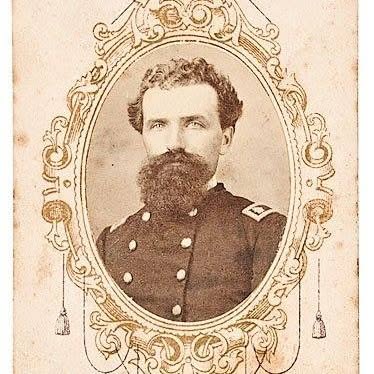
Vastly-outnumbered Union scouting parties skirmished with Confederate troops throughout their push northward. One of the commanders of those Union forces was Colonel Datus E. Coon (pictured here). On the night of November 21, 1864, Coon’s troopers camped in Lawrenceburg.
While battling each other, the two armies also had to battle a late-November snowstorm. Coon reported to his superiors that the night of November 21, when his men camped in Lawrenceburg, the weather “was cold, and much snow fell during the afternoon and night following.”
Most of the combat in Lawrence County during the Nashville Campaign occurred on November 22-23, 1864. Stay tuned for more about those actions tomorrow, on their 160th anniversary.




 Lawrence County History Trivia